Cargando...
6.9·2000·105 min·Français·Dirigida por Mathieu Kassovitz
El mal se eleva a nuevas alturas.
CrimenMisterioSuspense
Sinopsis
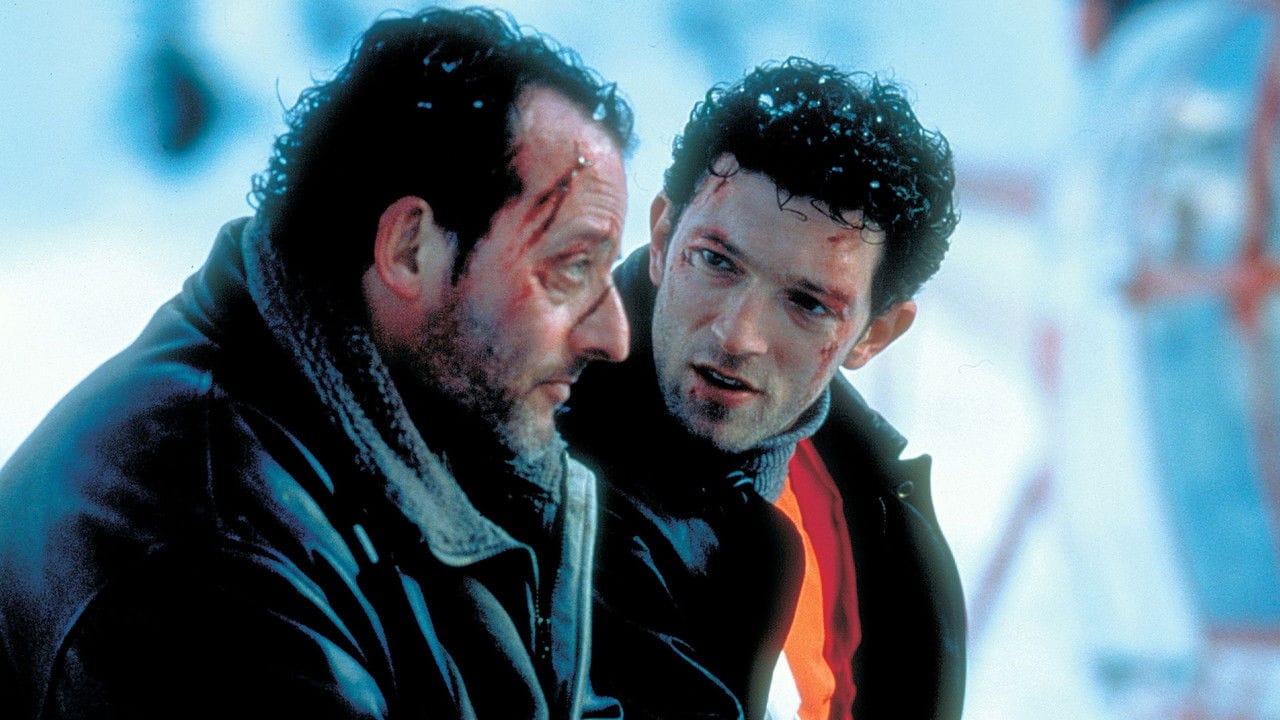
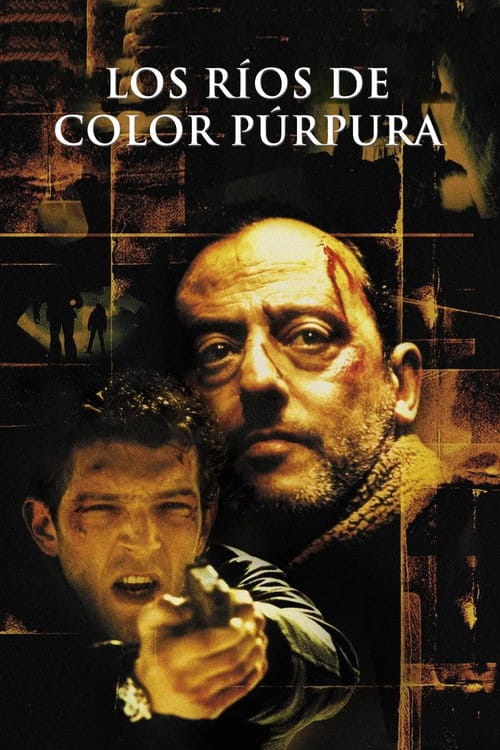
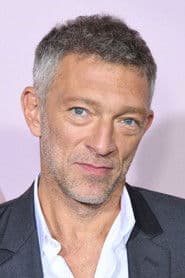
El mismo día, en dos lugares separados por 300 kilómetros de distancia, a dos policías les asignan investigaciones muy particulares. Pierre Niemans (Jean Reno), un hombre con experiencia y un instinto infalible para los casos criminales, viaja a Guernon, una ciudad universitaria de los Alpes, donde se ha cometido un violento asesinato. Mientras tanto, el joven y solitario Max Kerkerian (Vincent Cassel), un antiguo ladrón de coches cuyo amor al peligro lo llevó a ingresar en la policía, está investigando en Sarzac la profanación de un cementerio, especialmente la tumba de una niña que murió hace veinte años. Inesperadamente, se establece una conexión entre ambos casos.
Reparto principal



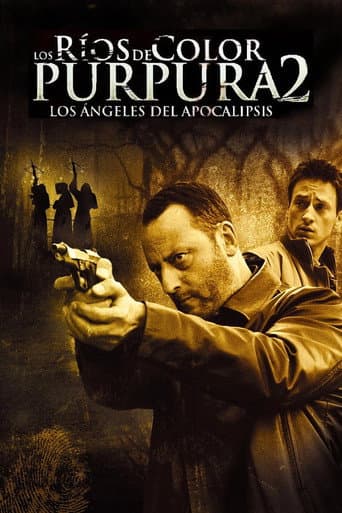
Los ríos de color púrpura - Colección
Más como esto





Communauté
7.1
Note Trakt
2.0K votes
10
172
9
105
8
504
7
618
6
416
5
82
4
51
3
11
2
12
1
16
7.2KSpectateurs
49.0KCollectés
2.8KListes
Avis de la communauté (8)
M
MareZare1991★6/10May 29, 2018
Not that good as I remember....still, this is more of a guilty pleasure for me, and it has that nostalgic moment. Rushed at the end, and when you have a story that is not very good, than the end have to be a lot better. Still, Jean Reno and Vincent Cassel were decent, so its 6/10 for me.
♥2
H
havucumuyedimMar 5, 2016
Re watching Re watching Re watching Re watching
♥2
D
DRNKMNKY★6/10Jul 14, 2015
I was disappointed by "The Crimson Rivers": although the plot is solid, you never feel very intrigued. And the ending is rather weak!
♥1
R
RedRudolfVIP★8/10Jul 5, 2026
Kassovitz's French procedural operates with a forensic intelligence rare in the genre — the alpine setting is genuinely atmospheric and the mystery's academic-world roots give it an unusual social texture. Cassel and Reno are well-matched.
S
senbaldorVIPCritique★8/10Jun 7, 2026
# Reception and Legacy - Cultural Impact - Significant box office success in France - Standard-bearer for the 'French Thriller' revival - Spawned a sequel and a television series # Themes and Symbolism - Core Themes - Eugenics and the corruption of science - The isolation of elitist institutions - Ancestry as a source of monstrosity - Symbolism - The 'Crimson Rivers' (bloodlines and genetic purity) - The Alps as a cold, impassable barrier to truth - The university as a closed, incestuous microcosm # Cinematography and Sound - Visuals - Cold, desaturated blue/grey color palette - Use of claustrophobic, mountainous wide shots - Dynamic, kinetic camera work in action sequences - Soundscape - Bruno Coulais’ intense, orchestral score - Choral elements evoking religious dread - Emphasis on harsh environmental sounds (wind, ice) # Narrative Structure - Parallel Investigations - Niemans in Guernon (academic elitism/theology) - Kerkerian in Sarzac (neo-Nazi cemetery desecration) - The convergence point at the university research center - Style - Hybrid of police procedural and Gothic horror - Non-linear discovery of historical context - Action-driven climax in the Glaciers # Character Analysis - Pierre Niemans - Veteran, cynical Parisian inspector - Motivated by duty and intellectual superiority - Undergoes a shift from solitary wolf to partner - Max Kerkerian - Young, impulsive ex-thief turned cop - Represents anti-authoritarian energy - Bridge between street smarts and official investigation # Summary Insights - The film serves as a critique of French elitism, positioning the academic institution of Guernon as a sanctuary where power is guarded through genetic exclusion. - The 'rivers' in the title act as a dual metaphor: the literal blood of the victims and the metaphorical, tainted bloodlines (the dynasty) being protected by the university. - By pairing Niemans and Kerkerian, director Mathieu Kassovitz juxtaposes the old guard of the state police with the street-level, rebellious youth, reflecting the changing landscape of 2000s French cinema. - The film effectively utilizes the Gothic horror trope of 'the secret past' to transform a standard police procedural into a visceral commentary on morality and scientific hubris. - Visual coldness is used not just for atmosphere, but to mirror the clinical, emotionless nature of the eugenics experiment at the heart of the mystery.
Reseñas