Cargando...
6.6·1943·100 min·English·Dirigida por George Cukor
DramaMisterio
Sinopsis
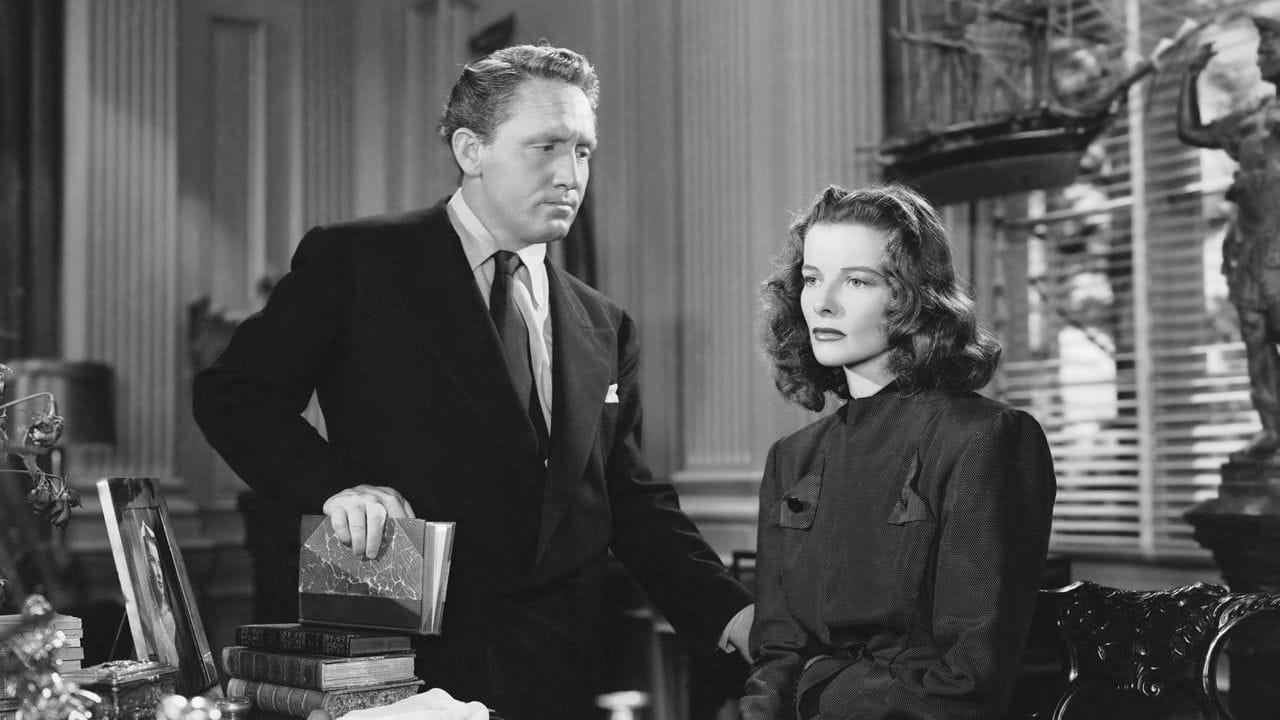
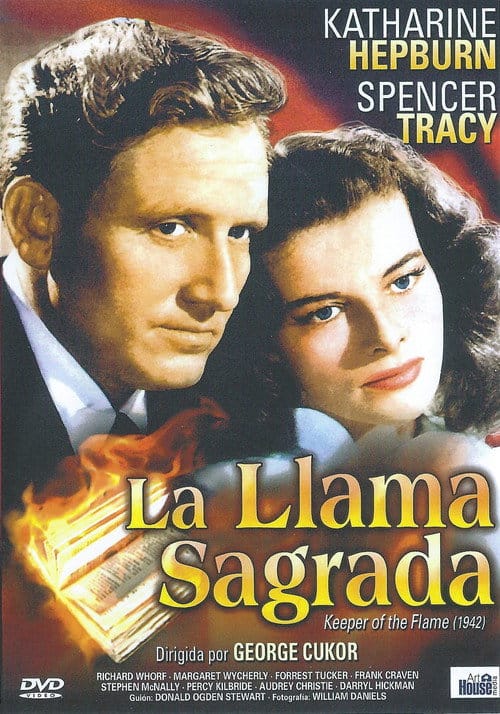
Un notable periodista (Spencer Tracy) quiere publicar un homenaje a un respetado y admirado patriota muerto en un accidente de coche. Hepburn es la viuda del hombre sobre el que Tracy quiere escribir.
Reparto principal

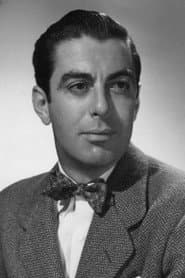
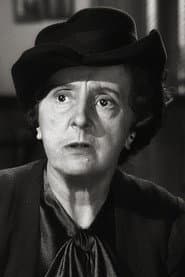
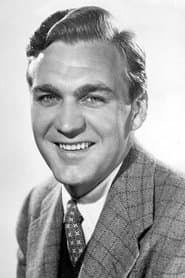
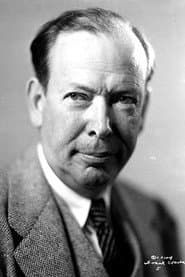
Más como esto
Más allá de la vida
2010·6.1
Inseparable
2012·6.1
Premonition (7 días)
2007·6.3
Remember
2015·7.4
Asesinato en el Orient Express
1974·7.1
Asesinato en la Embajada
2025·6.2
Rubia, sexy, alta
2012·6.3
Sherlock: la novia abominable
2016·7.8
Fedora
1978·6.7
De padres a hijas
2015·7.1
Agatha y la verdad del crimen
2018·6.4
Asesinato en el Orient Express
2017·6.7
Communauté
7.0
Note Trakt
72 votes
10
8
9
2
8
13
7
19
6
23
5
4
4
2
3
2
1
1
235Spectateurs
7.7KCollectés
305Listes
Avis de la communauté (2)
N
NancyLDraper@gmail.comVIP★8/10Dec 30, 2018
An important message in a world bent on fostering isolating and unhealthy nationalisms. Even though this movie was released in 1943, in the wake of annihilating European fascism, the last scenes should speak a cautionary word to our 2018 world. [spoiler]It gives a description of how fascism seeds hate, suspicion and enmity in a nation and its subsequent disastrous harvest[/spoiler]. Besides being uncomfortably current, this is a great movie. The mystery is intriguing. The thill is enthralling. The acting and chemistry is... well... Tracy and Hepburn. Need I say more? This is the second of 9 movies that Tracy and Hepburn gave us and may I say, "Thank you" to Turner Classic Movies (TCM) for bringing them back to us. I give this film an 8 (great) out of 10. {Drama, Thriller, Mystery}
♥2
C
cunninmCritique★6/10Jan 26, 2026
I became aware of Keeper of the Flame in early 2026, and after reading a little about it, I discovered that it was based on a novel by I. A. R. Wylie. Given the political and cultural climate in the United States in 2026, that coincidence felt oddly serendipitous — perhaps even unavoidable. The story’s reputation as a warning about demagoguery and authoritarianism made it feel like one of those works that periodically resurfaces because history insists on rhyming. So, before watching the film, I decided to read the book first — a decision that, in hindsight, I’m not entirely sure improved the experience. To be fair, the novel does offer considerably more background on the characters than the film, and in principle that should be an advantage. Wylie takes her time establishing Christine Forrest, her guarded emotional world, and the reverence surrounding her late husband, Robert Forrest. However, the book is glacially paced, and that patience is rarely rewarded. Crucially, it takes far too long to engage with the central question of who Forrest really was and what he was doing beneath the surface of his public persona. For much of the novel, Forrest exists as an absence — a revered statue rather than a man whose ideas deserve scrutiny. Instead, the narrative seems disproportionately fixated on Stephen O’Malley’s melodramatic, almost adolescent infatuation with Christine, which comes to dominate the emotional tone of the book. As a result, the political heart of the story feels oddly sidelined until very late in the game. The film, by contrast, wastes no time nudging the audience toward its real subject. Fascism is introduced early on, if quietly, most notably in O’Malley’s seemingly casual but pointed “philosophical” conversation with young Jeb. That moment works well: it plants an ideological seed without announcing itself, and it gives the viewer fair warning that this is not merely a romantic mystery wrapped around a great man’s legacy. When the film reaches its final act and Christine finally “explains all,” subtlety is decisively abandoned. What follows is unapologetically anti-fascist, heavily expository, and unmistakably propagandistic. Filmed in 1943, it’s impossible not to read this as Hollywood very consciously “doing its bit” for the war effort. This is also where Katherine Hepburn’s performance becomes, for me, genuinely jarring. Up to that point, her Christine is controlled, guarded, and emotionally opaque. Then, almost abruptly, she transforms into something else entirely — an urgent, analytical explainer of political evil, laying out Forrest’s ideology as if she’s solving a case for the audience. The shift feels less like character development and more like a tonal gear change, as though Hepburn has stepped out of the role and into a kind of 1940s proto-Columbo mode: intense, relentless, and oddly performative. The film’s biggest weakness, however, lies in its script. I’d like to believe that this is simply a matter of historical distance — my Gen X ear struggling with the cadences of early-1940s Hollywood dialogue — but that excuse doesn’t really hold. Plenty of films from the same era have scripts that remain sharp, natural, and dramatically effective. Here, much of the dialogue feels stiff, overwritten, and frequently overplayed. Emotional beats are hammered home rather than allowed to land, and characters often speak less like people than like mouthpieces. That said, the climactic dialogue scene — in which Christine lays out the essence of Forrest’s plan — remains the film’s most striking and unsettling moment. It is genuinely prescient. Much of what she describes — the manipulation of mass emotion, the deliberate erosion of truth, the cultivation of myth over reality — feels disturbingly familiar eight decades later. What did make me laugh, though, was the film’s faith in the corrective power of truth. The idea that exposing Forrest’s real beliefs would work because “people want the truth, and they can take it” feels almost quaint in a modern, social-media-driven world. Today, the truth would simply be denied, reframed, or buried under a tidal wave of misinformation. And then there’s the final action sequence — shootings, chaos, and the inevitable burning building — which is entirely absent from the novel. It feels like a studio-mandated concession to spectacle, a reminder that Hollywood has always been Hollywood, even in the 1940s. The irony is that the story doesn’t need it; the ideas are explosive enough on their own. Overall, I didn’t enjoy the book. Its pacing issues and misplaced narrative focus dulled what should have been a sharp and unsettling story. The film is better, largely because it understands — and foregrounds — what the story is actually about. But that’s not saying very much. For all its historical importance and flashes of insight, Keeper of the Flame ultimately feels like a work whose message remains relevant, even urgent, but whose execution — on page and on screen — never quite lives up to its potential.
Reseñas