Cargando...
8.0·1975·106 min·Русский·Dirigida por Andrei Tarkovsky
DramaHistoria
Sinopsis
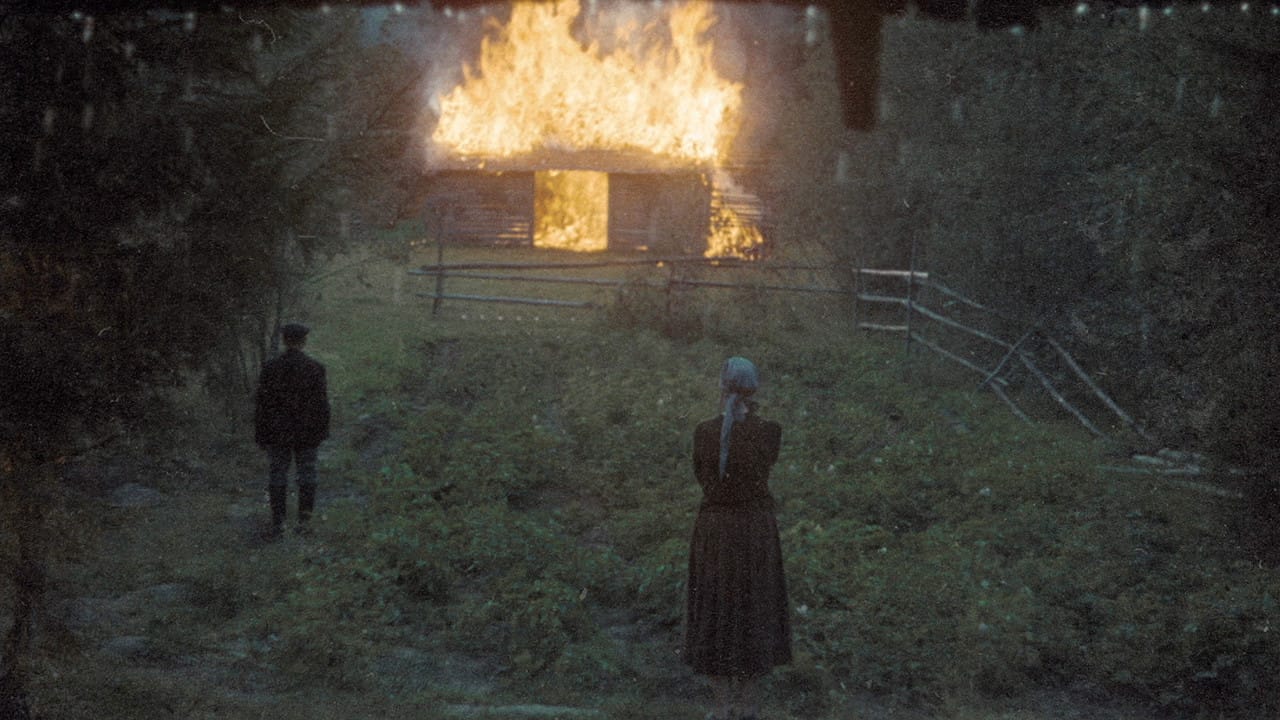
Un hombre, Alekséi, habla con su esposa sobre su situación actual y los motivos por los que se han distanciado. La película es una evocación continua de recuerdos y sentimientos que viajan en diferentes tiempos sin orden aparente: la relación con su madre, su infancia,...que se mezclan con material fílmico de noticiario sobre la Guerra civil española, la Segunda guerra mundial y el enfrentamiento entre la URSS y China por la isla Damanski. En la película suenan poemas escritos y recitados por Arseni Tarkovski, padre del director. Retrata un pasado que es el suyo, pero también el de un país y el del acontecer mundial.
Reparto principal
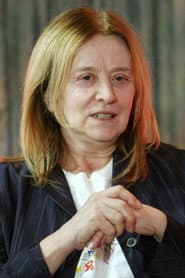
Маргарита Терехова
Natalya / Maroussia - the Mother
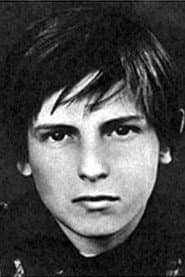
Игнат Данильцев
Ignat / Alexei - 12 Years Old
Лариса Тарковская
Nadezha
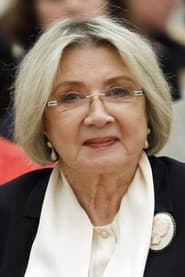
Алла Демидова
Lisa
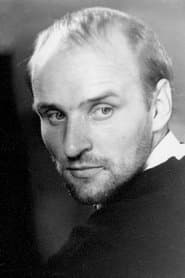
Анатолий Солоницын
Forensic Doctor
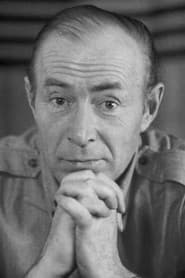
Микола Гринько
Printery Director
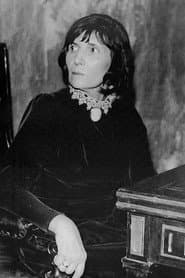
Тамара Огородникова
Nanny / Neighbour / Strange Woman at Tea Table
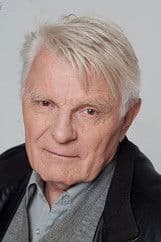
Юрий Назаров
Rifle Shooting Instructor
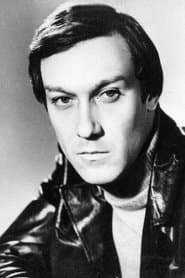
Олег Янковский
The Father
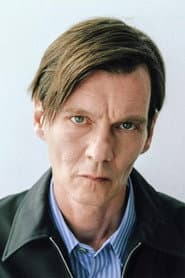
Филипп Янковский
Aleksei - 5 Years Old
Más como esto
Octubre
1928·6.9
El destino de un hombre
1959·7.5
Hitler: los diez últimos días
1973·6.2

Las hijas del Reich
2020·6.2

Camino a la libertad
2010·7.0
Siberiada
1979·7.1

La vida de Chuck
2025·7.3

Devotion. Una historia de héroes
2022·7.1

War Horse (Caballo de batalla)
2011·7.3
Trumbo: La lista negra de Hollywood
2015·7.2
Brand Upon the Brain!
2007·6.6
The Master and Margarita
2024·6.8
Communauté
7.8
Note Trakt
1.1K votes
10
286
9
151
8
317
7
167
6
110
5
45
4
26
3
14
2
12
1
20
3.1KSpectateurs
84.9KCollectés
7.5KListes
Avis de la communauté (8)
B
batfosOct 26, 2018
The beautiful is hidden from the eyes of those who are not searching for the truth…
♥3
J
Jay Shuai★5/10Nov 28, 2022
Hmmmm… it starts iff terribly and is boring as all hell for the first 75 mins. And in those 75 mins the visuals are not good. It suddenly picks up and gets much better for the last half hour and is visually quite arresting. However, it’s as pretentious as films get. It seems to think believe itself to be of profound philosophical impact and it just isn’t. Much like the rest of Tarkovsky’s films. It’s much better than the awful Stalker and the interminable Andrei Rublev, but that isn’t saying much. Solar is is Tarkovsky’s best work. Though it is not free of his characteristic pretentiousness. If you decide to skip this, you won’t be missing much at all. 5/10
♥2
M
Maarten DelfgouFeb 12, 2022
The original title of the film is Zerkalo.
♥2
M
manicureVIP★7/10Aug 12, 2021
“Mirror” revisits the thoughts and memories of a dying poet in random order, with continuous time leaps, old newsreel footage, and people’s faces overlapping each other (the mother becomes the wife, the man becomes the child, etc.). An obviously autobiographical film by Tarkovksy, who recalls his childhood days spent in the countryside during the war, the separation from his wife and child, and above all, the strong influence his mother had on his life. You would think Tarkovsky is the dying poet here, but the poems are written and recited by his father, who also happened to have abandoned his wife to later came back in an attempt to take his son away with him. Different timelines, places, people, and cinematography techniques, all blended together in a chaotic yet visually powerful stream of consciousness.
♥1
A
AchrontrackCritique★10/10Dec 20, 2025
# When Memory Rewrites Genes: A Personal Interpretation of Tarkovsky’s Mirror by Hailong Hao on 21 Dec 2025 Before watching Andrei Tarkovsky's autobiographical film Mirror, I hadn't read many other interpretations, which helped me avoid many preconceived notions. This meant that my experience of several scenes was quite different from how others perceived them. (The following represents my personal views only; if you have your own perspective, I fully respect that.) 1. The Mystery of the Redhead's Age In the film, the adult Alexei (Tarkovsky's own projection) mentions his first love from when he was 12 years old during a phone call with his son, Ignat: "Red hair, lips cracked from the cold." This refers to the scene from his childhood involving the redhead girl during that terrifying grenade incident. The common understanding is that this girl was likely his age. However, when combined with Alexei's severe Oedipus complex, the reality might be starkly different. As a boy who lost his father early on, Alexei holds a pathological attachment to his mother. The fact that he grew up to marry Natalia—a wife who looks exactly like his mother in her youth (played by the same actress)—is sufficient proof that he has been subconsciously seeking a "mother substitute" all along. Following this logic, a 12-year-old Alexei would never have been satisfied with a green, naive girl of his own age. In that war-torn winter, the only figure capable of truly striking a chord in his heart would have been an older woman possessing a mature, motherly temperament. So, I make a bold speculation: the "first love" Alexei speaks of was actually a mature redhead in her twenties (perhaps a teacher evacuated to the rear, or a friend of his mother). She not only filled the emotional void left by his mother’s suffering but also completed the boy’s sexual awakening. 2. The Implication of the Hair Washing Scene Why do the characters in the film often seem indistinguishable? I believe Tarkovsky offers a hint: in this dreamscape, physical traits (such as hair colour) are fluid. There is a highly ritualistic hair-washing scene in the film. When the water rushes over the woman's long hair, and the wet strands obscure her face, she seems to transform into a different person when she lifts her head again. To me, because the colours in the shot aren't vivid, this act of washing can be interpreted as dyeing. Dyeing the hair maps perfectly onto the subsequent plot. This mapping corresponds to the film's title and its overarching theme: "Mirror." Alexei married the golden-brown-haired Natalia, yet they produced a son, Ignat, with red hair. If Natalia is the biological mother (which is undoubted), where did Ignat's red hair come from? There is only one answer: this is the "spiritual inheritance" of Alexei’s intense will. Although Alexei intellectually chose to marry a "woman like his mother" to build a life with, in the depths of his desire and soul, he remained madly obsessed with that "red-haired first love" from years ago. This obsession was so powerful that it skipped biological genetics and manifested directly in his son. Ignat's red hair is the ironclad proof of his father's spiritual infidelity—a living monument to that unfulfilled love. 3. The Identity of the Woman in the Apartment Based on the deductions above, the identity of the mysterious old woman who appears in the modern apartment and orders Ignat to read Pushkin's letter is finally revealed. She appears to be around 60 years old in the film. * Past (1940s): The first love was a red-haired woman in her 20s. * Present (1970s): She would now be an old woman around 60. This aligns perfectly with the age of the old lady in the apartment. She is not the ghost often described in standard interpretations, nor is she a random passerby. She is that red-haired first love, aged in reality. When she arrives at the apartment and sees the red-haired Ignat, she commands him to read the letter Pushkin wrote to Chaadaev. The content of the letter discusses "what kind of country Russia truly is." This is likely the view endorsed by Alexei—or Tarkovsky himself. When the old woman vanishes, only a patch of evaporating condensation remains on the table. This is no longer just a metaphor for Russian history; it transforms into a deeply private tragedy: Alexei spent his life trying to see himself clearly in the mirror, but all he ever saw were fractured images—the mirror held his mother's face (his wife), yet bore his first love's hair colour (his son). And right after that patch of condensation disappears, Ignat receives a phone call from his father discussing that very first love. This, again, is a mirror of time and space. Although the old woman's hair is black, her hairstyle matches that of the red-haired lover when she first appeared. As mentioned earlier, the fluidity of hair colour was already hinted at. Finally, at the moment of Alexei’s death, both the old woman and his mother appear, sitting face-to-face in the clinic. As a substitute for the mother figure he sought in his youth, they form yet another set of mirrors, perfectly fitting the film's theme once more. (As for those who claim this old woman is the poet Anna Akhmatova, I find that interpretation far-fetched. Rather than that, it is better to say the old woman is the incarnation of the State—likening the State to a mother is common practice. Making Ignat read that specific text—which the old woman had underlined, indicating she had read it repeatedly—was to admonish him on what kind of person [or State] he should become. The "State Mother" and the "Biological Mother" thus form another mirror image.) What do you think?
Reseñas