Cargando...
6.9·2024·117 min·English·Dirigida por Clint Eastwood
La justicia es ciega. La culpa lo ve todo
DramaSuspense
Sinopsis
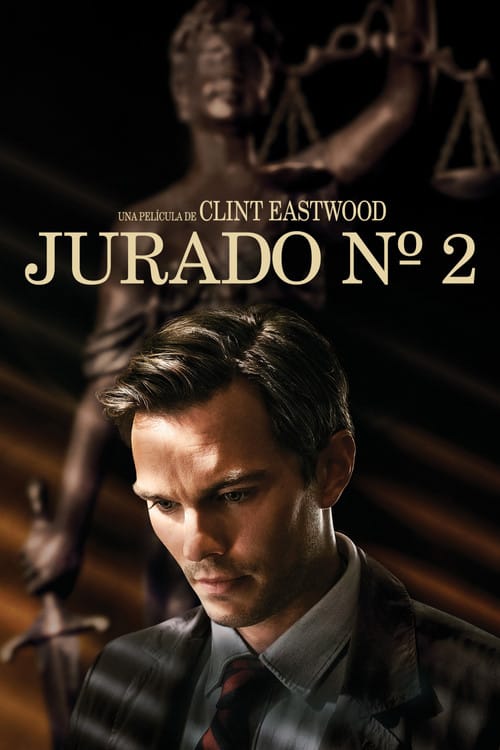
Justin Kemp, un hombre de familia, mientras forma parte de un jurado en un juicio por asesinato, se encuentra luchando con un serio dilema moral... uno que podría utilizar para influir en el veredicto del jurado y potencialmente condenar (o liberar) al asesino acusado.
Reparto principal






Más como esto
Legítima defensa, de John Grisham
1997·7.0
Cuestión de justicia
2019·7.8
La horca depende de la gramática
1991·6.7
Llamad a cualquier puerta
1949·6.2
El informe Pelícano
1993·6.6
El veredicto, la ley del menor
2018·6.6
Los jueces de la ley
1983·6.0
16 calles
2006·6.5
La herencia del viento
1999·6.3
La casa de Carroll Street
1988·5.9
La máscara de Dimitrios
1944·7.1
Insomnio
2002·7.0
Communauté
7.3
Note Trakt
14.1K votes
10
1.4K
9
779
8
4.3K
7
3.9K
6
2.6K
5
624
4
309
3
71
2
54
1
49
62.0KSpectateurs
36.3KCollectés
13.9KListes
Avis de la communauté (12)
S
sandu.lulu★6/10Dec 3, 2024
1. this movie feels old, like 20-30 years old. there are other movies that are slow and emotional, but this one feels old. 2. this movie is all about doing the right thing and the truth and in god we trust and most of all justice and morality. 3. at the very end of the movie you get to see with big letters on the screen the "Clint Eastwood" name and you'll remember his strong righteous words in support of the most famous convicted felon today. maybe that fits with the ending, i don't know. Edit: for those who need some extra explanation, this last point is about the hypocrisy of American Christians and the American Christian / conservative values.
♥22
H
heyflpCritique★10/10Dec 3, 2024
In “Juror #2,” Clint Eastwood delivers what feels like a love letter to courtroom dramas of decades past—a refreshing breather for audiences who miss stories that blend tension, subtlety, and palpable emotional weight. At 94, with a filmography that’s seen its fair share of highs and recent lows, Eastwood proves he’s still capable of turning a seemingly simple film into something memorable, without resorting to over-the-top theatrics or flashy narrative tricks. This is the kind of cinema that thrives on well-crafted characters and an engaging plot, elevating what could have been just another procedural into something thought-provoking and gripping. At the heart of the story is Justin Kemp, played by Nicholas Hoult in one of his strongest performances to date. He carries the burden of a regular guy thrown into an extraordinary situation. Jonathan Abrams’ script masterfully balances tension and morality as Justin, an otherwise unremarkable juror, starts questioning not only the evidence in the case but also his own role in the events of that fateful night. It’s fascinating to watch the film unravel Justin’s facade of neutrality, turning him from a passive observer into a key player in a moral conundrum. Hoult’s performance is understated but powerful, capturing the anguish of a man trapped between the truth and the consequences of revealing it. Savannah’s sultry, tension-filled setting feels like another character in the story. Yves Bélanger’s cinematography beautifully contrasts the oppressive heat of the streets with the cold, stifling atmosphere of the courtroom. The flashback sequences, unraveling the hazy details of Kendall’s (Francesca Eastwood) death, are a masterclass in suspense-building. Every cut, every sound of a brewing storm, and every subtle lighting shift adds to the unease, pulling the audience into the chaos of that stormy night. The supporting cast is another major strength. J.K. Simmons shines as a seasoned juror and former detective, delivering a magnetic performance filled with cynicism and sharp wit. He’s the kind of character who steals every scene he’s in, but never to the detriment of the central narrative. Toni Collette, as prosecutor Faith Killebrew, brings a fierce energy to the screen, adding another layer of pressure to the unfolding events. Her presence makes it clear that there’s more at stake than just a verdict of guilty or not guilty. What truly sets “Juror #2” apart is Eastwood’s handling of the story’s moral complexity. This isn’t a film that offers easy answers. The script toys with the concept of justice—not just in the legal sense, but in ethical and personal terms. As a juror, Justin is forced to wrestle with the tension between doing what’s right and doing what he can live with. The audience is invited to question alongside him: how far would someone go to protect themselves, even if it meant compromising the truth? These questions are explored with a depth rarely seen in contemporary films, especially in a genre that often leans on predictable tropes. And then there’s the ending—a conclusion that, while shocking, feels perfectly aligned with the emotional and moral journey built throughout the film. Eastwood delivers a finale that not only surprises but also demands reflection. It’s the kind of ending that sparks heated debates, a reminder that cinema can still serve as a platform for meaningful dialogue. “Juror #2” doesn’t reinvent the genre, nor does it need to. Its brilliance lies in its simplicity, its faith in the strength of storytelling, and its trust in its cast to carry the weight of the narrative. If this truly is Clint Eastwood’s swan song as a director, he’s bowing out with grace, proving there’s still room for honest, character-driven stories in a landscape crowded with disposable productions. For those who miss films that treat their audience like thoughtful adults, “Juror #2” is a rare gift—a genuine piece of cinema from the old school, yet still deeply relevant.
♥19
F
fziritVIP★5/10Dec 15, 2024
Just watched Juror #2 and I gotta say… I’m underwhelmed. With Clint Eastwood directing and a solid cast, I had high hopes for a gripping courtroom drama. Instead, it felt more like a made-for-TV movie. The courtroom scenes? Unrealistic and stiff. The way the jurors interact is so scripted it’s almost cringey. No real-life lawyer acts like the ones in this film — not in the courtroom, not outside it. And the ‘big emotional moments’ that were supposed to hit hard? They fall flat. There’s no weight behind them because the characters feel one-dimensional. I’ve seen more intense, thought-provoking legal stories on Netflix or Amazon Prime shows, which honestly have set a much higher standard. Juror #2 just doesn’t keep up. And don’t get me started on the ending. It’s ambiguous, but not in a ‘let me think about this for hours’ kind of way. More like a ‘wait, that’s it?’ kind of way. I respect Eastwood as a director, but I feel like his legacy might be propping this one up more than it deserves. If you’re looking for courtroom drama, you’re better off binging The Night Of or The Lincoln Lawyer.
♥14
R
RG9400VIPCritique★6/10Nov 18, 2024
12 Angry Men is one of my favorite movies of all time, so I was very excited to see a movie that had such a similar plot setup, albeit with a twist. From the very first scene, Clint Eastwood hits you with symbolism, literally starting with a character wearing a blindfold that will constantly be juxtaposed with the statues of blind Lady Justice. Whether it be focusing in on the scales of Lady Justice or a character looking out a window, framed by bars, or slats of light hitting a character's face that is otherwise shrouded in darkness, all cinematic decisions are in your face, subtlety checked out at the door. I actually do not mind this, but I think it's worth noting because it is a constant presence throughout the movie. The other thing worth noting is that the movie will stretch your suspension of disbelief. Not only in its premise, but also within the way certain jurors act. Some of the ways characters investigate or come to conclusions feel a bit contrived. Regardless, this movie is focused on one thing, and that's the moral quandry that it places its main character in. This aspect of the movie is fantastic, showcasing the inner struggles of a character trying to do the right thing but struggling with his own desires. Nicholas Hoult is fantastic in this movie, really bringing that turmoil to the surface. And through 75% of the movie, it manages to maintain that constant tension and utilizing it to reflect on various other characters, most notably Toni Collette's DA agent whose political aspirations ride on the outcome of this trial. In the last 25%, the movie starts to feel like it is overstaying its welcome though, and the pacing slumps. I think the movie's lack of subtlely is harmful here because it relies on so many unnecessary flashbacks, especially in the last act, where we already have all the relevant plot and character details well before that point. All of this could have been excused had it landed the ending. It does not. I hate the ending to this movie. Throughout the movie, the protaganist's beliefs, values, and struggles remain constant, only for the movie to completely undercut them in the last 10%. The decisions are head-scratching because not only do they not feel in line with the characters, they also do not make sense with the thematic throughline. This movie asks what justice truly means and what is required to acheive it, but then it seems to not want to grapple with that question. In the end, it sort of reaches the conclusion I was expecting anyways, but by skipping some critical character moments, it ends up not mattering. When that final scene played out in our theater, it ended up feeling so anticlimactic that when the credits started rolling, everyone was almost in a daze. This movie should have ended by landing an emotional haymaker, but instead it goes out with a whimper. I can overlook a lot of the smaller stuff, but that last 10% knocked my rating down a few points easily.
♥12
J
jmg999★5/10Dec 6, 2024
I had numerous problems w/ this both from a storyline point of view and from an ideological perspective. I don't like that some old, white, right-wing man used the horror of a miscarriage to make some dishonest, murderous white man a sympathetic figure, while his wife, the person really having to deal w/ the firsthand repercussions of miscarriage, was made a set-piece no more relevant than the family car. It's really no surprise that a right-wing man would have views like this that sympathize w/ husbands, while disposing of the feelings of women suffering from a miscarriage. As for the story, you're asked to completely suspend disbelief, when you find out that [spoiler]a man is being tried for murder for beating a woman, then tossing her over a freeway overpass, and the woman has injuries consistent with being hit by a car. The only way this gets by a coroner would be if they weren't actually a coroner[/spoiler]. This was a major plotline that the story turned on, and they asked the audience to pretend that they were completely and utterly ignorant.
♥7
Reseñas