Loading...
Loading...


The ocean chose her for a reason.
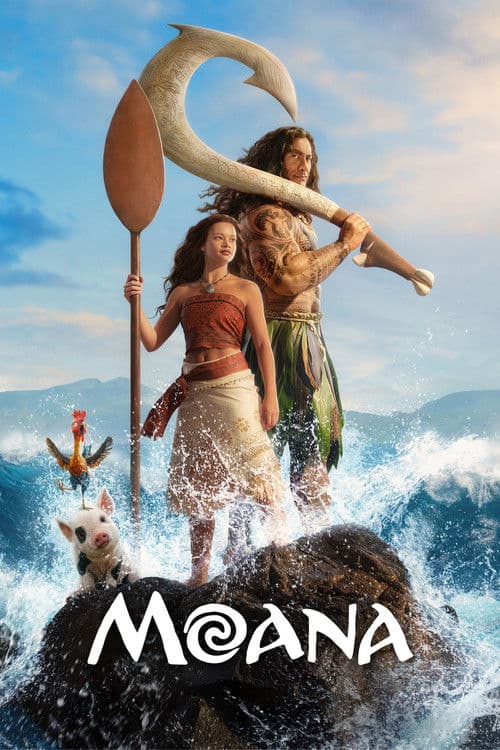
Teenage Moana answers the Ocean's call and, for the first time, voyages beyond the reef of her island of Motunui with infamous demigod Maui on an unforgettable journey to restore prosperity to her people.
Avis de la communauté (12)
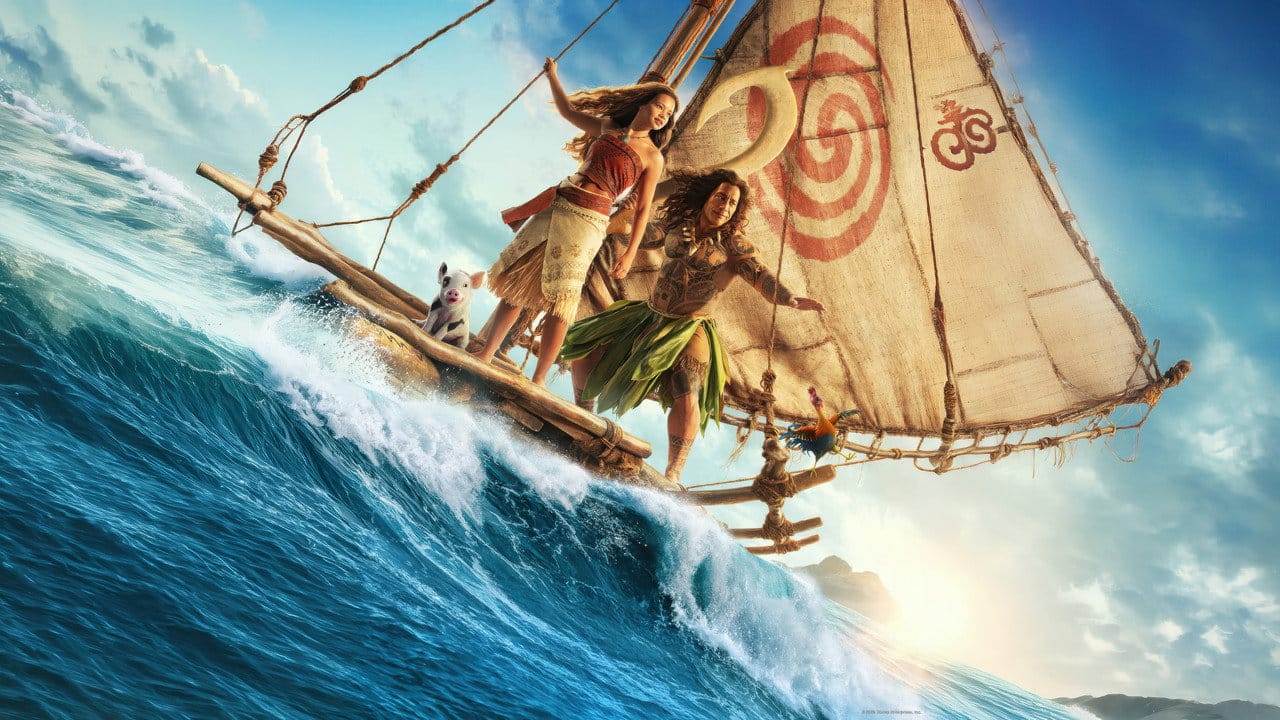
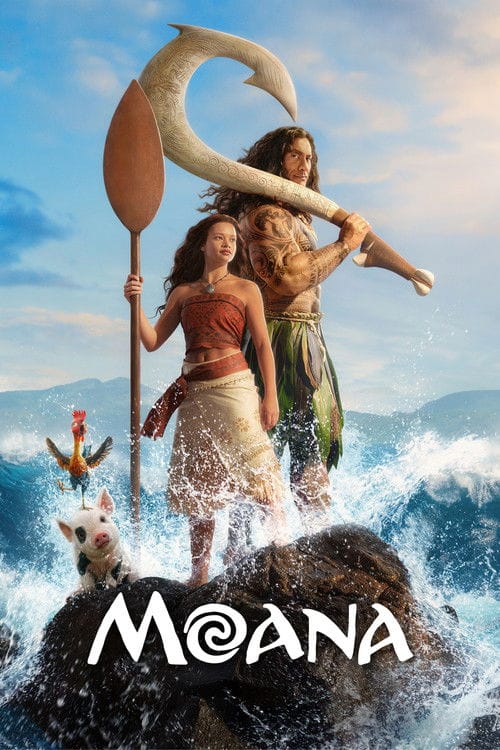
“A story can be retold with real water and real faces, but realism means nothing when the magic feels less alive.” I honestly walked out of this feeling disappointed more than anything. This isn’t one of the absolute worst Disney remakes I’ve seen, and there are performances, visuals, and cultural details that I appreciated. But it might be one of the most unnecessary. The original animated movie is only ten years old, still looks beautiful, still sounds great, and has not aged enough to need another version of the same story. That’s the biggest problem: this movie never gives me a convincing reason for why it exists. It follows the original so closely that I spent most of the movie thinking about how every scene, song, joke, and emotional moment was already done better in animation. Instead of revealing a new side of Moana’s journey, it often feels like Disney rebuilt the same movie using actors, elaborate costumes, locations, and an enormous amount of CGI. The original film had so much life and personality. The colors were brighter, the character animation was expressive, the Ocean felt playful, Maui’s tattoos had personality, and even the smallest reactions told us something about the characters. This remake may technically appear more realistic, but it often feels less alive. That’s the strange thing about calling it “live action.” So much of the movie the Ocean, Maui’s transformations, Te Kā, Te Fiti, Tamatoa, the Kakamora, Hei Hei, the environments, and the action—still relies heavily on visual effects. It sometimes feels less like a true live-action reinvention and more like a photorealistic animated movie attempting to imitate a much more expressive animated movie. Catherine Lagaʻaia is easily one of the strongest parts. She brings warmth, sincerity, and a natural confidence to Moana. She doesn’t simply imitate Auliʻi Cravalho’s performance, and I respect that. You can feel her determination, love for her people, and desire to understand why the Ocean keeps calling her. She has a difficult job because she is stepping into a role already defined by an iconic vocal performance. Auliʻi gave the animated Moana so much energy, humor, uncertainty, and emotional power. Catherine does well, but the movie surrounding her rarely gives her enough freedom to make this Moana feel completely separate. The story still works because Moana herself is such a strong character. She isn’t motivated by romance or by wanting to prove she is better than everyone. She leaves her island because her people are in danger, but her journey also becomes about understanding herself and reconnecting with the history her community was forced to forget. She begins trapped between responsibility and curiosity. Her father wants her to remain on Motunui and prepare to lead safely from the island, while the Ocean and Gramma Tala encourage her to recognize that leadership may require going beyond the boundaries everyone else accepts. Those ideas remain powerful. Moana’s journey is about identity, ancestry, courage, environmental restoration, and discovering that respecting tradition doesn’t always mean refusing change. Sometimes honoring your ancestors means recovering the parts of your culture that fear caused people to bury. But these themes were already communicated beautifully in the original. This remake doesn’t deepen them enough. It mostly repeats them with longer scenes and more realistic environments. Dwayne Johnson returning as Maui makes sense because his voice and personality are so closely connected to the character. He clearly cares about Maui and Polynesian representation, and physically seeing him take on the role is interesting. But his performance also felt strangely restricted to me. Animated Maui could stretch, transform, move, pose, and react in exaggerated ways. His confidence filled every scene because animation allowed him to feel larger than life. The live-action version tries to reproduce that energy through prosthetics, visual effects, and Johnson’s natural charisma, but it sometimes feels like he is recreating his original performance instead of discovering something new. “You’re Welcome” is still a catchy song, but the animated sequence had more visual imagination. Maui could transform into animals, manipulate the environment, and move with impossible cartoon confidence. The remake can reproduce the basic actions, but it can’t recreate the freedom of that animation without becoming another CGI sequence. That applies to a lot of the music. The songs are still strong because the original soundtrack was strong. “How Far I’ll Go,” “Where You Are,” “We Know the Way,” “You’re Welcome,” “Shiny,” and “I Am Moana” already have emotional and musical foundations that are difficult to ruin. But hearing familiar songs performed again isn’t automatically enough to justify an entire remake. Too often I felt like I was watching expensive reenactments of musical sequences I could already experience in a more imaginative form. The newer material is appreciated because it at least tries to give this version something of its own, but it isn’t enough to completely separate the remake from the animated film. The movie needed more than an additional song or a few expanded family moments. It needed a genuinely different perspective. Rena Owen was good as Gramma Tala. Tala is the emotional heart of the story because she is the person who understands Moana before Moana fully understands herself. She preserves the history of the wayfinders and gives Moana permission to follow the part of herself everyone else treats as dangerous. The material involving Tala still got to me because the character and what she represents are powerful. She represents ancestors remaining present through memory, culture, love, and the lessons they leave behind. Moana doesn’t stop carrying Tala simply because Tala is no longer physically beside her. But again, I kept comparing those scenes to the animated version. The original’s simplicity made Tala’s death and spiritual return hit harder. The animation, music, and image of the manta ray created something almost dreamlike. The remake is trying so hard to make everything physically believable that some of the spiritual magic becomes strangely less affecting. I also liked seeing more attention given to Moana’s parents and community. The remake has an opportunity to make Motunui feel like a real place filled with people whose lives depend on Moana succeeding. That makes her responsibility feel larger than one family. John Tui and Frankie Adams bring warmth to Chief Tui and Sina. Tui’s fear of the Ocean is understandable because it comes from trauma, not because he simply wants to control his daughter. He believes he is protecting Moana from repeating the loss that shaped him. That father-daughter conflict is one of the more interesting parts of the story. Tui sees leadership as protecting what already exists. Moana eventually understands that true leadership can also require taking a risk so the community has a future. The remake occasionally adds more space for that family dynamic, but I still don’t think it goes far enough. This was one area where the live-action format could have meaningfully expanded the original rather than simply reproducing it. Jemaine Clement returning as Tamatoa was fun, and “Shiny” remains one of the strangest and most entertaining Disney villain songs. But photorealism works against Tamatoa too. The animated version is colorful, theatrical, vain, and ridiculous. His entire world feels like a neon musical performance. The new version can be visually impressive, but “realistic giant crab” is naturally less expressive than the glowing cartoon diva from the original. The remake keeps discovering that translating something literally is not the same as improving it. The Kakamora sequence has some entertaining action, and Hei Hei still manages to be funny because his entire character is built around surviving situations he barely understands. But even those parts feel familiar rather than exciting because the movie follows such a recognizable path. Pua barely being used was also disappointing. He is such a lovable part of Moana’s home life, and the remake had the chance to give him more presence or allow him to accompany her. Instead, he once again feels underused and arguably even more pushed aside. The Te Kā and Te Fiti reveal is still the most meaningful part of the story. Moana wins not by overpowering the enemy, but by recognizing the pain underneath the anger. She understands that Te Kā is not simply a monster to destroy. She is Te Fiti after something essential was violently taken from her. That idea is beautiful because it reframes the entire conflict. The apparent villain is really a wounded being defending the emptiness left by theft. Moana restores balance through empathy rather than domination. That is what separates her from Maui. Maui’s original decision to steal the heart came from wanting humanity’s love and approval. He convinced himself that giving people a gift justified taking something that did not belong to him. Moana repairs the damage by returning what was stolen. That remains a powerful message about environmental exploitation, colonial taking, emotional wounds, and the difference between defeating someone and truly seeing them. But the live-action finale didn’t hit me with the same emotional force. I knew every beat, every visual, and exactly what the music was building toward. The remake reproduces the moment, but it can’t reproduce the feeling of discovering it for the first time. That is the problem with almost the entire movie. It is not completely incompetent. The cast is committed, the cultural representation matters, the music is familiar and enjoyable, and there are beautiful images. Seeing a major Disney production built around Pacific Island performers and culture is genuinely valuable. But strong representation deserved a bolder movie. Instead of using that cast and cultural foundation to tell a fresh story, Disney places them inside an extremely familiar structure that often feels designed to reproduce the success of an animated film that people are still actively watching. I would have rather seen these resources used on a new Pacific Island fantasy, a different legend, a story about another generation of wayfinders, or even a live-action continuation that gave Moana a new journey. Why remake a movie that still feels modern? The animated film was released in 2016. It isn’t some forgotten story that needs to be rediscovered. Moana is still one of Disney’s most popular modern characters, and she already received an animated sequel. Recreating the first movie this soon makes the project feel less like artistic reinterpretation and more like Disney turning an existing success into another product. That’s what frustrated me most. A remake should give us something the original couldn’t. It should deepen the characters, rethink the story, change the perspective, or use the new medium in a meaningful way. This version mostly proves that the original worked and then reminds me I would rather be watching it. My issue isn’t that it changes too much. It’s that it changes almost nothing that matters. It makes some sequences longer, adds a little more family material, includes new musical touches, and places real actors inside the world. But the emotional structure, jokes, conflicts, songs, and major revelations are so familiar that the movie constantly feels trapped in the animated film’s shadow. This is the same issue I have with many Disney remakes. Animation is treated like an early draft that becomes more legitimate when converted into live action. But animation is not a lesser form. The original Moana was specifically designed around what animation could do. Replacing expressive drawings and stylized movement with realistic textures doesn’t automatically make the story more mature, powerful, or meaningful. Sometimes it just makes everything heavier and less magical. The remake is also longer and feels slower, especially during the opening stretch. Expanding a movie isn’t helpful when the additional time doesn’t reveal much we didn’t already know. The original moved with purpose. This version often pauses to admire its production design or stretch familiar interactions. I could see children or viewers unfamiliar with the original enjoying this. The story is still good. Moana is still inspiring. The music is still catchy. The central message still works. But when a remake is this close to its source, comparison becomes unavoidable. Catherine Lagaʻaia gives the movie a heart, and I’d like to see her continue as Moana in something that actually allows her to make the role her own. The supporting cast brings authenticity and warmth. There are moments when the scenery, music, and performances come together. But those moments belong to a movie that feels like it was made because Disney knew people already loved the title, not because anyone discovered a necessary new way to tell the story. Overall, the live-action Moana is watchable, visually polished, and respectfully performed but creatively empty. It recreates a great movie without becoming a great movie itself. The original made me feel like the Ocean was calling Moana toward something unknown. This remake made me feel like Disney was guiding us toward a destination we had already visited.
The remake was done so beautifully. Excellent job.
They did a fantastic job with this remake! The new song in the credits was really good too. Everything important about the original is there, all the heart and depth, all the fun, all the great music. This is a very good translation of the original to this format. I'll definitely be buying this one on blu-ray.
The live-action version of Moana (2026) works as an excellent and entertaining gateway for younger children or viewers who have never watched the original feature film. However, for longtime fans, it feels like watching a technically flawless 'cover band,' but without the visceral magic of the original material.