Laden...
7.0·1991·113 min·English·Regie Nicholas Meyer
Der Kampf um den Frieden hat begonnen.
Science FictionActionAbenteuerThriller
Handlung
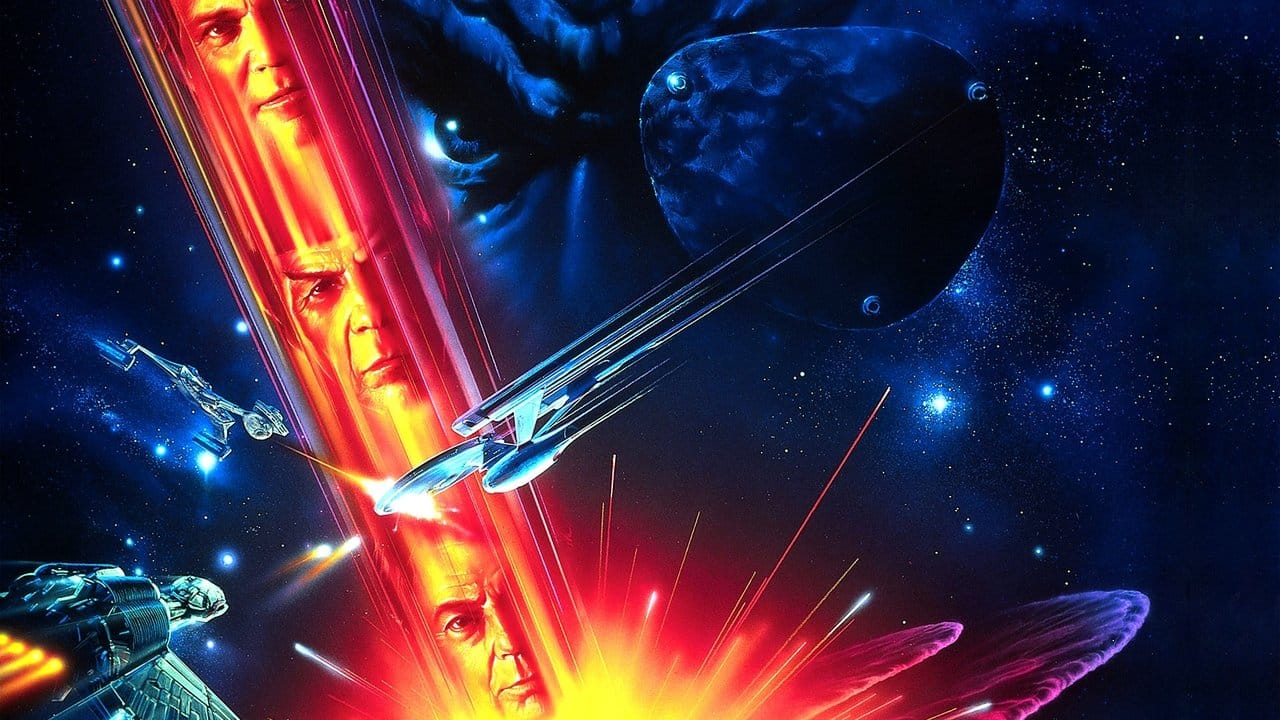
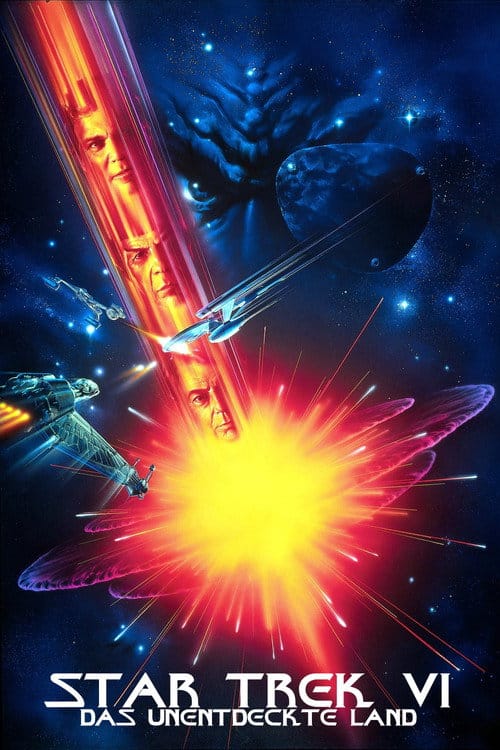
Nachdem die Explosion eines klingonischen Mondes das Imperium in die Knie zwingt, liegt das fremdartige Konzept eines Friedens mit der Föderation in greifbarer Nähe. Ironischerweise soll gerade Captain James T. Kirk als Botschafter den Frieden aushandeln. Alle Hoffnungen werden jedoch zunichte gemacht, als die Crew der U.S.S. Enterprise beschuldigt wird, einen klingonischen Diplomaten ermordet zu haben. Stattdessen stehen beide Seiten vor einem alles vernichtenden Krieg...
Hauptdarsteller

William Shatner
Captain James T. Kirk
Leonard Nimoy
Captain Spock

DeForest Kelley
Dr. Leonard 'Bones' McCoy
James Doohan
Captain Montgomery 'Scotty' Scott

Walter Koenig
Cmdr. Pavel Chekov

Nichelle Nichols
Cmdr. Uhuru

George Takei
Captain Hikaru Sulu
Mark Lenard
Sarek

David Warner
Chancellor Gorkon

Kim Cattrall
Lt. Valeris
Star Trek-Filmreihe: Raumschiff Enterprise
Mehr wie das
Star Trek: Nemesis
2002·6.3
Star Trek - Der Aufstand
1998·6.4
Star Trek Beyond
2016·6.8
Star Trek Into Darkness
2013·7.3
Star Trek III - Auf der Suche nach Mr. Spock
1984·6.6
Solo: A Star Wars Story
2018·6.6
Star Trek - Treffen der Generationen
1994·6.5
Star Trek - Der erste Kontakt
1996·7.3
Star Trek - Der Film
1979·6.5
Star Wars: Der Aufstieg Skywalkers
2019·6.3
Stowaway
2021·6.0
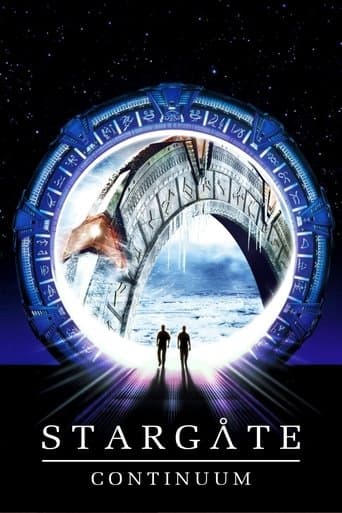
Stargate: Continuum
2008·7.1
Communauté
7.5
Note Trakt
3.7K votes
10
555
9
281
8
987
7
1.1K
6
566
5
112
4
54
3
15
2
19
1
56
17.2KSpectateurs
184.6KCollectés
8.4KListes
Avis de la communauté (12)
D
DRNKMNKY★7/10Jul 17, 2015
After the very disappoint "The Final Frontier", this flick is on par with the "The Voyage Home". Only during the middle part it gets a little boring. But otherwise I can recommend this film wholeheartedly to every SciFi fan.
♥5
A
AndrewBloomVIPCritique★6/10Nov 17, 2017
[5.6/10] *Star Trek* is probably the wrong place to go for subtlety. The television show that spawned this six film series ended more than a few episodes with Captain Kirk waxing philosophical about what the lesson or message of that week’s installment was. It was full of garish colors, larger than life figures, and fantastical locales. So expecting the franchise to use a light touch when it comes to what it’s trying to say is probably a fool’s hope. But maybe I just expected something different in 1991. It’s odd for me to think of the adventures of *The Original Series* cast coexisting in real time with those of *The Next Generation*. The latter show was what I grew up, and had hit its stride by the time *The Undiscovered Country* debuted. In that successor series, Michael Piller and his collaborators had evolved Star Trek, making it still bombastic at times, but also, oddly enough a little more down to Earth. Which is why *Star Trek VI* feels like such an odd duck. It was released nearly a quarter century years after the original show made its debut, and it’s not quite the four-color adventures of the weekly series; it’s not quite the political and character drama of *The Next Generation*; and it’s not quite the blockbuster big screen dramas we’d seen from Star Trek on the silver screen previously. It’s a strange amalgamation of all three of these things, and it never fully works. It might work better if *Star Trek VI* weren’t so heavy-handed about its themes. The film series had been contemplating the aging and impending mothballing of its cast since at least *The Wrath of Khan*, but whether it was the success of *TNG* leading to that show taking the Star Trek mantle, or the inevitable running out of gas that comes when you’ve made six movies in twelve years, *The Undiscovered Country* is very self-consciously about the end of the adventures of Kirk, Spock, Bones, and the rest of the original Enterprise crew. That’s a fact that the film is not at all shy about reminding you. There are repeated mentions of our heroes being “three months from retirement,” a pronouncement that can only elicit snickers from *Simpsons* fans attuned to the cliché of “retirony.” There are endless, hokey discussions about what the future holds, what “tomorrow” will bring, nominally talking about the future of the Federation (and seemingly hinting toward the *TNG* era), but also talking about the end of this generation of the Enterprise crew. And if that weren’t enough, the final sequence of the film has on-the-nose dialogue like “I guess this is goodbye” and benedictions for whatever’s to come that feel a little too unnatural. That lack of subtlety is shared by the film’s heavily-signposted Cold War allegories. You don’t need to hear Kirk wax rhapsodic about declarations of “the end of history” to understand what *Star Trek VI* is getting at with its various ruminations on the difficulties inherent in an end to hostilities between the Federation and the Klingon Empire after the latter is on the verge of collapse. There’s nothing wrong with being topical. *The Original Series* made its bones (no pun intended) reflecting on Cold War metaphors and nuclear anxieties. But *The Undiscovered Country* spends so much time nudging the audience in the ribs and going “Do you get it?” that it grows tiresome. Rather than baking those themes into the picture, the film is constantly reminding you, in its dialogue and story beats and clumsily written dinner table scenes, what it’s trying to say. Part of that comes from the way that *Star Trek VI* is both trying to Say Something™ and be a theme park ride. The premise of the film is that the Klingons are in dire straits and potentially making peace with The Federation, to the shock of both parties. After an awkward diplomatic meeting between the officers of the Enterprise and the Klingon Chancellor’s entourage, something goes terribly wrong. In the aftermath, Kirk and Bones are trapped in Klingon territory, Spock and the rest of the crew have to try to solve the mystery of what exactly happened, and eventually, the whole kit and kaboodle has to stop a plot to prevent that sort of peace from ever happening. But along the way, things turn much more *Star Wars* than *Star Trek*. Kirk is basically banished to the ice planet Hoth, where he meets a motley collection of aliens fit for the Mos Eisley Cantina. Spock uses his mind-melding abilities like they’re part of some Jedi mind trick. And overall, the film leans much more into its weightless adventuring side than its contemplative sci-fi side. Still, it tries. It’s interesting watching this film in the middle of *Star Trek Discovery*’s first season, where the latest Star Trek series is very much concerned with the same issues in the same terms as *The Undiscovered Country* is. There’s the same concern about mutual distrust and what amounts to racism between humans and Klingons. There’s the same questions about whether the two cultures could ever find common ground and coexist. And there’s the same worries about the Federation transitioning from what it used to be into something new as what patrolling the frontier means begins to change. That change gets consumed in the film’s slow start, the empty calories of its rock ‘em sock’em middle, and the tepidly-built tension of its grand finale and final bow. There’s bouts of questionable 90s CGI, a murder mystery that loses its luster when you can play Roger Ebert’s good old “who’s the most famous guest actor” game, and lord knows we can’t leave *The Original Series* orbit for good without William Shatner fighting himself on screen again. Sure, there’s some cool production and design and minor thrills in seeing Worf’s Grandfather go full-on John Adams during Kirk and Bones’s trial. But the plot of the episode just isn’t compelling enough on either the “Kirk escapes the Klingons” front or the “Spock uncovers the saboteur” front to make it work. Part of that comes from the performances. Maybe it’s just the film’s sense that our heroes are aging getting to me, but it felt like most of the regular Enterprise cast were sleepwalking through their parts here. Spock felt out of character and downright emotional at times. Shatner looks tired. And the rest of the cast vacillates between “okay” to “unremarkable.” The lack of subtlety makes its way to the guest performers as well. Kim Catrall lacks any and all of the reserve or dignity that Nimoy brought to the table as she plays his Vulcan protege, Lt. Volaris. There’s an untenable amount of overacting for a Vulcan and it serves the character poorly. Christopher Plummer fares a bit better as the Klingon General Chang, managing to bring with him a Patrick Stewart-like ability to make hokey dialogue sound convincing. But even he is reduced to just spitting out an endless stream of out-of-context Shakespeare quotes by the end of the film. (“See! We’re cultured and profound!”) And yet there’s something to the ideas of the film that grabs you, even if the execution leaves plenty to be desired. The notion that Captain Kirk and General Chang are warriors of a different time, each wary about letting the old ways go and trusting the new age, while their more stoic counterparts, Spock and the Klingon Chancellor, take chances for peace, creates an interesting dynamic. The film undercooks it, but there’s a solid arc for Kirk, and to a lesser extent, the whole cast here, in learning when times have changed and you need to change with them or step aside, no matter what your reservations are. But Star Trek had changed too by 1991, and even compared to a little less than a decade earlier, when *Star Trek VI* director Nicholas Meyer first joined the final frontier with *The Wrath of Khan*, the franchise had moved toward a bit more realism, a bit more nuance, a bit more of hinting at what you meant to say instead of beating the audience over the head with it. It’s nice that *The Original Series* cast gets a proper send-off. It’s nice that the show grapples with the end of an era of Star Trek and couples it with the end of an era in history that often informed the franchise. And it’s nice to see the heroes who burst onto the scene in 1967 get one last standing ovation. But that goodwill comes from the years of seeing other adventures, not something earned by this last outing, which goes for bombast, profundity, and a throwback vibe, while never being able to synthesize it all into something that works.
♥4
W
Whitsbrain★6/10Jan 15, 2022
After the nearly horrid "Star Trek V: The Final Frontier" I found "Star Trek VI: The Undiscovered Country" to be a difficult movie to take seriously. The movie was enjoyable as it explored themes like racism and served as an analogy for the strained relationship between the U.S. and Soviet Union. The thing that keeps this movie down is how familiar we have become with the crew of the Enterprise. After the corny but good "Star Trek IV: The Voyage Home" and the aforementioned disaster that was "Star Trek V" everything that these characters do seems like a cartoon. When they have to get serious and they do get very serious in "The Undiscovered Country" I can't actually take them seriously. The balance of comedy and drama that make up the Star Trek movies and television shows sways too far to the silly side of the equation so when the crew of the Enterprise furrows their brow I just end up chuckling. That's not to say that this movie isn't good it just lacks the impact of the statement it is trying to make.
♥3
F
FinFan★8/10Nov 17, 2015
The swan song of the Classic Star Trek crew. Well, as a group that is. And it was a worthy one. A really good story inspired by the end of the Cold War era. Co written and directed by Meyer you instantly recognize the step up in quality. No stupid dialogue, no more supposedly funny scenes and finally some Klingon characters with depth. I would put this one on the same level as the second part.
♥1
M
madhackrviperVIPCritique★8/10Feb 19, 2026
Its very good and the core themes are interesting to see play out in a Trek way. And the conspiracy plot is fun to see play out. I do have some complaints that bring it down for me though. - Middle stretch drags, the whole prison planet storyline could have used a serious runtime shaving. The investigation on the Enterprise stuff was good, but the Rura Penthe stuff really dragged - I dont think its a nitpick to say that Uhura not knowing Klingon and needing a dictionary is a huge undercut of her credibility. Playing that for a joke instead really rubbed me the wrong way. - Chang doesnt click for me like he does for a lot of people. Plummer did a good job, but the Shakespere quoting was a bit much at times. I like the idea of him, the warrior that doesnt want war to end stuff is always a fun theme. - [spoiler]Im among those who think that they should have gone with the plan to bring back Saavik to play Valeris's role, it would have been a much more emotional punch to have her be the one, rather than a character thats new to us.I get that those against it didnt want to ruin a beloved character, but I think it would have been more bold.[/spoiler]
reviews