Cargando...
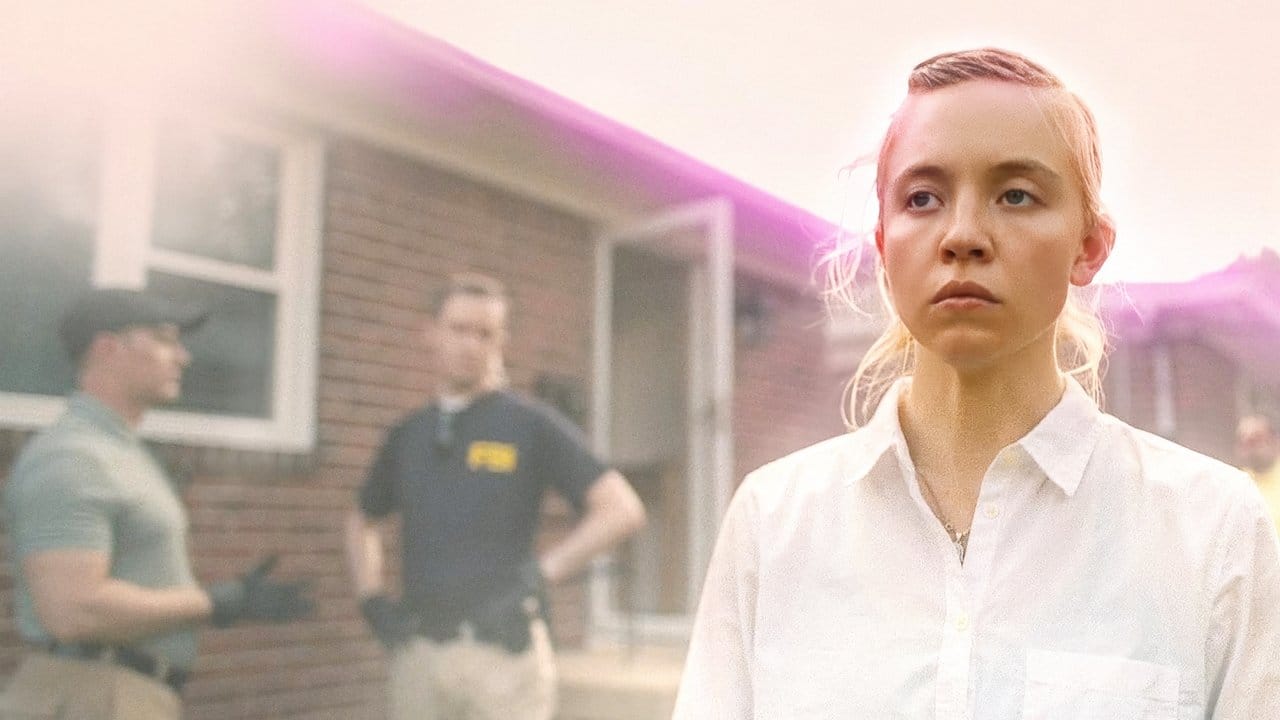
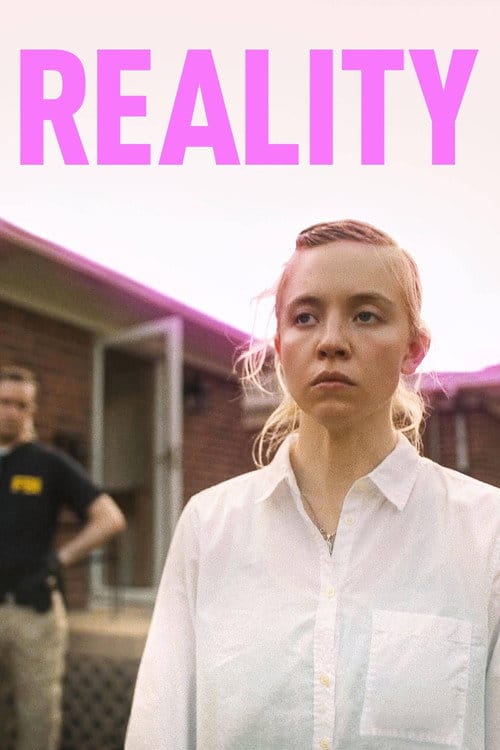
6.4·2023·83 min·English·Dirigida por Tina Satter
DramaSuspense
Sinopsis
Augusta, Georgia, Estados Unidos, 3 de junio de 2017. Tras hacer unos recados, Reality Winner regresa a su casa, donde es abordada por dos hombres.
Reparto principal

Sydney Sweeney
Reality Winner

Josh Hamilton
Agent Garrick

Marchánt Davis
Agent Taylor

Benny Elledge
Joe (Unknown Male)

John Way
FBI Agent

Reality Winner
Self (archive footage)

Tucker Carlson
Self (archive footage)

Bill Maher
Self (archive footage)

Krystal Ball
Self (archive footage)
Juan Williams
Self (archive footage)
Más como esto








Communauté
6.7
Note Trakt
2.7K votes
10
138
9
125
8
540
7
664
6
868
5
177
4
128
3
29
2
39
1
24
6.3KSpectateurs
29.8KCollectés
4.3KListes
Avis de la communauté (12)
Y
yurimenezes★7/10Mar 11, 2024
Reality takes you inside the true story of Reality Winner, a young woman who leaked classified information from the NSA, the US government's National Security Agency, the same place where Edward Snowden worked. :flag_us: I really liked the mix of documentary drama, it gave the film a really good taste, especially when images and speeches from the real testimony are inserted. I love movies based on facts. They touch me much more. The film is slow and full of dialogues that make you think about what happened there. So, if this is not your style of film, better skip it. But Sydney Sweeney's performance will make you want to watch, she is impeccable in the lead role, capturing the strength and fragility of Reality, a woman who fought for the truth, even if it meant sacrificing her freedom. P.S.: I don't have a background in cinema, my opinion is moved by affection 😉
♥4
D
dtsouza★7/10Jul 16, 2024
It's really great when a story stands on its own without relying on crutches to make it flashy. The movie is carried by Sydney, no doubt, but props for the agents as well for threading the line trying to be friendly while expertly trying to pry information in a tone that swings between comical and terrifying.
♥2
_
_kenpark★8/10Feb 3, 2024
Actually a very good acting. It is a nice story about a national security agency and a leaked document. Worth watching.
♥2
D
decatur555VIPCritique★8/10Mar 3, 2026
There are films that don’t need movement to unsettle, and Reality is a very clear example. It’s staged almost like a play, confined to a minimal space, sustained by words, silences and glances. And it works. It works because it’s harsh, because it’s uncomfortable, and because it doesn’t try to soften anything. The decision to base the script on real FBI transcripts gives the film a particular weight. Everything sounds dry, bureaucratic, almost banal… and that is precisely where the horror lies. There’s no music underlining emotions, no twists designed to hook the audience. The tension grows out of the everyday, the seemingly trivial, what is said and, above all, what is left unsaid. Sydney Sweeney is outstanding. It’s a restrained performance, fragile and resilient at the same time, where every gesture matters. There are no excesses, no major emotional explosions, yet there is a constant sense of pressure, of being trapped in a situation that slowly closes in. It is probably one of her most solid and daring performances so far. The staging is minimal, almost clinical, and that may work against it for viewers expecting something more conventional. This is not an easy or comfortable film. It demands attention, patience and a willingness to feel unsettled. But that is exactly where its strength lies. It doesn’t aim to please — it aims to provoke thought. Reality is an exercise in pure tension, a small film in form but immense in what it suggests. It won’t be for everyone, but for those who enter its rhythm, it is absorbing, harsh and very hard to forget.
♥1
H
heyflpCritique★8/10Feb 14, 2025
If there’s one thing “Reality” does masterfully, it’s turning an episode that seems utterly mundane—a casual conversation between FBI agents and a woman on her doorstep—into a suffocating thriller, the kind that grips you without relying on cheap tricks or over-the-top drama. Directed by Tina Satter in her feature debut, the film adapts her own play, “Is This a Room?”, with surgical precision. The script doesn’t invent dialogue, doesn’t fill in gaps with speculation or interpretation. Every single word comes straight from the real-life transcript of Reality Winner’s FBI interrogation—the former NSA employee who leaked a classified document about Russian interference in the 2016 election. This radical commitment to authenticity doesn’t just heighten the tension—it pulls the audience into the scene, making us feel like we’re being interrogated right along with her. Choosing not to “open up” the story, keeping it confined to a single space and unfolding in near real-time, could have easily made the film feel claustrophobic or monotonous. But Satter controls the pacing with precision, using every silence, every pause, and every glance to build an overwhelming sense of unease. At first, the FBI agents—played by Josh Hamilton and Marchánt Davis—come across as casual. The conversation is friendly, full of small talk about the weather, Reality’s grocery shopping, her pets. But as it progresses, subtle shifts in tone and body language reveal what’s really happening: this isn’t just a conversation, it’s a trap. Reality senses it but doesn’t resist. She doesn’t scream, doesn’t demand a lawyer. Her only concern is making sure her pets are okay. Sydney Sweeney delivers a surprisingly restrained performance. Her Reality doesn’t panic, doesn’t make big speeches, doesn’t try to dramatize her situation. What makes her so compelling is precisely that calculated passivity, that almost automatic acceptance that she’s been caught and there’s nothing she can do about it. Sweeney conveys everything through the smallest details: a slight hitch in her breath, the way she avoids eye contact, the brief hesitation before answering a question. And what’s most impressive is that, even though we already know she leaked the document, the film still manages to create genuine suspense—not about what happened, but about the exact moment when the illusion of casualness will shatter. The minimalist aesthetic of “Reality” reinforces that oppressive atmosphere. The setting is simple and anonymous: an empty room, plain white walls, harsh fluorescent lighting. There’s no manipulative score, no explanatory flashbacks, no external scenes to “break up” the narrative. When Satter does allow brief glimpses of Reality’s work life, they’re quick and clinical, just fragments of an ordinary routine that ultimately led her to this inevitable moment. The editing is subtle but effective—at certain points, the screen goes blank, as if the film itself is being censored, a visual representation of the redacted portions of the government transcript. These small choices add significant layers to the experience. If “Reality” makes one thing brutally clear, it’s the banality of an oppressive system. There are no cartoonish villains, no sadistic interrogators here. The FBI agents are polite, patient, even courteous. And that’s exactly what makes it so terrifying. They don’t need to yell or threaten. They already know they’ve won. Reality has no way out, and the way the film makes us feel that inevitability—without exaggeration or emotional manipulation—is one of its greatest achievements. At the end of the day, “Reality” doesn’t need twists to be devastating. Its power lies in its simplicity, in the precision of every scene, in the cold, calculated way it portrays an unstoppable system at work. It’s short, direct, brutal—and maybe that’s exactly why it’s so hard to forget.
♥1
Reseñas