Cargando...
5.6·2006·121 min·English·Dirigida por Brian De Palma
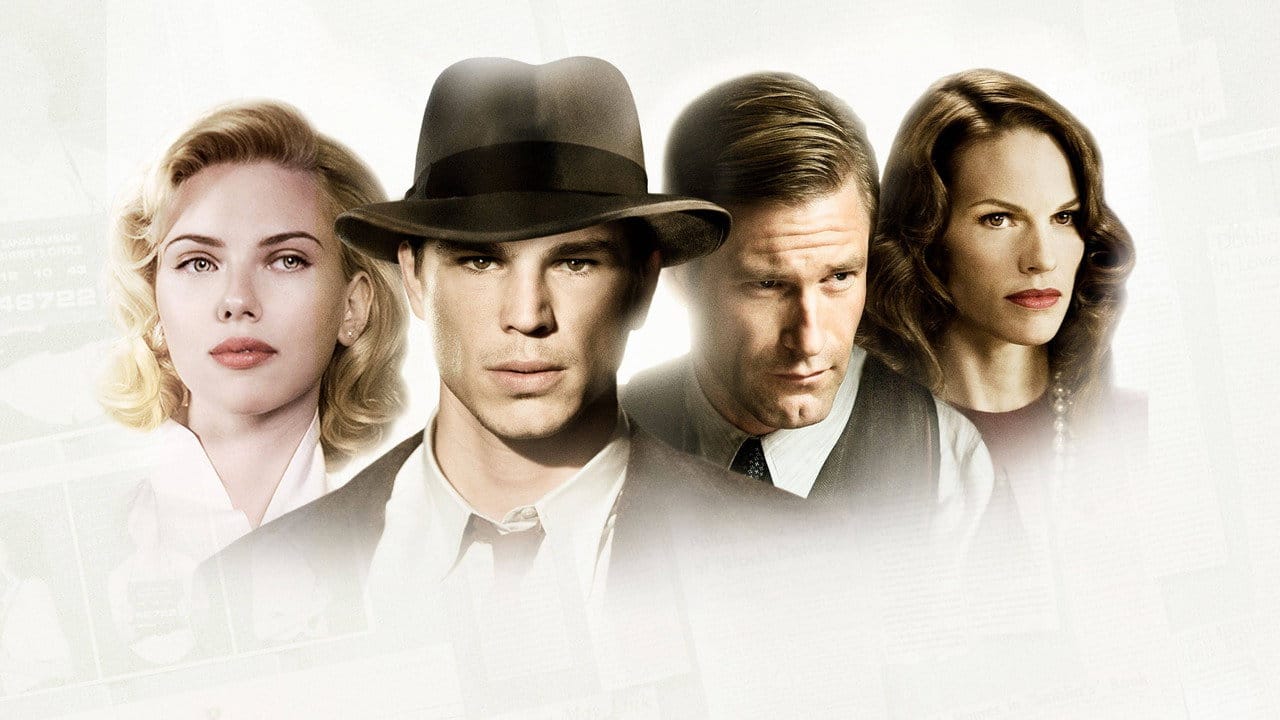
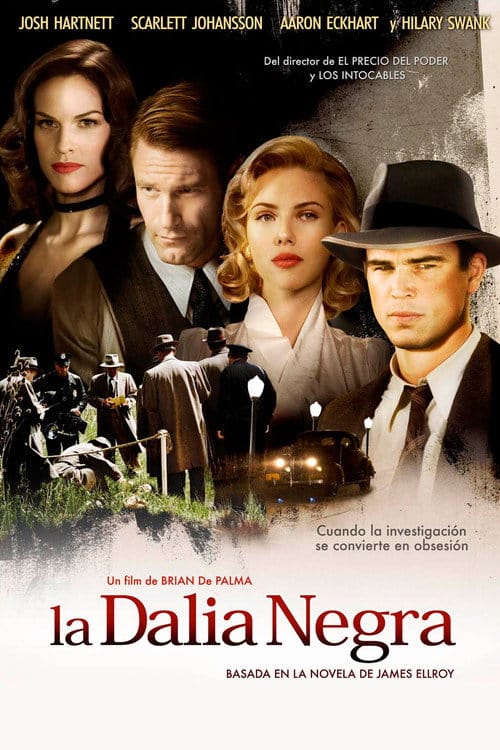
Inspirado en el asesinato sin resolver más notorio en la historia de California.
CrimenSuspenseDrama
Sinopsis
Una joven es encontrada brutalmente torturada y asesinada. Se abrirá una tortuosa investigación para dirimir la responsabilidad de tan horrible crímen.
Reparto principal




Más como esto
Communauté
5.8
Note Trakt
1.5K votes
10
69
9
18
8
149
7
242
6
456
5
266
4
178
3
81
2
49
1
29
4.3KSpectateurs
40.7KCollectés
3.1KListes
Avis de la communauté (6)
J
jarvis-8243417★4/10Nov 4, 2019
From director Brian De Palma comes the noir thriller The Black Dahlia. Based on a novel, the story follows a pair of police detectives that are assigned to one of the notorious Black Dahlia murders of the 1940s, but the investigation uncovers their own dark secrets and starts to tear them apart. The cast is quite impressive, and includes Josh Hartnett, Aaron Eckhart, Scarlett Johansson, and Mia Kirshner. But the story is convoluted and overly complicated, full of needless twists and reveals. Additionally, the noir tone doesn’t really work, as De Palma puts style before substance. The Black Dahlia is an overly stylized and disjointed film that lacks focus.
♥3
K
KurtMoneyVIP★9/10Aug 14, 2016
Rewatched this to see if it really was good. I saw it when it came out, liked it, and have been defending it ever since but for the last few years haven't remembered a thing about it other than a shot of ScarJo on the steps. Super babe. Happy to report that it IS great. I'm also happy to watch it after burning through a few of De Palma's best over the past few weeks. This definitely has the classic De Palma style that went way over my head back in the day. I also know now that the off screen director's voice in the movie is De Palma because I recognize him from the bonus features on the Blow Out bonus features. Now I'm going to watch Hollywoodland, another film from the same era (film setting and release date...ish). Both are on HBOGO if anyone is interested. Hey, Ben Affleck as Superman! Hahah that's going to be fun.
♥2
S
senbaldorVIPCritique★6/10Jun 7, 2026
# Historical and Contextual - Background - Based on James Ellroy's novel - The real-life 1947 unsolved murder of Elizabeth Short # Themes and Symbolism - Core Themes - The corrupting nature of obsession - The objectification of the female body - The facade of 1940s Hollywood - Symbolism - The Dahlia as a void for men's desires - The 'Blue Dahlia' film reference - Architecture and the physical structure of the city # Cinematography and Aesthetic - Visual Style - Vilmos Zsigmond's neo-noir lighting - High-contrast chiaroscuro - The saturated gold-and-black color palette # Narrative Structure - Plot Development - The 'Black Dahlia' murder case - The investigation of the Linscott family - Bucky's infiltration of the high-society ring - Narrative Style - Non-linear elements - Voiceover narration - Noir-driven procedural # Character Analysis - Key Figures - Dwight 'Bucky' Bleichert: The stoic, obsessive protagonist - Lee Blanchard: The partner unraveling under pressure - Kay Lake: The enigmatic femme fatale with a dark history - Madeleine Linscott: The predatory 'Dahlia' double - Character Arcs - The disintegration of the partnership - The projection of desires onto the murder victim # Summary Insights - The film functions as a meta-critique of the noir genre, where the detective is not just solving a crime but participating in the victim's exploitation. - De Palma uses the camera to emphasize the 'gaze'—characters are constantly watching or being watched, reflecting the voyeuristic nature of the industry and the case itself. - The relationship between Bucky and Lee acts as an anchor for the theme of moral decay, showing how obsession with a victim can dismantle justice. - Elizabeth Short is depicted less as a character and more as a 'hollow vessel'—a blank slate onto which the male characters project their personal demons and fantasies. - The film's complexity lies in its refusal to offer a 'clean' closure, mirroring the real-life frustration of the unsolved historical murder.
O
On Cinema At The Cinema★5/10Dec 28, 2025
It’s pretty meh. Not much to do with Dahlia. Influences, but didn’t feel like the focus.
S
Spiritualized Kaos★8/10Oct 22, 2025
Everyone is corrupt in this twisted story.
Reseñas