Cargando...
6.9·2024·109 min·English·Dirigida por Alex Garland
Todos los imperios caen
BélicaAcciónDrama
Sinopsis
En un futuro cercano, donde América está sumida en una cruenta guerra civil, un equipo de periodistas y fotógrafos de guerra emprenderá un viaje por carretera en dirección a Washington DC. Su misión: llegar antes de que las fuerzas rebeldes asalten la Casa Blanca y arrebaten el control al presidente de Estados Unidos.
Reparto principal
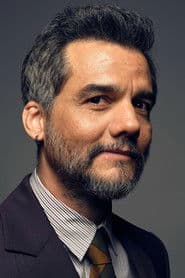

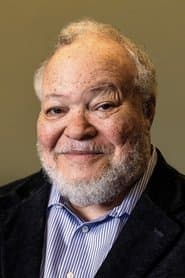

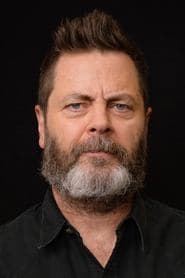
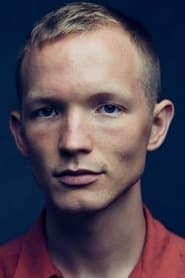

Más como esto
Communauté
7.0
Note Trakt
20.8K votes
10
2.1K
9
1.3K
8
5.2K
7
5.1K
6
3.9K
5
1.4K
4
905
3
300
2
290
1
231
101.3KSpectateurs
70.7KCollectés
24.8KListes
Avis de la communauté (12)
L
Lanny5000★4/10May 25, 2024
♥53
F
FallenArtemieCritique★8/10Apr 12, 2024
Hilariously, this is not a political film. Coming from a background in photography and art, I appreciated the cinematography a lot. It felt like they looked right at me and said these shots are for you. Additionally, I was proud of Jessie becoming a photojournalist as the film went on. She started as enthusiast but as the movie went on you could see her learning and becoming more hardened. I also appreciated that she was shooing on film. So many moments in the film I could feel myself seeing the "right shot" and while Jessie missed some of them, she also got them too, especially at the end where she becomes actualized. As someone with an education in psychology, I also really appreciated the film's portrayal of the artist. Both in Lee and Jessie. One dying as one, and the other becoming one. The changes in both of their mindsets and reactions to the events they encounter were interesting and I loved that there were small moments where the two of them got to reflect and contrast each other. As a fellow viewer, I don't think this isn't for the lighthearted. I watched this not knowing anything about the film and walked out really impressed but also knowing that many people were not going to like this movie. Most of my friends were less enthusiastic about the film. Unfortunately the film was marketed to be more political, violent, and action adventure-y. It's not. It's gory, dramatic, and introspective. I warn people that this film is about war journalism and being an artist. The people behind me may have appreciated a warning like that because they were mostly bored throughout the film and gave the movie a lower score than I - and I can't blame them. It was not an action movie. But for those who seek the stories of the human condition, this was a masterpiece.
♥50
S
SkinnyFilmBuffVIPCritique★8/10Apr 12, 2024
While exiting the theater, my brother commented that the trailers for this movie were misleading, as he thought it would explore more of the details, perhaps even the origin, of the titular civil war. Instead, the civil war is simply a back drop for a deep character study and a sequence of well acted and incredibly well shot vignettes that explore the small scale affects of the war while sweeping the practical details under the rug. Interestingly, it even feels like the underlying politics behind the division are kept intentionally out of focus. Luckily, I don't watch trailers, so I didn't experience this disconnect and could appreciate the movie for what it is - and what it is, is great. First, I want to call out the technical filmmaking. As I already mentioned, this movie is incredibly well shot, and though I didn't see it in IMAX, I can safely say that it is deserving of the format. Perhaps even more impressive though was the sound, as the action sequences were explosive, with every gun shot feeling far more powerful than I've come to expect out of recent films. Combine that with the chaotic mix of shouting soldiers, helicopters overhead, and cleverly leveraged silence, and you get an Oscar worthy sound design. This sound also heavily contributes to the film's successful use of tension, which was near constant throughout. When it comes to the writing, this movie is actually incredibly simple. In a lot of ways, it plays like a zombie road trip (which the director is no stranger to, having written 28 days/weeks later), except instead of zombies it's random militia encounters. But the key point is that each sequence is largely stand alone, with the throughline being only the characters. But because the characters are complex/compelling and each sequence offers some unique obstacle or idea, the vignette structure is a success despite lacking some narrative connective tissue. On top of that, the moment to moment dialogue is fantastic. I think it also helps that the film keeps its length reasonable, as this structure might have outstayed its welcome at 2+ hours. Finally, I've got to call out the performances, which are all fantastic. I'm sure Kirsten Dunst and Caille Spaeny will get plenty of deserved praise, but Wagner Moura's performance might have been my favorite. Jesse Plemons also deserves a shoutout for nailing his disturbing role.
♥33
J
JordyepVIPCritique★4/10Apr 12, 2024
I'm completely fine with not painting the broader context of the civil war in this film. If that doesn't interest Garland as a filmmaker, there's no need to. The notion of California and Texas teaming up negates any possibility of this being a direct metaphor almost by design. His interest here clearly lies in making a movie about journalism and neutrality as symbolized through the character played by Kirsten Dunst. Together with fellow photojournalists Joel, Jessie and Sammy we find ourselves on a road trip where our protagonists are trying to get to the white house and interview the president (Nick Offerman). Unfortunately, none of these characters are developed in an interesting way, so that makes the first half a bit of a slog. There's still interesting bits of tension, but some of the writing is surprisingly stupid coming from Alex Garland. Take the scene with Jesse Plemons, which is probably the best scene. The entire set-up to that scene introduces these two disposable new characters in a way that feels like it comes from a much dumber film, on top of that it makes the Plemons scene feel contrived and forced. That scene has some fantastic acting and tension, but it ultimately resolves in a way that's unintentionally funny by using a trope often found in action comedy films. I don't know if Garland's consciously watering it down to reach a broader audience, but he's certainly not at his sharpest here. You pretty much know from the beginning which characters are going to die, and they're usually killed once they expose themselves at their most human. Going back to how that comments on the theme of the film, I think that's an incredibly narrow minded, childish view of journalism. The film even indirectly acknowledges how taking pictures is a process of selection; there's bias involved there, it isn't neutral or simply something left for a reader to interpret. Combined with the general portrayal of the journalists as opportunistic assholes (look no further than the cheesy note this film ends on), this movie often fails to strike a chord that feels truthful. I could go into all the other small details that don't make a lot of sense (e.g. aren't there a ton of escape routes underneath the white house?), but instead I'll just leave it there. I enjoyed Dunst's and McKinley Henderson's performances (the other two aren't quite as strong) and the third act is an engaging set piece for as long as you don't put too much thought into it. Technically, it's fine. There's some beautiful visual moments but I wouldn't say it looks better than _Devs_ or _Annihilation_. Rob Hardy does some interesting things with objects coming in and out of focus to reflect the main characters, but in terms of colour and composition I expect a little better from him. The music choices didn't work at all for me, I found the juxtaposition way too jarring. There's this De La Soul needle drop when someone's being executed and I'm still baffled what that scene's trying to communicate tonally. Still, I enjoyed the sound design and strong use of silence, especially during the more intense scenes. Overall, if this is A24's interpretation of what a blockbuster should be going forward, they probably shouldn't bother. I'm astounded by how much of this doesn't work. It's simultaneously too watered down to work as art and not fun enough to work as entertainment. For something that's tainted to be the 'most controversial movie of the year', it's too forgettable to leave a real impression. 4/10
♥29
H
hgram★10/10Apr 16, 2024
>"No one's giving us orders, man. Someone's trying to kill us. We're trying to kill them." Quite literally the scariest movie I've ever seen. I feel like you can always recognize a writer-director. Alex Garland's vision is so confidently realized here. Masterfully constructed all around, from the cinematography to the sound design to the outstanding performances. I was struck by the way Garland advances his story and lends it weight using tiny, understated moments that hit me like a punch to the gut: - "300 Canadian." - "Florida. Central America." - The two star flag of the WF - Lee deleting the photo of Sammy I never call a movie important, but I think this one might be.
♥21
Reseñas