Cargando...

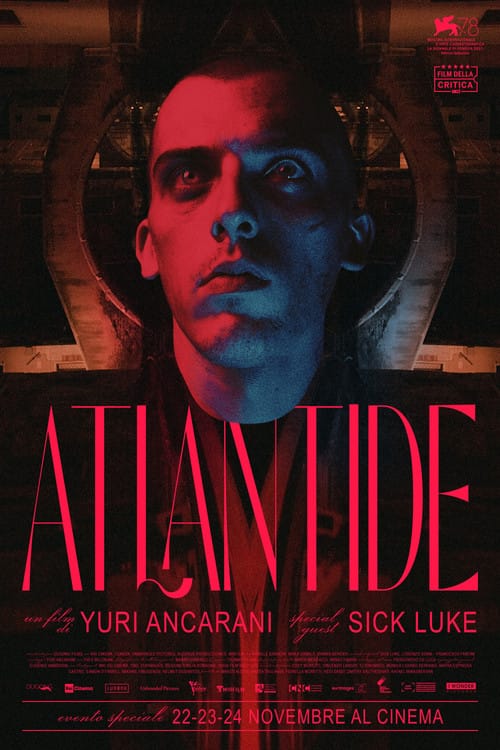
7.3·2022·104 min·Italiano·Dirigida por Yuri Ancarani
DramaDocumental
Sinopsis
Un joven de Sant'Erasmo, una isla en los bordes de la laguna de Venecia, vive de su ingenio y aislado incluso de su grupo de compañeros, quienes están ocupados explorando la existencia de la búsqueda de placeres expresada en el culto al 'barchino', una lancha a motor.
Reparto principal
Más como esto

McQueen
2018·7.5
Fiasco total: El crucero de la caca
2025·5.9

Fiasco total: El verdadero Proyecto X
2025·5.9

Tyson
2008·6.8

Fuck
2006·6.4
Sacro GRA
2013·5.9

Voyeur
2017·5.9
Kids for Cash
2014·6.6

Selena Gomez: Mi mente y yo
2022·8.5
Cuando caiga la noche
2014·7.6

Biggie y Tupac
2002·6.4

La influencer siniestra: La historia de Jodi Hildebrandt
2025·6.2
Communauté
6.8
Note Trakt
13 votes
10
3
9
8
3
7
2
6
1
5
1
4
2
3
2
1
1
44Spectateurs
581Collectés
60Listes
Avis de la communauté (1)
L
Lamba94Critique★8/10Mar 23, 2022
4 years of filming in the outskirts of Venice, to then assemble a film written ex-post, inspired by their observation. Neorealism or documentary, "cinema of reality" say the good ones, to tell a false story in a true reality, through characters created starting from the real life of the actors who interpret them and that inhabit this world made of fragmented islets and sandbanks also out of the movie. A world that recalls typical western settings: large spaces of water and reeds instead of earth and dust, where the eye wanders in search of a small boat instead of the classic diligence and where you can measure the distance from Venice by observing how quickly the urban areas give way to unspoiled nature, like a frontier not of woods and Appalachian Mountains, but of limonium and calm waters, and in which the pioneers seem to have given up or passed on. A world whose characters reflect the bare landscape they inhabit: lonely, taciturn individuals, without guides, parents or mentors, people who are aware of the conditions they live but who accept them as they are, without any attempt to change them. In fact, the dominant theme of the film is resignation, the total renunciation of aspiring dreams and the future, getting used to apathy in relationships with others, be they of friendship or love... Existences among which it is not necessary to speak because there is neither someone nor something to talk about. The only thing that matters and seems to exist in this reality are the specifications of engines, propellers and keels, the '_barchino_' as the only reason to live for, satisfied by a new speed record or a more powerful stereo system that does not disfigure enough to allow you to enter Venice, at the same time a place where those who count go around and yet as desolate as a ghost town, where there seems to be no one but the _barchinos_' guys themselves, yet another example of lives built around empty and senseless aspirations leading to nothing. An inhumanity that stuns and disarms all attempts to empathize with the characters and to understand something of their motivations, whose frustrating absence is the only thing that transpires from their faces as they wander around the lagoon surrendered to the prospect of looking for at least one that would give them any meaning to their existence, during days that are always the same where even time seems to have got tired of flowing. An inhumanity that is even more disorienting when it is accompanied by the soundtrack of Sick Luke and the Dark Polo Gang, which with its post-gangsta rap tones always remains halfway between taking seriously the nihilism represented on the screen, glorifying it as the ultimate true sense of existence, and ironically distancing itself from it, charging him with rhetoric to the point of making it a parody of itself. Consistently, direction and editing follow this ambiguity in the tones of the story, avoiding camera movements and limiting shots' connections to a minimum. The shot is usually fixed, it does not follow the movement of what is on the screen, as if what is being filmed has value in itself and it is enough just to frame it to convey its meaning, like in a photograph, and most of the time the dynamism of the camera is diegetic, with the swinging shots from the bow of the boats while they reach the different locations of the film at full speed with a background of blaring house music. In the same way the scenes are connected to each other loosely, disorienting the viewer in the temporal ellipses between one event and another, during which it seems plausible that both months, days and a few hours pass, hence scattering the events in an apparent eternal present where time seems to have stopped. This aseptic approach in recording reality without a context or a time frame forms a collection of "animated photos" which, taken individually, pretend to give a complete meaning, but in reality they are not interested in really deepening it and when seen all together they highlight its absence. Exactly, form and substance, seriousness and irony. Ultimately a movie dominated by an imperturbable stillness of places, rhythms and characters, at least until a particular event traumatizes it at the very end. [spoiler]The tragicity of the unhappy end of the protagonist, victim of this reality that slowly but inexorably overwhelms you like a salt marsh when high tide arrives, is coldly defused with a mere news on TV, to underline the insignificance of the events seen so far to the eyes of the rest of the world and marking the apex of the detachment between the narrative and its characters. But in the following 15 final minutes everything changes: in a nocturnal Venice whose narrow canals are patrolled by the guys' gangs, electronic music becomes a piece of classical music, '_acqua alta_' arrives, and slowly docks, sidewalks and houses' entrances are submerged. The shot from the bow of a '_barchino_' is finally stable and seems to touch the water surface as it explores the city, until suddenly it overturns 90° shooting the canals lying on its side: the time of decadent indolence is over, this modern Atlantis too has suffered its punishment or perhaps it was so apathetic and empty that it might as well be submerged, and as it disappears into the depths waiting for the dawn we begin to visit its underwater ruins, now that there is no longer a difference between up and down.[/spoiler]
♥3
Reseñas