Cargando...

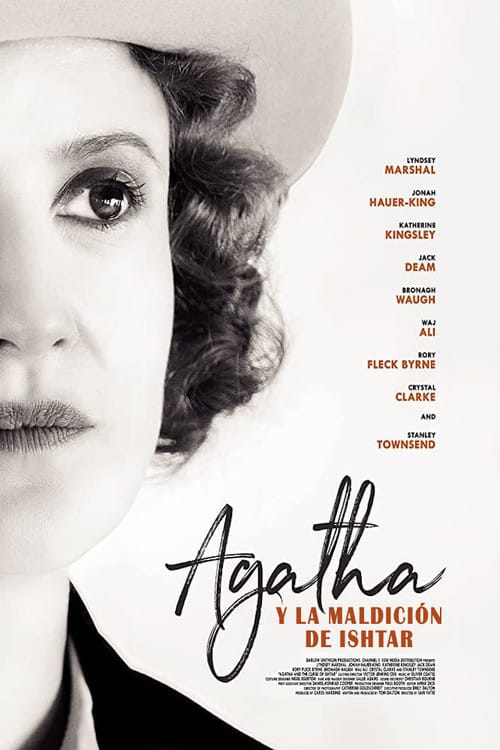
5.7·2019·95 min·English·Dirigida por Sam Yates
¿Ha encontrado Agatha la horma de su zapato?
Crimen
Sinopsis
En una excavación arqueológica en Irak, la autora Agatha Christie descubre una serie de asesinatos.
Reparto principal










Agatha - Colección


Más como esto
Tragedia en tres actos
1986·5.9

Pasos en la niebla
1955·7.0

Después del funeral
1963·7.1

El tren de las 4:50
1961·7.3

Mira cómo corren
2022·6.3
El maullido del gato
2001·5.8

El inspector Tibbs contra la organización
1971·6.3

Gardenia azul
1953·6.5

Estudio de terror
1965·6.2

Un misterio para Aurora Teagarden: Cómo estafar a un estafador
2021·7.2

El efecto Zero
1998·6.3

Crossword Mysteries: Proposing Murder
2019·7.5
Communauté
6.1
Note Trakt
289 votes
10
11
9
3
8
38
7
64
6
88
5
50
4
19
3
5
2
6
1
5
1.5KSpectateurs
65.1KCollectés
564Listes
Avis de la communauté (1)
S
senbaldorVIPCritiqueJun 7, 2026
# Historical Context - Real-world Parallels - Agatha Christie's actual 1928 trip to Ur - The 'Golden Age' of British archaeology in Mesopotamia - Interwar social tensions and colonial attitudes # Themes and Symbolism - Core Themes - Female autonomy in a post-Victorian world - The collision of ancient myth and modern scientific inquiry - Grief and the reinvention of self - Symbolism - Ishtar: The duality of love and war as the core of human conflict - The Desert: A void mirroring the protagonist's internal emotional state # Cinematography and Production - Visual Aesthetic - Warm, golden hues reflecting the Iraqi desert - Contrasting intimate, candlelit interiors with expansive, harsh landscapes - Art Deco influences in costume and set design # Narrative Structure - Plot Progression - Post-divorce escapism to Iraq - Encounter with Max Mallowan - Escalation of ritualistic murders at the excavation site - Style - Fictionalized 'Lost' period biography - Closed-circle mystery within an exotic desert setting - Linear investigation with building tension # Character Analysis - Agatha Christie - Vulnerable divorcee seeking purpose - Analytical mind repurposed from fiction to reality - Development: Transition from fleeing trauma to reclaiming agency - Max Mallowan - Young, ambitious archaeologist - Serves as both romantic interest and grounding force - Catalyst for Agatha's re-engagement with life # Summary Insights - The film effectively uses the 'fictionalized biography' genre to explore how personal trauma informs a writer's obsession with death and motive. - The use of the 'Ishtar' curse serves as a metaphor for the 'femme fatale' and historical misogyny embedded in archeological academia. - By placing a famous mystery author in a real-life mystery, the film blurs the line between the architect of the crime and the observer, suggesting Christie creates order out of chaotic human behavior. - The choice of 1928 Iraq highlights the disconnect between the intellectual pursuit of the past and the political instability of the present.
Reseñas