Cargando...
8.4·2018·116 min·English·Dirigida por Bob Persichetti
Entra en un universo donde más de uno lleva la máscara.
AnimaciónAcciónAventuraCiencia ficción
Sinopsis
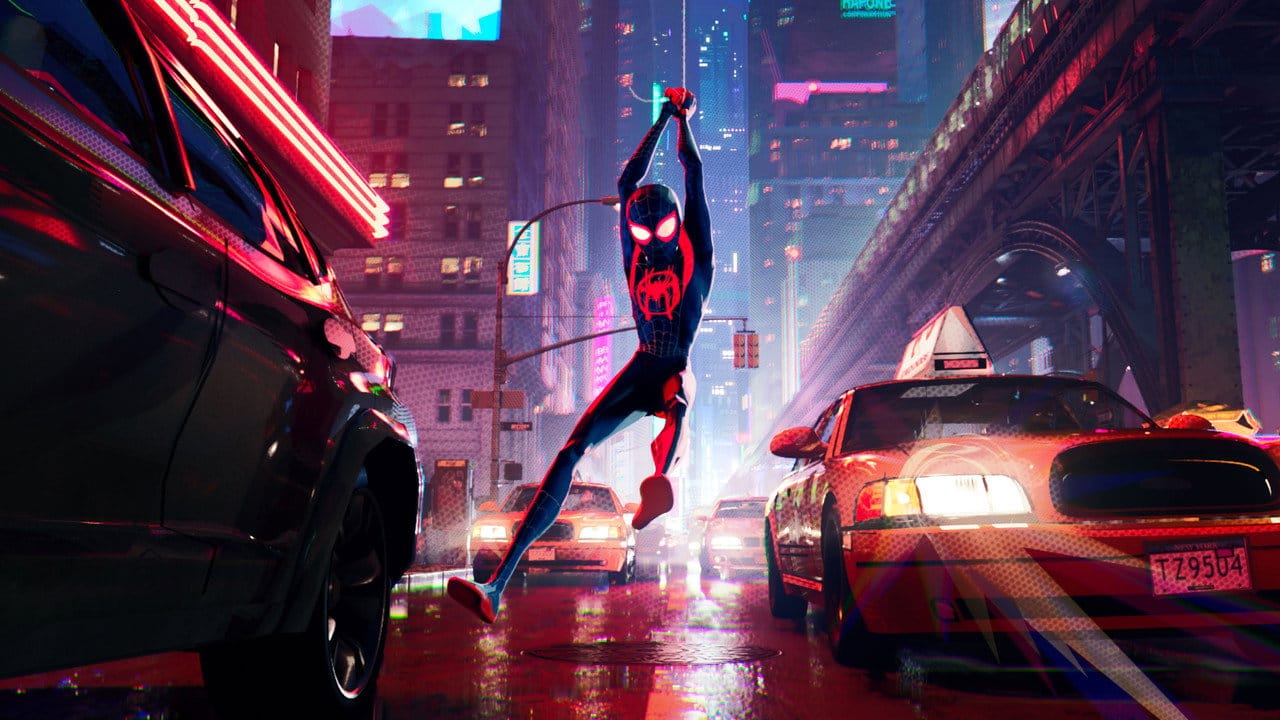
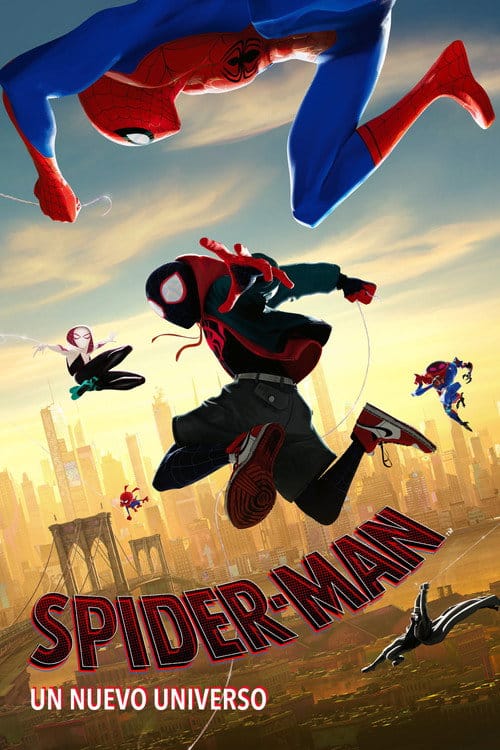
En un universo paralelo donde Peter Parker ha muerto, un joven de secundaria llamado Miles Morales es el nuevo Spider-Man. Sin embargo, cuando el líder mafioso Wilson Fisk construye el 'Super Colisionador' trae a una versión alternativa de Peter Parker que tratará de enseñar a Miles como ser un mejor Spider-Man. Pero no será el único Spider Man en entrar a este universo: cuatro versiones alternativas buscan regresar a su universo antes de que toda la realidad se colapse.
Reparto principal

Shameik Moore
Miles Morales (voice)

Jake Johnson
Peter B. Parker (voice)

Hailee Steinfeld
Gwen Stacy (voice)

Mahershala Ali
Uncle Aaron (voice)

Brian Tyree Henry
Jefferson Davis (voice)

Lily Tomlin
Aunt May (voice)

Luna Lauren Vélez
Rio Morales (voice)

Zoë Kravitz
Mary Jane (voice)

John Mulaney
Spider-Ham (voice)

Kimiko Glenn
Peni Parker (voice)
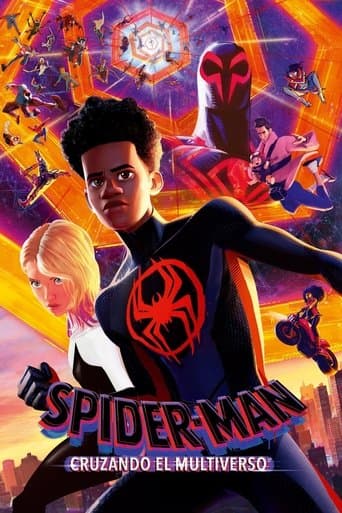
Spider-Man: Un nuevo universo - Colección
Más como esto
Liga de la Justicia
2017·6.1
Batman vs. las Tortugas Ninja
2019·7.2
Doctor Strange en el multiverso de la locura
2022·7.2
Teen Titans Go! La película
2018·7.2
La Liga de la Justicia: La paradoja del tiempo
2013·7.9
Legión de superhéroes
2023·6.4
Black Panther
2018·7.4
Ant-Man y la Avispa: Quantumanía
2023·6.2
DC Liga de supermascotas
2022·7.2
Gru 4. Mi villano favorito
2024·7.0
Megamind
2010·7.0
Venom: habrá matanza
2021·6.7
Communauté
8.8
Note Trakt
44.8K votes
10
17.9K
9
9.8K
8
10.4K
7
4.0K
6
1.8K
5
319
4
215
3
89
2
119
1
152
208.6KSpectateurs
446.2KCollectés
65.0KListes
Avis de la communauté (11)
J
JordyepVIP★9/10Dec 16, 2018
Great storytelling and concepts, it may be weird and even inaccesible for some folks, but it’s also very creative, original and bold. The characters are fantastic and well rounded, and they all inhabit a NY that’s captured it in a very unique way. That’s mostly a result of the animation, which grasps the attention immediately because it’s so boundary pushing and atmospheric. It’s just hard to find any weaknesses in it. The comedy is strong and tasteful, it doesn’t drag, the voice acting is excellent and all of the different Spiderman add to the story in their own way. I’m not as much of a fan of some of the bland autocrooning in the soundtrack (that’s probably the biggest thing that might make this seem dated in the future), though I generally still like most of the musical choices made here. 8.5/10
♥36
D
DannyVFilms★9/10Dec 19, 2018
[spoiler]“Is he allowed to say that? Legally?”[/spoiler]
♥21
C
ChilkaraVIPCritique★10/10Dec 15, 2018
Easily my favorite animated film in the last 5 years. Where most animation suffers from plot dragging, too much comedy, or unrealistic character's, this one had none of these issues. The beginning captured me, meeting Miles, his uncle, and Spider Man - everything felt like how life happens, as opposed to 'random chance'. There is so much about this art piece I loved, I can't even recount it all. The music was very fitting, and all voice talent well placed. A scene that gave me chills and tears at the same time, was [spoiler] the entire monologue of Miles' father while he was tied up, all the way through Miles discovering himself, painting the suit, and swinging through the city. [/spoiler] That entire scene was perfect in every way - the music, the visuals, the emotion from the buildup, everything. The last time I was filled with that much emotion from animation was when Hiccup and Toothless met and were drawing in the sand, in How To Train Your Dragon. I also loved the art style. It somehow clearly set itself apart from other animation, while simultaneously being beautiful, and at times realistic. I would love to see more of this style.
♥15
A
AndrewBloomVIPCritique★9/10Jan 6, 2019
[8.8/10] I’m currently watching my fifth consecutive Spider-Man animated series. From the 1990s cartoon that I grew up on, to the *Ultimate Spider-Man* series that ended in 2017, Marvel and its licensees gave us five versions of the web-head in different forms. Some kept Spidey in New York, others sent him off into space. Some made him an untested kid in high school, others made him an accomplished young adult in college. Some narrowed Spidey’s world to a focused ecosystem of characters and conflicts and others expanded to encompass the whole of the Marvel universe. But all of them starred Peter Parker as Spider-Man. And in the process of repeat adaptation, they can’t help but prompt the question -- what makes Spider-Man who he is? What is the connective tissue that makes all of these adaptations of a piece and recognizable as stories about the same character? Is it just the suit, or the web-slinging, or the quips, or is it something deeper than that? *Spider-Man: Into the Spider-Verse* aims to answer that question with Miles Morales, the Afro-Latino teenager from Brooklyn who took over the Spider-Man mantle in the “Ultimate” line of Marvel comics. Miles shares some of Peter’s qualities -- he’s young, he’s bright, he’s uncertain. But he also has his unique elements: his two loving parents, his being torn between two sides of his family, and the different culture he is a part of and represents. He is familiar to anyone who’s followed the Spider-Man character for years and years in his endearing efforts to figure out both his normal life and his superheroic one, and his youthful awkwardness and uncertainty at it, but he’s also distinct from the raft of Peter Parkers who’ve graced both the big and small screen in the last two decades. And most importantly, this is his story. *Into the Spider-Verse* uses its combo-breaking protagonist and its parallel universe-hopping plot to ask the broader question of what makes a Spider-Man (or -Gwen or -Ham). But it is first and foremost a story about a young man being pulled in two different directions by the father he loves and the uncle he admires, about resolving the differences between the place that can help lift him up and the place he came from, about figuring out not just who Spider-Man is, but who *you* are, when everything’s counting on you. Strip away the spidey-sense and supervillains. Strip away the interuniversal mashup and the flash and fury. At heart, *Into the Spider-Verse* is a coming of age tale for arguably the most compelling young protagonist the superhero genre has offered in a long time. And while it is yet another cape flick origin story -- something the film itself pokes fun at -- it has the smarts to make it much less about how a budding hero gets his superpowers, and much more about how a teenage boy decides who he wants to be. That’s aided by the style of the film, which works in concert with the substance. The term “comic book movie” is thrown around willy-nilly to describe any cape movie (including by yours truly) but this is the first one to truly earn the designation. The entire film exudes the bumpy texture and tropes of the medium to firmly cement the movie as emerging, fully-formed, from the comic pages. It’s a tack that’s particularly effective when Miles gains his spider powers, and the prominence of thought bubbles and whirly onomatopoeia take over to cement the fact that something serious has shifted here. Honestly, you could halt the movie at around the half hour mark and still have a tidy and encouraging tale about Miles discovering his abilities that would work as its own thing and leave you hungry for more. But that would deprive us of the ensuing hour of superheroic flash and fun. *Into the Spider-Verse* is a joy to watch, with kinetic, color-bursting action that captures the ebb and flow of Spider-Man’s balletic grace through the skies better than any adaptation to date. The stylized approach to character design and animation gives the whole movie a distinctive flavor from the first glance to the final scene. And the way the movie blends art styles to help connote the ways in which this is a crossover between Spider Men and Women from across the multiverse is funny and fantastic. The films boasts almost as many web-heads per capita as a Spidey-themed *Where’s Waldo* book, but it works in the movie’s favor. Whether it’s the black and white stylings of Spider-Man Noir, the anime-influenced presence of Peni Parker, or the Looney Tunes-aping insanity of Spider-Man, one look at the horde of Spider-people on screen tells you what’s afoot. At the same time, the film sketches out its supporting characters with complete arcs. A spider-powered Gwen stacy has tentative but inevitable romantic chemistry with Miles, but is a capable and vital part of the action, and slowly overcomes her reluctance to build friendships after what happened in her home universe. At the same time, an older Peter Parker from another world joins the fray to give us the “after” of the traditional Spider-Man to Miles’s “before.” There’s real juice in seeing a potbellied, battle-weary, and cynical Spider-Man being forced to rediscover his ideals through the eyes of someone who looks up to him (or, at least, a version of him), and needs him as a mentor. And the way the film not only reconstructs one Spider-Man in the background while it’s building up another for the first time, while baking in a story of growing comfortable with having children, is nigh-masterful. But in the end, apart from the eye-catching art and dimension-spanning guest stars, *Into the Spider-Verse* is about Miles, and that’s where it’s the most engrossing. The film constantly draws a contrast between the life Mile’s policeman father wants for him, and the rougher-edged existence his black sheep Uncle has cut out for himself, with the freedom and style that Miles envies while trapped in his midtown magnet school existence. It depicts Miles as inherently uncertain, before and after he has the ability to stick to walls. He is undeniably capable of great things, something his family members and reluctant mentors all agree on. But he doesn't know what shape that’s supposed to take, how to be what he’s expected to be or who he means to be. Then, through heart-rending but heartening trial and tragedy, he finds out. *Into the Spider-Verse* signposts it a little too heavily for my tastes, but with the encouragement of his uncle, the acceptance of his father, Miles finds his own path, his own style, that’s the true-to-oneself harmonization of the best that’s been passed on to him, from man and Spider-Man alike. He has his father’s inherent goodness and sense of doing what’s right, with his uncle’s talent for improvisation and determination, and his own creative spark that drives him to put his own signature on each move and choice he makes. The best part of *Into the Spider-Verse* comes not only from when our hero truly becomes Spider-Man; it comes from when he fully and firmly becomes confident, caring, self-actualized Miles Morales he wants to be. With that, *Into the Spider-Verse* answers its animating question. In a preemptive strike against those who would claim that someone who doesn't share Peter Parker’s name, or his skin color, cannot be Spider-Man, it posits that the things that made the character so indelible through fifty years of stories go beyond moniquers or melanin. Through Miles’s journey, and his other universe counterparts, it declares that being Spider-Man requires facing down tragedy and knowing the pain of loss but having it embolden you toward justice rather than driving you to madness and cruelty like it does for the film’s villains. It means learning to trust yourself and what you’re capable of even when that tentativeness and uncertainty hangs over you like a cloud that you just have to thwip or leap your way through. And most of all, persevering, getting up when you’re knocked down, and deciding not to quit. Time again, Miles is pushed back, beaten down, and all-around inclined to just give up. It’s the quality that inspires the most doubt, in his father, in his wall-crawling colleagues, and in himself. But when he overcomes it, when he finds himself and learns to believe in his own potential, he also refuses to stay down. That’s the central idea of *Spider-Man: Into the Spider-Verse*. The film was preceded by five decades’ worth of Spider-Man adaptations in scores of different mediums, and it will almost certainly be followed by five decades’ more. What unites these varying takes on the character, what makes them true and right and real despite their differences, is that indefatigable quality each of them shares, despite setting or style or sobriquet. And Miles Morales gives shape to that lesson, straining and striving to become Spider-Man, and becoming himself in the process.
♥9
N
nmahoney416★10/10Dec 14, 2018
This film is gorgeous. The best looking animation movie I've seen in a long time. The story is great and flows really well. It has a lot of heart and is really funny. It explains things quick and doesn't focus on anything for too long. Seeing all the other universes' Spider-Mans (Spider-Men?) was a lot of fun. The voice cast is stacked with people that I recognized but couldn't place right away, except for Nic Cage, I recognized him right away. Go see this and enjoy seeing the closest thing to an actual comic on the big screen. Edit: I caught a lot more the second time and loved it even more. This easily is one of the best of the year and one of my all time favorites.
♥9
Reseñas