Cargando...
5.8·2025·99 min·Deutsch·Dirigida por Philip Koch
SuspenseCiencia ficción
Sinopsis
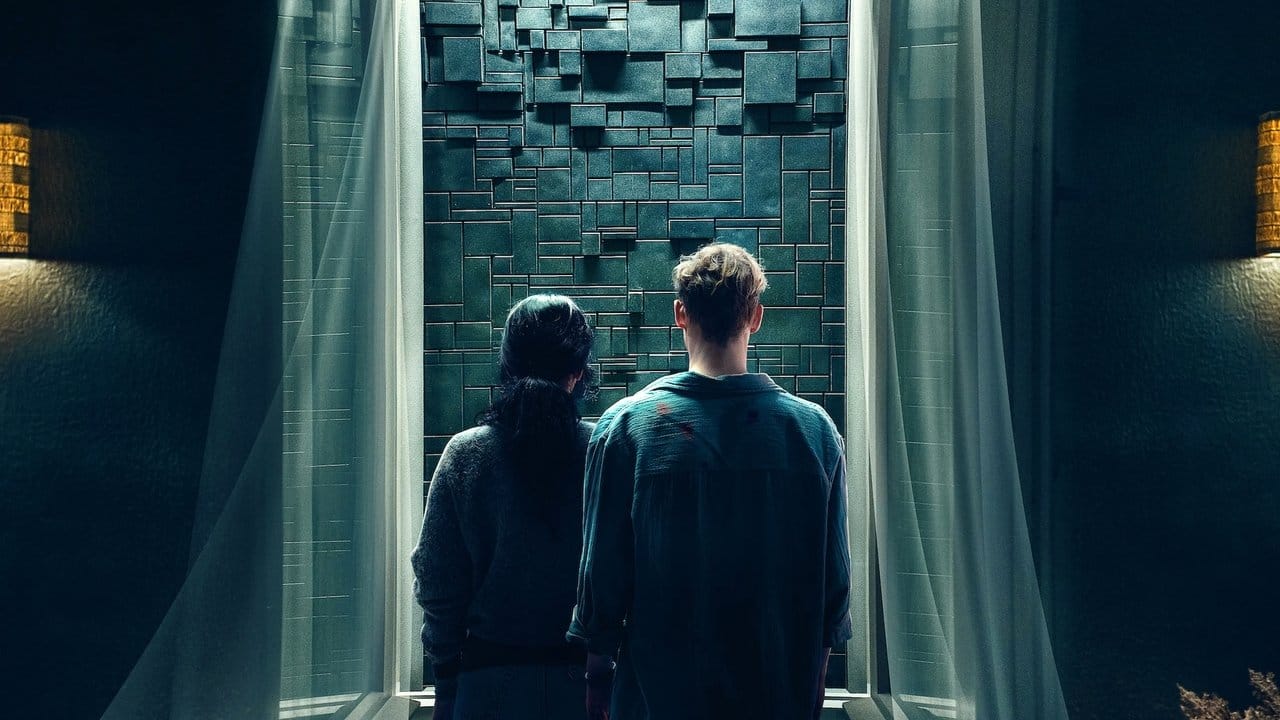
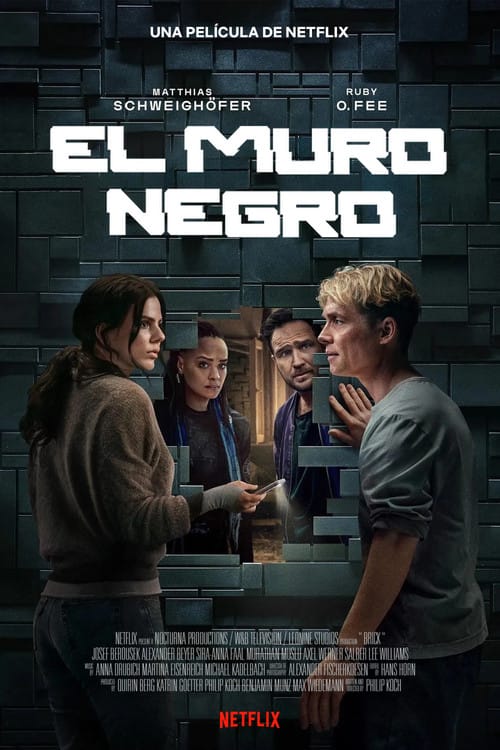
Cuando un misterioso muro de ladrillo aparece inesperadamente en torno a su edificio, Tim y Olivia deberán colaborar con sus vecinos para encontrar una salida.
Reparto principal









Más como esto





Communauté
6.0
Note Trakt
5.1K votes
10
309
9
64
8
662
7
712
6
1.6K
5
716
4
577
3
142
2
198
1
62
21.0KSpectateurs
22.2KCollectés
2.6KListes
Avis de la communauté (12)
D
decatur555VIPCritique★5/10Jul 11, 2025
At first, it looks like it’s going to be a good movie. A simple but powerful premise: a couple on the verge of emotional collapse wakes up to find their apartment sealed off by a mysterious black wall. From there, you might expect a mix of tension, claustrophobic sci-fi, and psychological drama. And for a while, Brick delivers. But then, it loses its way. The beginning works: Tim (Matthias Schweighöfer) buries himself in work, Olivia (Ruby O. Fee) wants to run from a relationship that feels empty. Just when she decides to leave, the whole building shuts down. No signal, no water, no windows. At first, you're hooked because you’re asking the same questions they are: what’s going on? Why them? What’s behind those walls? But soon the script starts to stumble. More characters show up, each with their own set of clichés: the shady cop, the troubled young couple, the sick old man, the innocent granddaughter… and instead of adding tension, they dilute it. The relationships that could have meant something stay flat, and the central mystery — the wall, the entrapment, the “why” — fades as the story drifts into forced dialogue and scenes that go nowhere. You can tell the director wants to explore grief, emotional isolation, and the inner walls we build. And to some extent, he does, especially thanks to the lead performances, which are the best thing here. But with the supporting characters adding little, the pacing turns uneven and the emotional weight the story aimed for gets lost along the way. Visually, it’s decent. The production design creates an effective atmosphere, and there are moments when the oppressive mood comes through. But then come the scenes that try to be action or conspiratorial thriller, and it all falls apart. Brick wants to be a lot: a drama, a mystery, a social horror, a critique of fake news… but in the end, it never fully commits to any of them. The resolution doesn’t help either. The “reason” behind the confinement tries to close things out with symbolic meaning, but it doesn’t quite land. It feels like the journey was supposed to matter more than the answer. That’s fine, but even the journey ends up feeling incomplete. It’s not a disaster. There are interesting ideas, a few well-done scenes, and a mood that works in some places. But everything it could have been — intense, meaningful, unsettling — ends up as just “almost.” It doesn’t quite bore, but it doesn’t move you either, and for a story about being trapped, that’s a problem.
♥10
D
DarkAngelX2VIP★8/10Jul 13, 2025
♥9
E
Enes_★2/10Jul 13, 2025
I didn't like it because the acting and script were incredibly annoying. Also, the stares were too long and constant. The film caught my attention as a genre, and I wanted to give it a try, but I got bored while watching it. If you can't find a movie to watch, just go watch it. Personally, I don't recommend this movie that much.
♥7
H
heyflpCritique★4/10Jul 30, 2025
There’s something uniquely promising, and deeply unsettling, about the idea of confinement that the subgenre of enclosed-space thrillers has been tapping into for decades. It’s a setup that’s given us everything from thought-provoking movies like “Exam” to more stylized carnage like “Escape Room.” That’s exactly why it’s so frustrating to watch a film like “Brick” waste such an intriguing premise with an execution that desperately wants to feel clever but stumbles on bland archetypes, visually lifeless direction, and a kind of drama that feels artificial pretty much the whole time. This new German thriller from Netflix does make an effort to explore modern-day paranoia, fear of tech, and the breakdown of collective Unity, but it lacks what’s most essential for this kind of story: dramatic intensity, a real sense of urgency, and characters we actually care about. The story kicks off with a solid hook: after a fight, a couple on the verge of breaking up suddenly finds that their apartment building has been sealed shut by an impenetrable black magnetic wall that blocks every possible exit. From there, “Brick” sets up a survival plot where a bunch of neighbors, total strangers until that point, have to work together to find a way out, navigating the building and unraveling the mystery behind this weird material surrounding them. Visually, the film has its moments: the look of the walls and the spaces slowly being taken over by the characters creates an immersive element, and some of the camerawork does a decent job of conveying the oppression and confusion. The problem is that this visual style rarely translates into any real tension. The atmosphere feels cold, not because that’s the thematic point, but because there’s just no emotional pulse driving it. The biggest issue with “Brick” is that it leans on weak, predictable characters – most of them feel like cardboard cutouts with generic traits that fall apart under even the slightest emotional weight. The central couple, played by Matthias Schweighöfer and Ruby O. Fee, kind of has the makings of a compelling dynamic, dealing with grief and emotional exhaustion, but the way their conflict unfolds is flat and often way too heavy on exposition. As for the rest of the supporting cast, it feels like they were picked out of a cliché catalog: the paranoid junkie, the sweet old man, the aggressive, ripped conspiracy theorist. Everything’s so functional and by-the-numbers that even when the script tries to shake things up (like playing with the antagonist’s motives or blurring lines between reality and paranoia), it just feels like recycled ideas from thrillers that were way bolder. Even when the suspense ramps up toward what should be a tense climax, the movie holds itself back too much. With a story like this, you expect the claustrophobia to actually make you feel something – sweaty palms, heart racing, maybe even a bit of panic. But “Brick” seems almost afraid to go there. When violence happens, it’s clean, sterile, like the film doesn’t want to commit to either horror or thriller territory. Add in a forgettable score, limp editing, and a third act that tries to tie up earlier mysteries in a neat but uninspired way, and what you get is a movie that had glimmers of a great idea but never delivers anything with real impact. In the end, “Brick” wants badly to be a modern dystopian parable, a symbolic take on individualism and paranoia, while also appealing to survival-thriller fans with puzzles and twists. But what we’re left with is a film that never fully commits to any of those ideas. Like the fly it keeps showing trapped in a glass (its most obvious metaphor), “Brick” just spins around in circles, making some noise but never truly disturbing or leaving any real impression.
♥4
S
Scruffy★4/10Jul 10, 2025
The movie "Await Further Instructions"is a thousand times better. Do yourself a favour and watch that movie (again if you already watched it) instead of "Brick". https://trakt.tv/movies/await-further-instructions-2018
♥4
Reseñas