Cargando...
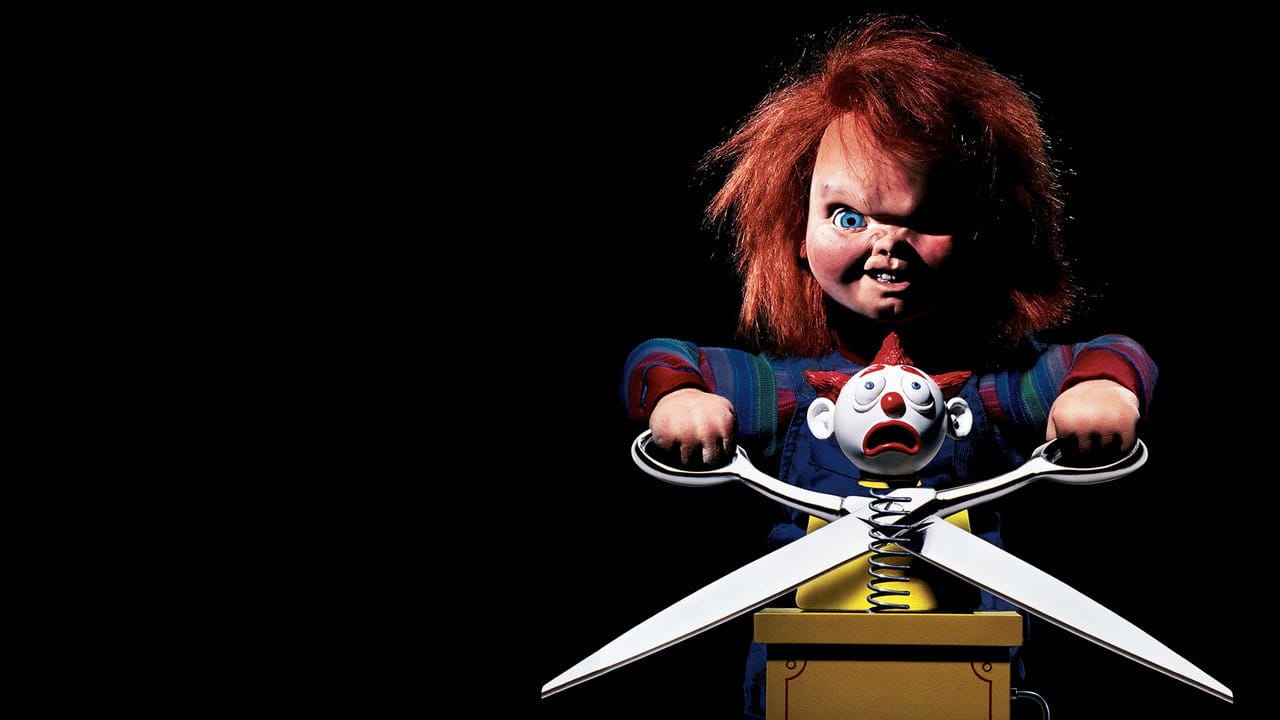
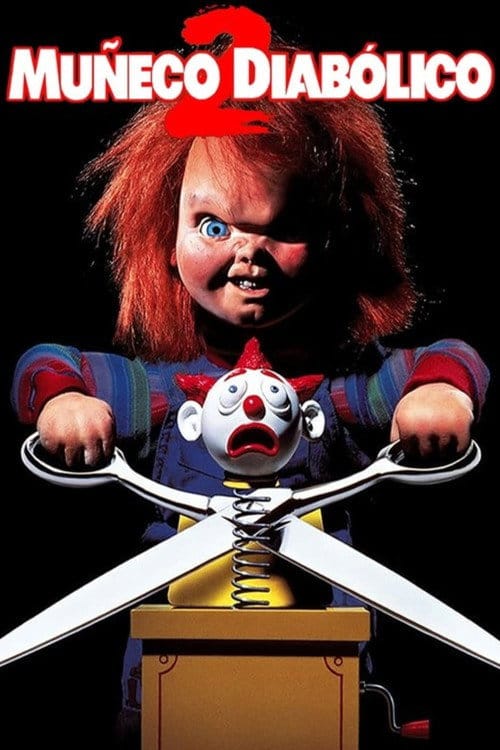
6.4·1990·84 min·English·Dirigida por John Lafia
Lo siento Jack... ¡Chucky ha vuelto!
Terror
Sinopsis
Chucky ha vuelto. El famoso muñeco asesino de sonrisa satánica resucita en este nuevo episodio. A pesar de que en su última escapada quedó totalmente achicharrado, Chucky resurge de sus cenizas cuando una fábrica de juguetes decide reconstruirlo para acabar con la mala publicidad que la rodea. Chucky vuelve a estar entero y sigue la pista de su presa hasta una familia de acogida..
Reparto principal









El Muñeco diabólico - Colección
Más como esto
El culto de Chucky
2017·5.8
La maldición de Chucky
2013·6.0
Muñeco diabólico 3
1991·5.9
Muñeco diabólico
1988·6.8
Annabelle: Vuelve a casa
2019·6.4
Annabelle: Creation
2017·6.6
The Boy: La maldición de Brahms
2020·5.9
Halloween: El Origen
2007·6.2
13 fantasmas
2001·6.3
Muñeco diabólico
2019·6.0
Dolly
2026·5.8
El exorcista: Creyente
2023·5.8
Communauté
6.6
Note Trakt
3.3K votes
10
336
9
91
8
589
7
669
6
911
5
345
4
238
3
54
2
55
1
33
15.2KSpectateurs
78.6KCollectés
5.5KListes
Avis de la communauté (10)
B
BKurtzDec 5, 2021
Having re-watched this for the first time in years, I have to say I enjoyed it a little bit more. The biggest downside is of course the human characters: Andy is little more than a sleepwalking child zombie, the stepfather is (intentionally) annoying, the stepmother provides nothing, and Kyle is just shy of enough personality to make her interesting. Let's face it though, like a Godzilla movie, you're not here for the mundos. You're here for the monster. Brad Dourif never disappoints, and he infuses his sinister wickedness into every foul-mouthed little barb. The body count is a bit light for my tastes, but the final (and dragged out) showdown in the toy factory makes it all worth it.
♥3
S
StoreGalVIP★10/10Oct 21, 2021
Personally, I think Child’s Play 2 is a masterpiece. I mean this with all my heart. It’s not scary, no. Not in the slightest. But it’s self aware. It KNOWS it’s stupid and has fun with it. This movie, really, is not supposed to scare you. It’s supposed to let you have fun while being a clever subversion of several horror movie tropes. Is it my favorite horror movie ever? No. Texas Chainsaw Massacre, Midsommar, Scream, and a few other films are all better horror flicks than this one. But I would be lying to myself if I said I didn’t love this movie to death. It’s my favorite Chucky movie by a long shot and in my opinion, a perfect sequel.
♥2
S
SunnyGabe★5/10Jul 14, 2026
Some cool visual effects especially in the toy factory. Weaker on characters than the first movie, and we get way less of Chucky pretending to be a lifeless doll which I found to be a shame.
H
heyflpCritique★9/10Nov 21, 2025
When a sequel comes back to an already–established universe with the confidence of someone revisiting a path marked by strong memories, yet still finds room to expand it with intention and style, it hits a very specific sweet spot. “Child’s Play 2” does exactly that by honoring everything the original built while widening its narrative scope with flair and a clear sense of what makes this story tick. From the very first frame, John Lafia shows he doesn’t need to reinvent Chucky (Brad Dourif), but deepen the consequences the doll left behind, especially on Andy (Alex Vincent). It’s this mix of well-handled continuity, aesthetic evolution, and a noticeably sharper rhythm that gives this second chapter its own identity: solid, confident, and surprisingly mature for an early-90s sequel. The script uses the trauma from the first film as a starting point instead of a repetition. Andy is older now, displaced, emotionally worn out, living under the shadow of a past no one believes. His new life in the foster system adds layers of vulnerability that raise the tension even more, not just because Chucky comes back angrier than ever, but because Andy is even more alone. Kyle’s presence, played with effortless charm by Christine Elise, brings a fresh, empathetic dynamic that the movie uses really well, balancing conflict, partnership, and that spark of “improvised sibling energy” that makes a huge difference in a horror film centered on a kid. Narratively, “Child’s Play 2” is built with a sense of urgency the original sometimes held back. Here, Chucky is always on the move, chasing, observing, sneaking around, plotting. The movie drops any restraint and embraces a more direct structure where the villain’s presence is constant and tangible, creating a cat-and-mouse game that feels tighter and more cinematic. The school sequence is a perfect example of Lafia’s control over suspense: quiet, claustrophobic, driven by an unsettling score and a precise use of space. The teacher’s death, quick and brutal, shows just how confident the film is in its own dramatic tools. On a technical level, “Child’s Play 2” is where the production really shines. The animatronics team achieves impressive results, refining everything that already worked in the original. Chucky has more expressions, more fluidity, more physical weight. His eyes move with intention, his mouth syncs dialogue with disturbing naturalism, and every detail helps make him feel like a living, intense, sarcastic antagonist. The shot of him widening his eyes when he spots Kyle on the swing is a miniature masterpiece of mechanical puppetry and tension-building. The visceral edge increases as the doll starts to “humanize,” with blood dripping from his nose and skin tearing, a choice that reinforces both the mythology and the body-horror elements of his transformation. The violence is more graphic, creative, and varied, but never pointless. Chucky is more sadistic, more desperate, and more theatrical, and that shows in how the kills are built. The suffocation in the car is efficient and suffocating; Phil’s (Gerrit Graham) fall hits hard because of its coldness; the attack on the orphanage director stands out for how it uses the environment and its sheer brutality. The film understands Chucky works best when it mixes morbid humor with cruelty, and this is where that formula lands perfectly. Production design also deserves praise for embracing the era’s aesthetic with personality. The Simpsons’ house, the damp basement, the school hallways, everything is designed to highlight Andy’s isolation. And then there’s the Good Guys factory, which hosts the finale: one of the most iconic settings the franchise ever created. That endless space filled with stacked dolls, conveyor belts, mechanical arms, and machines ready to tear anything apart is both fascinating and threatening. Lafia films it like an industrial nightmare maze, turning the final sequence into a spectacle of horror, action, and technical creativity, topped off with a grotesque final fate for Chucky that sticks with you. Graeme Revell’s score heightens what the movie already builds visually. His themes mix distorted melody with electronic and percussive elements, giving the film a sonic identity that amplifies its urgency. The music in the factory climax is especially striking, pushing each moment forward like the score itself is chasing the characters. Even with all its technical strength, the movie never loses sight of its characters. Alex Vincent gives a surprisingly emotional performance for such a young actor, showing fear, courage, and exhaustion with authenticity. Christine Elise is magnetic as Kyle, balancing rebellion and protectiveness naturally. Jenny Agutter and Gerrit Graham portray the conflicted foster parents with precision, while Brad Dourif once again proves his brilliance in Chucky’s voice work: every laugh, insult, and shift in tone is essential to the doll’s unsettling personality. Sure, there’s a small continuity slip in how the movie portrays Chucky’s physical body, which switches between rigid plastic and flexible material. But even that inconsistency fades in the face of how much care the production shows overall. It’s a tiny flaw in an otherwise cohesive, ambitious whole. In the end, “Child’s Play 2” is more than a good sequel. It’s the film that solidified Chucky’s mythology and set the bar for the entire franchise. With sharp pacing, inspired direction, impeccable effects, and a memorable climax, it stands as one of the best horror films of the 90s and, for many fans (myself included), the true peak of the series. It’s pure entertainment, built with competence, creativity, and a villain who remains irresistibly terrifying decades later.
R
Rin J Tohsaka★8/10Oct 22, 2025
This alongside the first Child’s Play are some of my favorite in the original trilogy film. Chucky himself as always carries every scene he in and while the tone is more goofy, it still could be terrifying. The climax at the factory is pretty cool and characters like Kyle are likable. I’d appreciate Graeme Revell score here plus the iconic ending theme that would later be used in franchise.
Reseñas