Loading...
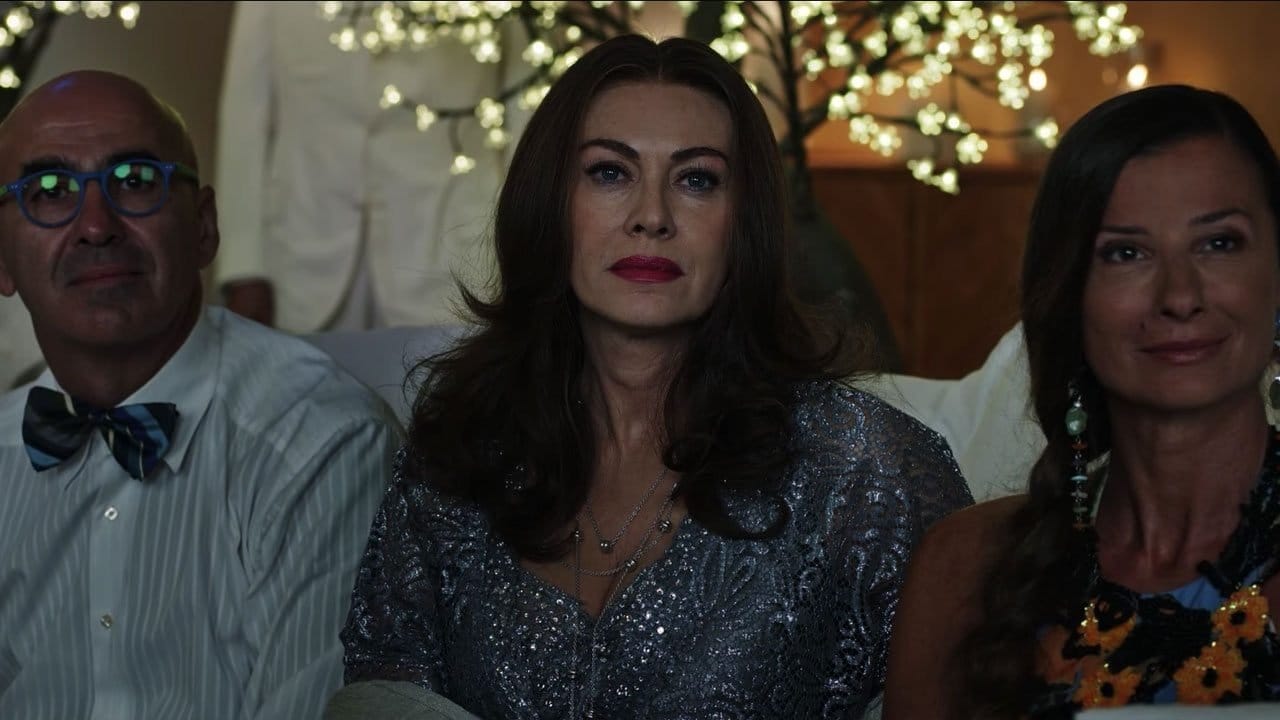


6.8·2018·104 min·Italiano·Directed by Paolo Sorrentino
All True, All False.
Drama
Synopsis
"Loro", in two parts, is a period movie that chronicles, as a fiction story, events likely happened in Italy (or even made up) between 2006 and 2010. "Loro" wants to suggest in portraits and glimps, through a composite constellation of characters, a moment in history, now definitively ended, which can be described in a very summary picture of the events as amoral, decadent but extraordinarily alive. Additionally, "Loro" wishes to tell the story of some Italians, fresh and ancient people at the same time: souls from a modern imaginary Purgatory who, moved by heterogeneous intents like ambition, admiration, affection, curiosity, personal interests, establish to try and orbit around the walking Paradise that is the man named Silvio Berlusconi.
Main Cast










Loro Collection


More Like This


Communauté
6.6
Note Trakt
165 votes
10
8
9
4
8
33
7
53
6
37
5
14
4
9
3
3
2
3
1
1
587Spectateurs
12.8KCollectés
537Listes
Avis de la communauté (2)
S
salvdelgCritique★7/10May 14, 2018
This is easily not the best movie from Sorrentino, but it's the most important one. What is Italy in 2006 (but also nowadays) if not a mixture of decadence and corruption? One can say that decadence and corruption are also the keys in The Great Beauty and Il Divo, but in Loro they elevate (or fall..) to a whole new level: they come between us, between the common people (but always without showing them). The movie gives in 4 hours the perception that everything you see is something that affects your life. The description of the power is limited to the court of the pimps that aspire to became relevant (in the first part) and to the harem of Berlusconi (in the second part). The harem is made of faithful servants, women willing to do anything and characters with superior and obscure power, that even Berlusconi himself does not seem to fully understand. The most intriguing one is God: a deus ex machina of which Berlusconi often asks, almost as if he wants to know his intentions and behave in a manner that will please him (perhaps a mafia boss, like Vittorio Mangano, creator of Berlusconi's economical fortune in the 90s). In the background there is the separation between private life, in which one can do what he wants, and public life, in which there is the higher purpose of the community. Sorrentino confronts us with the essential question: does this separation really exist? Can a person be two people at the same time? The answer is entrusted to Berlusconi's wife: "you are a sick man" she tells him. This is the tragic account of the corruption of the Italian political class, a world that many detest, but too many desire. There is only one exception to the portrait of ordinary people: the only time they are shown is in the ending. They are the tired faces of the displaced people after the 2009 earthquake in L'Aquila. They are the people who represent Italy painted by Sorrentino: they can't ask themselves questions anymore, but they need to get answers. This is the power: the absence of questions. 6.5/10
♥3
J
Jimmy_Two_Times-deleted-1783320634★4/10Jun 8, 2026
As much as I like Sorrentino's style, I just coyldn't get this one. Yeah superficially I understood it but the nuances... I don't have enough knowledge of this time in Italy and most of it went over my head. I will still watch part 2 but yeah I didn't connect. Maybe when I get round to reading more about Sorrentino I will.
Reviews