Laden...
8.0·1994·432 min·hu·Regie Tarr Béla
Drama
Handlung
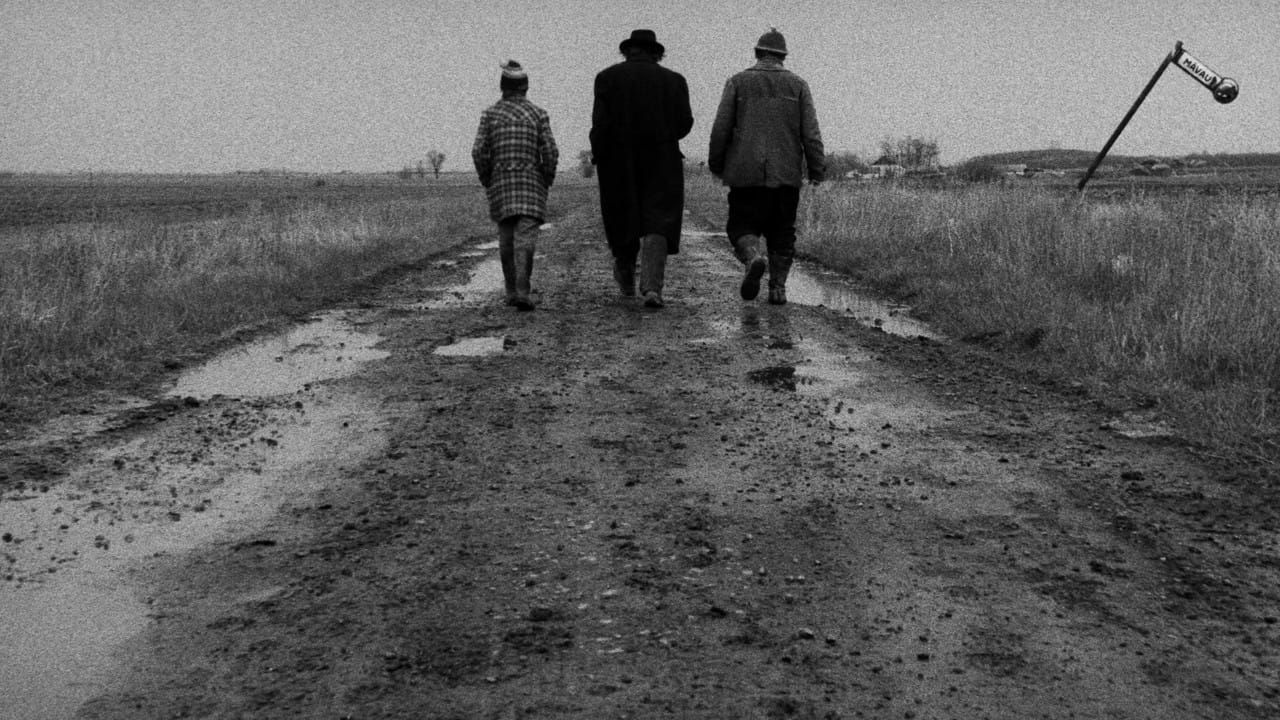
Am Vorabend einer großen Auszahlung sehen sich die Pläne der Bewohner einer zusammenbrechenden Kolchose in Verzweiflung verwandelt, als sie feststellen, dass Irimiás, ein ehemaliger Kollege, den sie für tot hielten, in die Gemeinschaft zurückkehrt.
Hauptdarsteller






Mehr wie das





Communauté
7.7
Note Trakt
286 votes
10
81
9
40
8
72
7
29
6
19
5
10
4
9
3
4
2
6
1
16
683Spectateurs
54.0KCollectés
3.5KListes
Avis de la communauté (5)
D
drtrotusk★1/10Feb 11, 2022
If you need 7+ hours and an abused cat to tell this asinine story than you are not a very good storyteller/filmmaker. What a waste of time.
♥4
M
miguelreinaMay 10, 2020
[Filmin, 4K Restoration] Cows. Poverty. Land. "Don't read Genesis; read Revelation." Rain. Communism. Mud. "The rain destroys everything." Tango. The dance of the poor is tango. "My father is the sea, my mother is the land, my name is Tango". Long takes. Time stopped. Bells. "Futaki woke up to the sound of the bells." Despair. Cinema. Masterpiece.
♥1
A
Achrontrack★10/10Dec 14, 2025
Béla Tarr’s seven-hour Sátántangó dissolves initial suspense into a nihilistic rain. Irimiás, a manipulator reminiscent of a "low-budget Che Guevara," dominates the villagers yet ultimately bows to higher authority, revealing that he, too, is merely a "twig in the wind." The film exposes a terrifying "order" maintained not by grand villains, but by banal bureaucrats eating lunch meat while typing fates. The tragedy culminates in Estike—a Mathilda without her Leon—and visual metaphors of a semi-blind world, like a blinking owl mirroring a broken windshield wiper. A striking realization occurs when the madman’s cry of "The Turks are coming!" rhythmically sounds like a marching cadence ("One, two, one!"), transforming historical trauma into an absurd, ghostly military drill. Ultimately, the suffocating atmosphere evokes my own middle school memories—a closed loop of despair. As the doctor boards up his window and writes the story's opening line, the tango completes its circle, trapping us in eternal darkness.
S
Soda_SprinklersOct 20, 2024
Felt shorter than The Turin Horse. Watch in a cinema not at home.
C
CursedChicoCritiqueApr 8, 2021
Kritiken