Laden...
7.5·2015·151 min·English·Regie Alejandro G. Iñárritu
Überleben ist der härtere Tod
WesternDramaAbenteuer
Handlung
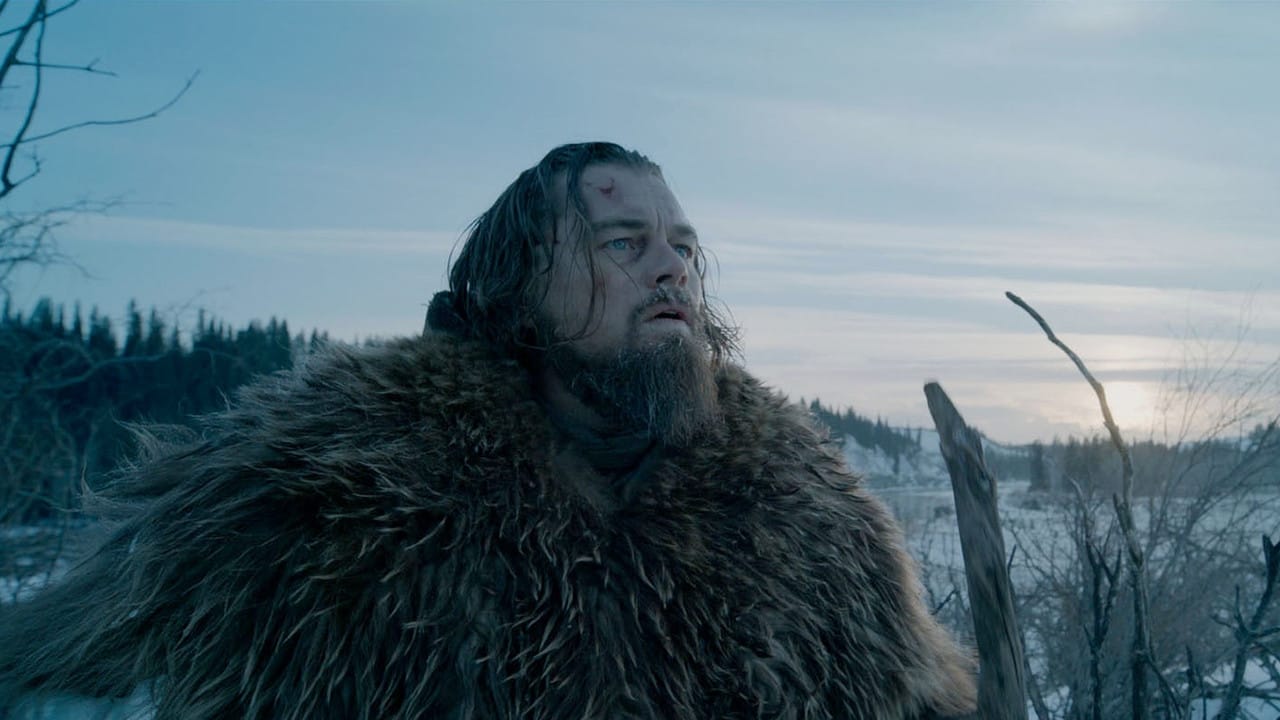
In den 1820ern zieht der legendäre Trapper Hugh Glass durch die Weiten der USA, wo er mit einer von Captain Andrew Henry angeführten Expedition dabei ist, den Missouri River zu erforschen. Am Fluss hat er einen unachtsamen Moment – den ein Grizzly ausnutzt, ihn übel zuzurichten. Glass schwebt in Lebensgefahr. Seine Begleiter, unter ihnen der raubeinige John Fitzgerald und der junge Jim Bridger, glauben nicht, dass er den Vorfall überleben wird und als sie dann Ureinwohner in der Nähe ihres Lagers erspähen, fackeln sie nicht lange. Sie nehmen dem Schwerverwundeten Gewehr, Messer und seine weitere Ausrüstung ab und überlassen ihn sich selbst. Aber überraschend überlebt Glass doch – und schwört allen Begleitern Rache, die ihn zurückgelassen haben. Auf der Suche nach ihnen schleppt sich der verletzte Abenteurer durch die eisige Bergwelt …
Hauptdarsteller




Mehr wie das
The Hateful 8
2015·7.8
Butcher's Crossing
2023·5.9
Duell am Wind River
1980·5.9
The Homesman
2014·6.5
Das Wiegenlied vom Totschlag
1970·6.8
Walking Out
2017·5.9
Beim Sterben ist jeder der Erste
1972·7.3
Feinde - Hostiles
2017·6.9
The Unholy Trinity
2025·6.3
The Missing
2003·6.3
The Power of the Dog
2021·6.7
The Quick and the Dead
1987·6.4
Communauté
7.8
Note Trakt
29.1K votes
10
4.6K
9
4.2K
8
9.5K
7
6.1K
6
2.8K
5
801
4
475
3
174
2
219
1
227
122.8KSpectateurs
425.0KCollectés
75.6KListes
Avis de la communauté (9)
T
tommyandrew★6/10Jan 13, 2016
The acting is impeccable and the cinematography and directing is truly memorising. However it all feels wasted on such a long, overdrawn and predictable story line. I found myself waiting for it all to end, which it does eventually, just how you thought it would.
♥80
C
carovonchaosFeb 5, 2016
I really dont understand why people are hyping this movie so much. Its way too long, has lotsa logic mistakes and on top of it all, this thing cost 135 million dollars to make? Wow. Ridiculous. Great acting by Tom Hardy, average acting by Leo DiCaprio. You could feel he just did something like this to win the Oscar finally, after pretty much every other type of story and film didnt bring him the desired trophy...
♥12
A
AndrewBloomVIPCritique★7/10Jan 22, 2016
3.75/5. I walked out of this one saying to my friends, "that was pretty good for a 10 hour film." It was a long film that wanted you to feel the length. At times, that made it feel appropriately epic, but at others that made it feel like it was alternatively being indulgent or spinning its wheels. The Revenant started strong and ended fairly strong, but had a lot of fat in the middle. But if there's one thing it deserves credit for, it's the cinematography and production. There are so many beautiful images throughout the film, whether it be a swooping shot of a snow-covered vista, or the slow lurch of the camera as it follows Glass crawling across the ground, or the Saving Private Ryan-esque battle sequence near the beginning of the film. It was visually arresting from the word go, even if the story and pacing couldn't always keep up. Oddly enough, the film I found myself thinking about while watching The Revenant was Mad Max: Fury Road. Both feature a fairly straightforward narrative intended to impart broad themes, but make their bones with their visual storytelling and sensibilities, bolstered by strong individual performances that vary from the depictions of quiet strength to bombast. To that end, both films eschew exposition and narrative complexity in a bid to allow the images and the performances to convey the story. There are certainly parallels between DiCaprio in The Revenant and Hardy in Mad Max, both playing largely silent, wounded animals who are haunted by their pasts. And the key feature in each is the aesthetic choices made by the folks behind the films, where both Miller and Inarritu communicate their themes most forcefully in the visuals they craft rather than dialogue, despite notable moments in both films where the characters' lines hit the major ideas of the film in a less-than-subtle manner. There are obviously significant distinctions between the two films in areas like tone and pacing, and Inarritu and Miller have different goals and styles, but they go about accomplishing and employing them in a strikingly similar fashion. That said, I wasn't particularly blown away by DiCaprio's performance here. It was good, there's no question, but I've more or less had my fill of DiCaprio playing these intense, perpetually perturbed men with something in their past gnawing on them. He knows how to play those notes well, but I'm just kind of inured to it at this point. By the same token, the film includes too many vignettes of Glass's survival, with many of them being too long as well. Many did little to advance the narrative or the character (the big exception being Glass and his Pawnee companion catching snowflakes in one of the film's most endearing moment), which is fine in small doses. Giving the audience a chance to just spend time with a character can work toward making them invested in his fate when the time for the narrative fireworks come. But a lot of those scenes in The Revenant felt like indulgence or even just fumfering around. They were a part of the film that cried out for a montage that never came. Hardy, on the other hand, does a fantastic job at Fitzgerald, who sells the character's attitude and role in the story almost from the minute he's on the screen, and makes Fitzgerald's nigh-heartless, mercenary pragmatism and his open racism feel lived-in and true to the character from the getgo. Inarrito spends a lot of time seizing on a fairly simple theme, represented with his wind and tree metaphor, and building up an elaborate, somewhat pretentious infrastructure around it. There's value in simplicity in story and theme at times, but it feels like he's trying to take something straightforward and telescope it out to unsupportable complexity and weight here, and the film suffers for it. Overall it's a generally good, but rarely great movie, with some serious and stultifying missteps in its lengthy, middle act. It's consistently a feast for the eyes, and the visual storytelling is close to impeccable, but the ideas involved are fairly shallow and trumped up, and the performances can only do so much to make up for its flaws.
♥8
S
SimonYNWAVIP★8/10Jan 11, 2016
The story is not particularly original at all, nor is the eventual outcome with few surprises in the plot. Whether or not awareness of the production of the film is key in appreciating its value is a matter of debate. But, regardless, this is still a stunningly beautiful film to watch. From the opening shots of hunters walking through a river to the final moments, the film revels in the scenery and locations. There is a wonderful fluidity to the movement of the camera as well that is perhaps best shown in the opening action beats - it might feel like showing off to some, but it lends an immediacy and tension to the sequence as the audience shares in the confusion. In addition, all the support performances are great, but DiCaprio commands every scene he is in and ensures that the audience cares about his character’s journey, tried and tested though it is. He may not be the first actor to put himself through genuine difficult real-world elements to produce a stronger performance, but that doesn’t lessen the impact nor should it take away from the film.
♥7
N
notnixon★7/10Mar 20, 2017
Frontiersman has a comically shit year against an overwhelmingly beautiful backdrop.
♥6
Kritiken