Season 2021
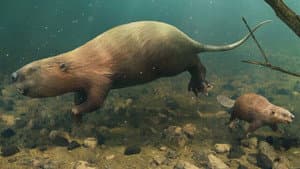
What Happened to the World's Biggest Beaver?
It’s important to us that you understand how big this beaver was. Just like modern beavers, it was semiaquatic -- it lived both on the land and in the water. The difference is that today’s beavers do a pretty special thing - one that the giant beaver probably didn’t, or couldn’t, do.
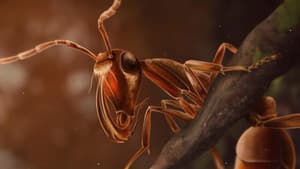
The Reign of the Hell Ants
This ancient species had the same six legs and segmented body that we’d recognize from an ant today. But it also had a huge, scythe-like jaw and a horn coming out of its head. This bizarre predator belonged to a group known as “hell ants.” But they’re gone now, and we’re still trying to figure out why.
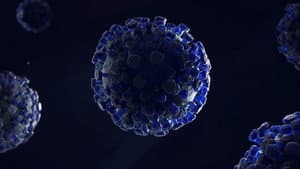
The Pandemic That Lasted 15 Million Years
Our DNA holds evidence of a huge, ancient pandemic, one that touched many different species, spanned the globe, and lasted for more than 15 million years.
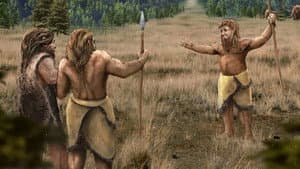
When We First Talked
The evolution of our ability to speak is its own epic saga and it’s worth pausing to appreciate that. It’s taken several million years to get to this moment where we can tell you about how it took several million years for us to get here.
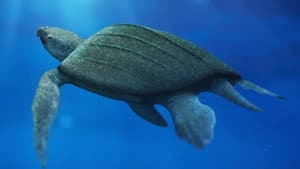
The Return of Giant Skin-Shell Sea Turtles
The biggest turtle ever described wasn’t an ancestor of today’s leatherback turtles or any other living sea turtles. But it looks like there are some things about being a giant, skin-shelled sea turtle that just work, no matter where, or when, you lived.
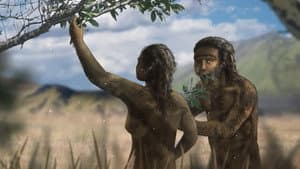
The Genes We Lost Along the Way
Our DNA holds thousands of dead genes and we’ve only just begun to unravel their stories. But one thing is already clear: we’re not just defined by the genes that we’ve gained over the course of our evolution, but also by the genes that we’ve lost along the way.
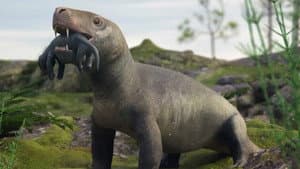
Our Bizarre, Possibly Venomous, Relative
It's possible Euchambersia possessed venom about 20 million years before the first lizards and over 150 million years before the first snakes evolved. We’ve teamed up Sarah Suta from Bizarre Beasts to explore the story of venomous mammals, both living and extinct.
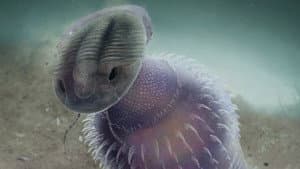
How Worm Holes Ended Wormworld
Elongated tubes, flat ribbons, and other “worm-like” body plans were so varied and abundant that a part of the Ediacaran is sometimes known as Wormworld. But in the end, the ancient Wormworld was ended by the actions of its very own worms.
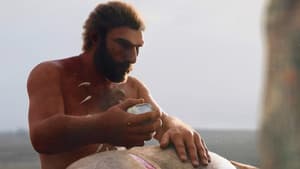
How Humans Became (Mostly) Right-Handed
No other placental mammal that we know of prefers one side of the body so consistently, not even our closest primate relatives. But being right-handed may have deep evolutionary roots in our lineage. And yet, being a leftie does seem to come with some unexpected advantages.
How Chilis Got Spicy (and Why We Love the Burn)
Today, chilis are the most widely cultivated spice crop in the world - grown everywhere from their native home in the Americas to Europe, Africa, and Asia. But how and why did chilis evolve this weird, fiery trick in the first place? And why did we learn to love that spicy burn?
How To Survive the Little Ice Age
Nunalleq, a village in what’s today southwest Alaska, seemed to have thrived during the Little Ice Age. How did this village manage to survive and prosper during this time period? And what caused this period of climate change in the first place?
When Crocs Thrived in the Seas
While dinosaurs were dominating the land, the metriorhynchids were thriving in the seas. But taking that plunge wasn’t easy because it takes a very special set of traits to fully dedicate yourself to life at sea.
When Trees Took Over the World
420 million years ago, the forest floor of what's now New York was covered with a plant that didn’t look like a tree at all, except its roots were made of wood. Instead of looking up to learn about the evolution of trees, it turns out paleobotanists should’ve been looking down all along.
How Weasels Got Skinny
Weasels have an extreme body plan that may push the boundaries of what’s metabolically possible. So when and how did this happen? Why'd the weasels get so skinny?
Where Are All The Squid Fossils?
It might surprise you but cephalopods have a pretty good fossil record, with one major exception. If squids were swimming around in the same oceans as their closest cousins, where did all the squids go?
Did These Giant Sloths Poop Themselves to Death?
At Tanque Loma, at least 22 giant ground sloths in the genus Eremotherium met their end. Of the five hypotheses that researchers proposed for what killed the sloths, the best supported one right now is that they died surrounded by their own poop.
The Traits That Spawned the Age of Mammals
Lots of the traits we think of as defining us as mammals show up pretty early, during the time of the dinosaurs. And, in some cases, they show up a lot earlier and in things that weren’t mammals at all.
The Island of the Last Surviving Mammoths
The Wrangel Island mammoths would end up being the final survivors of a once-widespread genus. In their final years, after having thrived in many parts of the world for millions of years, the very last mammoths that ever lived experienced what’s known as a mutational meltdown.
Where Are All the Medium-Sized Dinosaurs?
The remains of medium-sized predatory dinosaurs are pretty rare in places where giant predators like T. rex existed. Which is weird, because that’s just not how ecosystems work today.
How the Starfish Got Its Arms
The story of how the starfish got its arms reminds us that even animals that might be familiar to us today can have incredibly deep histories - ones that stretch back almost half a billion years.
The Creature That Stumped Darwin
Toxodon was one of the last members of a lineage that vanished 11,000 years ago after thriving in isolation for millions of years. And its fossils would inspire a revolutionary thinker to tackle a bigger mystery than Toxodon itself: evolution.
How Pollination Got Going Twice
The world of the Jurassic was a lot like ours - similar interactions between plants and insects were happening, but the players have changed over time. Because it looks like pollination by insects actually got going twice.
How a Supervolcano Ignited an Evolutionary Debate
The Toba supervolcano was the biggest explosive eruption of the last 2.5 million years. And humans were around to see it, or at least feel its effects! But what were those effects?
How a Mass Extinction Event Created the Amazon
The Amazon rainforest of South America is a paradise for flowering plants. But long ago, the landscape that we now think of as the Amazon looked very different. And would you believe that the entire revolution of the Amazon began with just one day?
When Mammals Only Went Out At Night
For decades, scientists believed dinosaurs were diurnal and tiny mammals were nocturnal. But as researchers have uncovered more mammalian fossils and studied the biology of different dinosaur species, they’ve found some surprising results.
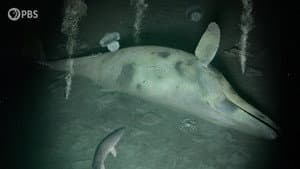
How Ancient Whales May Have Changed the Deep Ocean
It looks like the evolution of ocean-going whales like Borealodon may have affected communities found in the deep ocean, like the ones found around geothermal vents. And it turns out that when a whale dies, that’s just the beginning of the story.
How Dinosaurs Coupled Up
Dinosaur mating behavior has been the subject of a lot of speculation, but what can we actually say about it from the fossil record?
When It Was Too Hot for Leaves
Plants first made their way onto land at least 470 million years ago but for their first 80 million years, leaves as we know them today didn’t exist. What held them back?
Why The Paleo Diet Couldn't Save The Neanderthals
These relatives of ours lived in Eurasia for more than 300,000 years. They were expert toolmakers, using materials like stone, wood, and animal bone. They were also skilled hunters and foragers, and may even have created cave art. So what caused the decline and disappearance of their population? Well, in a way...it could’ve been us. But maybe not in the way you might’ve heard.
The Fossil Record In Your Mouth
The hardened residue scraped off your teeth at the dentist is called your dental calculus, and your dental calculus is the only part of your body that actually fossilizes while you’re alive! And scientists have figured out how to study & trace the evolutionary history of these microbes over tens of millions of years.
When Pterosaurs Walked
If you know one thing about pterosaurs, it’s that they’re flyers. And while pterosaurs may be well-known for their domination of the skies in the Mesozoic Era, they didn’t live their entire lives in the air. So how did we figure this out? And what were they like when they finally came down?