جاري التحميل...
7.0·2024·89 min·Français·إخراج Matthew Rankin
كوميديادراما
الممثلون الرئيسيون





المزيد مثل هذا

Communauté
7.3
Note Trakt
136 votes
10
9
9
17
8
42
7
28
6
26
5
7
4
4
3
2
2
1
1
404Spectateurs
9.9KCollectés
596Listes
Avis de la communauté (3)
A
AdamMorganVIPFeb 12, 2026
This film completely snuck up on me. In a weird kind of way, it felt like an unholy mixture of Monty Python and Wes Anderson with a thick indie vale put over it. Despite the semi-serious subject matter, the film works best as a block comedy. It really is an amazing achievement that a movie like this is as good as it is. I can't think of another movie like it. follow me at https://IHATEBadMovies.com or facebook IHATEBadMovies
H
heyflpCritique★9/10Jan 15, 2025
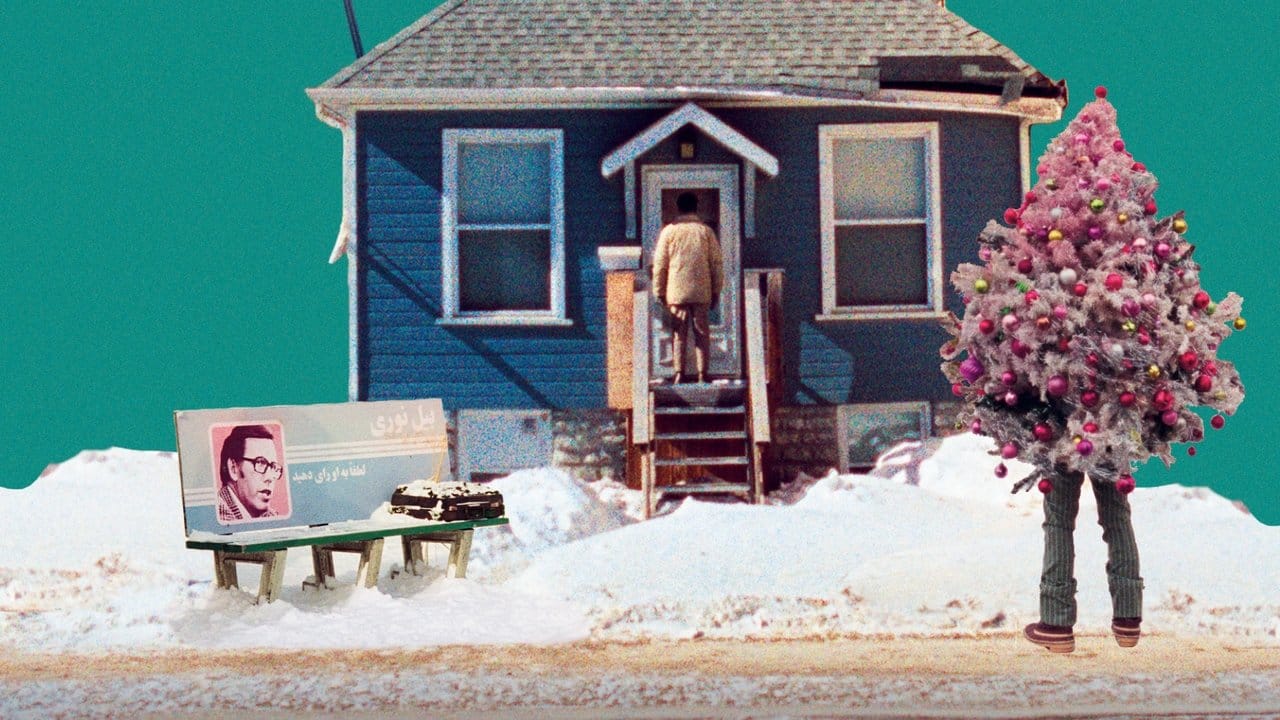
What happens when you take the cultural traditions of two seemingly distant worlds and fuse them into a chaotically harmonious mosaic? In “Universal Language”, Matthew Rankin crafts a story that’s both absurdly specific and oddly universal, examining Canadian identity through the lens of a deeply personal reimagining. The result is an ode to multiculturalism, brimming with ironic humor, cultural parodies, and a warm humanity that transcends linguistic boundaries. From the start, Rankin plunges us into an alternate Canada where Farsi and French are the official languages. This choice might seem random at first, but it’s actually a meticulous effort to subvert traditional narratives of Canadian identity. The visual humor—like a Winnipeg school sign written in Persian script—sets the film’s quirky tone, blending magical realism with deadpan comedy. Professor Bilodeau, played with biting wit by Mani Soleymanlou, becomes both a symbol of everyday exasperation and a tragicomic figure embodying the tensions between cultural tradition and innovation. The journey of sisters Negin (Rojina Esmaeili) and Nazgol (Saba Vahedyousefi) captures Rankin’s vision of childhood as a realm of improbable discoveries and absurd adventures. When they find a frozen banknote stuck in ice, their innocent desire to free it morphs into a mission that takes them through brutalist neighborhoods with monochromatic names. This icy, concrete setting deliciously contrasts with the cultural vibrancy brought to life by the sisters’ Farsi dialogue and boundless energy. Their quest isn’t just about retrieving a piece of money—it’s a metaphor for perseverance and the search for meaning in an often indifferent world. In a parallel narrative, Rankin inserts himself as a fictionalized version of himself, delivering a storyline that’s equal parts comedic and introspective. His journey to visit his ailing mother in Manitoba highlights the peculiarities of Canadian life: a live turkey with its own seat on the bus, banal monuments celebrated as historical landmarks. This balance between the mundane and the surreal is where the film truly shines, transforming small, everyday details into sharp commentary on national identity, collective memory, and the bonds that connect us. Rankin’s cinematic influences are both obvious and masterfully employed. Winnipeg’s aesthetic recalls the work of Guy Maddin, while the bizarre scenarios evoke Roy Andersson’s humor. Yet at its heart, the film pulses with the sensitivity of Abbas Kiarostami. The classroom scenes, blending humor with a touch of melancholy, are a direct homage to Iranian cinema, adding a layer of universality that transcends geography. This cultural connection isn’t a superficial gimmick but is deeply woven into the narrative, reflecting Rankin’s genuine effort to explore what it means to belong in a constantly shifting world. Even in its lightheartedness, “Universal Language” delivers a sharp critique of identity and cultural integration. By reimagining Canada as a space shared between two cultures, the film challenges xenophobia and isolation, offering a vision where differences are celebrated rather than erased. There’s also a playful provocation in the film’s visual and narrative choices, like Tim Hortons signs written in Farsi or pharmacies embracing the exaggerated minimalism of the No Name brand. These local jokes might not land as strongly with international audiences, but they add layers of authenticity for those familiar with Canadian cultural symbols. What truly elevates “Universal Language”, though, is its ability to balance absurdity with empathy. No matter how eccentric the situations get—whether it’s Turks navigating the city or reenactments of 1950s parking lot incidents—the film never loses sight of its characters’ humanity. The third act’s role-swapping among actors reinforces the idea that, despite cultural or linguistic differences, we share a common essence. In the end, Rankin delivers more than a film—he offers a cinematic experience that challenges conventions while celebrating life’s complexity. “Universal Language” isn’t just a cultural satire or a surreal homage; it’s a reminder that, even in a fragmented world, there’s still room for connection, understanding, and, of course, a little bit of madness.
M
miguelreina★8/10May 20, 2024
[Cannes '24] The director creates a scenario that mixes Winnipeg with Tehran, in which the characters communicate speaking French and Farsi, creating an imaginative recreation of stories based on reality and invented narratives, in which the connection of the human being is mainly addressed, beyond distance or cultural differences. With references to Iranian cinema, the film also has the self-deprecating tone of Canadian cinema, an ironic look at the monotonous landscape of Winnipeg, shown by a tourist guide. From the static shots that show the actions through the windows, to the retro production design reminiscent of Wes Anderson, the story moves in a surreal reality in which time and space intertwine to offer a strange but strange comedy very suggestive.
المراجعات