جاري التحميل...
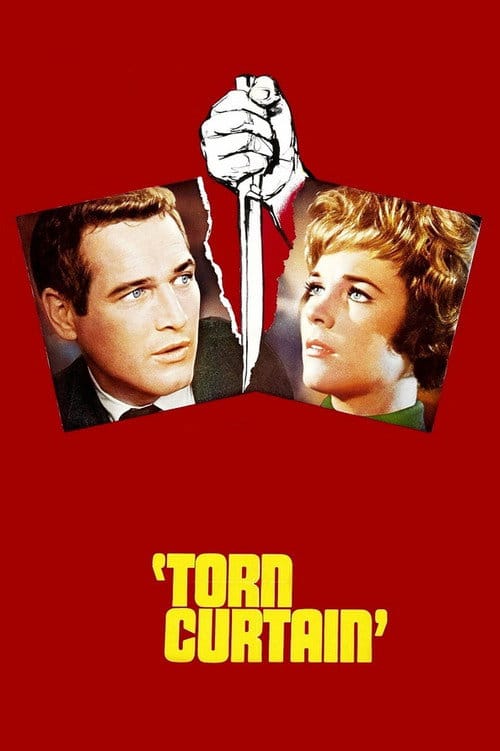
6.6·1966·127 min·English·إخراج ألفريد هتشكوك
إنه يمزقك بتشويق!
إثارة
ملخص
خلال الحرب الباردة ، يبدو أن عالمًا أمريكيًا ينشق إلى ألمانيا الشرقية كجزء من مهمة عباءة وخنجر لإيجاد صيغة لحل الراتنج ، لكن الخطة تنحرف عندما تتبعه خطيبته ، غير مدركة لدوافعه ، عبر الحدود. .
الممثلون الرئيسيون


المزيد مثل هذا





Communauté
6.6
Note Trakt
672 votes
10
59
9
19
8
86
7
172
6
219
5
59
4
29
3
11
2
8
1
9
1.8KSpectateurs
58.5KCollectés
1.7KListes
Avis de la communauté (4)
G
glasgow1975★2/10Feb 14, 2022
This really was pretty poor. If I hadn't literally seen him in his trademark cameo I wouldn't have thought Hitchcock directed this. Half the time I had no idea what was happening. The plot is nonsense. A professor pretends to defect to meet another professor in the Eastern Bloc, and his fiance joins him on a whim because why wouldn't you defect to Communism after 5 minutes thought? Wouldn't the spy network already have assets who could meet this professor already in place? There's absolutely zero chemistry between Julie Andrews and Paul Newman making it even more ludicrous she would defect with him. Wish I hadn't wasted my time.
♥1
A
AlfieSGDVIP★6/10Aug 26, 2025
Alfred Hitchcock had absolute star power at his disposal in 1966 for his spy thriller “Torn Curtain.” There were not many bigger names than Paul Newman and Julie Andrews at the time. Unfortunately, the star-studded line-up didn't pay off, as Newman and Andrews don't have the right chemistry in the film. And the plot itself is pretty generic. That said, “Torn Curtain” does have its moments, mainly thanks to some of the supporting characters and the expertly crafted production. But for me, it never really clicked.
D
drqshadowCritique★5/10Apr 1, 2025
While preparing for his fiftieth feature, Alfred Hitchcock was fascinated by the real-life saga of Guy Burgess, a connected British diplomat who ignited an international scandal by defecting to the Soviet Union. Hitch would co-opt and fictionalize that account with _Torn Curtain_, the aforementioned anniversary picture, in which a jilted American scientist (Paul Newman) walks through the Iron Curtain when his funding is revoked. He makes no mention of this to his long-term romantic partner (Julie Andrews), who tags along unwanted on an overseas voyage and catches him in the act of trading passports. Never one to let survival instincts stand in the way of a good engagement, she then follows him into East Berlin and plunges them both into deep, hot political waters. Hitchcock was unhappy with how this turned out, having rushed through production to accommodate the big-name stars he didn’t want in the first place. He found Newman’s method acting techniques frustrating, Andrews distant and distracted, and the pair’s A-list asking price an unnecessary strain on his limited budget. He also retained composer Bernard Herrmann, a longtime collaborator, against studio wishes, then replaced him following a testy personal disagreement. Suffice to say, _Torn Curtain_ was a tumultuous, discouraging production for the legendary director, and one that doesn’t live up to his usual standards. Which is disappointing, because the story’s bones have purpose and promise. In an era where James Bond was winking and drinking his way through all manner of phony Hollywood espionage tricks, Hitchcock sets out to prove that the truth is far uglier. Our turncoat scientist, an admitted amateur, is far from suave as he fails to keep a story straight or mislead his suspicious Soviet handlers. He’s adept enough to permanently silence one such villain, but the act is hardly impressive. Even with help, he struggles and scrambles to put the guy’s lights out. That scene is awkward and uncomfortable, nothing romantic about it, and lands about as close as the finished film gets to what I suspect (hope?) was its director’s intention. What remains is a case of hits and whiffs. Newman and Andrews provide a terse and unconvincing romance, a stiff partnership with all the fire and passion of a tired old married couple. They’re always running somewhere, racing an impossible clock, and the details of their predicament make us suspect everyone, even those who profess to help. There’s tension galore, right in Hitch’s wheelhouse, but no impetus. Rather, the film employs an extremely relaxed pace, even as half of East Germany presses our spies against the Berlin Wall. A little pep would’ve gone a long way.
P
paulrobson666@duck.com★6/10Jun 1, 2024
It's all a bit boring and this is only exacerbated by being over two hours long. The first third especially so. The suspense rises significantly after that but by that time I'd already kinda lost interest.
المراجعات