جاري التحميل...
6.2·1995·79 min·Deutsch·إخراج فيم فيندرز
دراماوثائقي
الممثلون الرئيسيون



المزيد مثل هذا






Communauté
6.8
Note Trakt
11 votes
10
9
2
8
3
7
2
6
3
5
4
3
2
1
1
21Spectateurs
159Collectés
61Listes
Avis de la communauté (1)
J
jarvis-8710259VIPCritique★9/10Dec 7, 2024
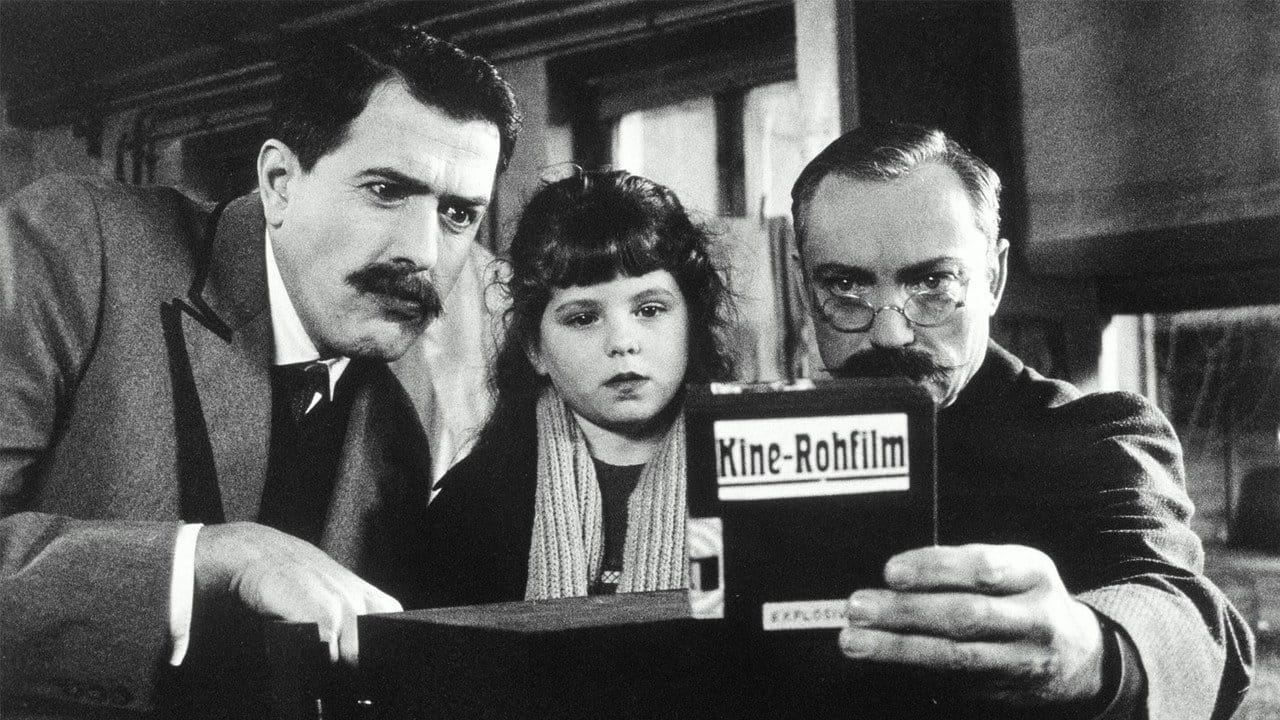
I had the great privilege of watching this in a local theatre yesterday, with live musical accompaniment by score composer Laurent Petitgand, and followed by an in-person, audience Q&A session with Wim Wenders. This was on the occasion of Wenders being awarded the European Film Academy's lifetime achievement award today. First of all, it's a pity that this film is not more widely known and appreciated, and is so hard to find. There were some DVD releases many years ago, which are long sold out. It's apparently available at some streaming service or other, but who really wants to trudge their way through the regional restrictions and DRM mess that these companies conjure up around the films? What I got to see yesterday is a remastered copy from 2023, with great picture quality and a new score (which, as I mentioned, was performed live at the showing). This gives me some hope that maybe a Blu-ray or UHD release might be in the works. I'll be first in line to get a copy, because the film is wonderful on so many levels. Some words on the background – maybe this is well-known, but I learned it from Wenders' talk yesterday. The film was initially a short-film project with students of the University of Television and Film in Munich, Wenders' alma mater. This makes up roughly the first third of the full movie, being a fictionalised retelling of the Skladanowsky story from the perspective of Max Skladanowsky's oldest daughter, recorded with a hand-cranked camera from 1922. Everyone involved in the project had so much fun that they revisited it a year later, and turned it into this feature-length film. Apart from wrapping up the Skladanowsky story by also covering the Wintergarten presentations and their ultimate defeat in the face of the Lumières' technologically superior system, a highlight is the interview snippets with Lucie Hürtgen-Skladanowsky, Max's youngest daughter, who, at the time of recording, was 91 years old, still living in her father's house in Berlin-Pankow, and turning out to be an endearing, feisty woman with a great presence of mind and fantastic memory of events reaching back into the 1920s. The film is worth watching for her scenes alone. The film works on so many levels. In its reenactments, it's a pretty authentic retelling, confirmed by daughter and niece Lucie, of the story of the Skladanowskys' development of the Bioscop film projector, their struggles, successes, and defeats. It's a story worth telling to anyone even remotely interested in the history of cinema, and makes a great case for the Germans' claim to innovation in the field along with the more widely-known French, British, and American innovators – even if the German system ended up being quickly replaced by its competitors'. In this footage, it's also an amusing comedy, with an authentic silent slapstick feel, because, in some way, it _is_ authentic, having been recorded with period eqiupment and techniques. In its interview parts, it's a wonderful documentary based on the memories of a very fascinating and likeable contemporary witness. And, a level you sadly won't get when you watch this on the hopefully soon-to-be-available home video release of the remaster, it was especially amazing and touching to me to be able to see it in a way that was as close as I was likely to get to a Wintergarten-style show: in a public theatre, filled with other people interested in the art of cinema, and accompanied by live music (with Petitgand also using effects he sampled from a real theatre organ). This added a whole other meta level of excitement to the showing. Ultimately, it's also a tragic story, considering the Skladanowskys' lack of success with their inventions. Wenders mentioned that this was a major reason for why he wanted to make this film. He was very touched when learning the story of these inventive brothers. Wealthy industrialists like the Lumière brothers or Thomas Edison used their considerable resources to professionally develop and market their new technologies, while the Skladanowskys were rather poor fairground showmen, and inventing in relative isolation. Given the circumstances, what they achieved is even more impressive. It's a heart-breaking story of renegade inventors who had the dream and almost got there, despite their lack of means, and even were at the very front of developments for a brutally brief moment in time. Wenders makes a good case that it might have been down just to a couple of minor coincidences that most history books talk of the world of cinema having started with the Lumière cinematographe, and not the Skladanowsky bioscope. I was initially a bit skeptical about how the mixture of documentary, reenactment, and imitation (using the 1920s camera) would work, but it turns out that the combination works just brilliantly and comes together very nicely. In retrospect, I don't know why I was even worried, given Wenders' track record. Who, by the way, came across as a very pleasant, down-to-earth, unpretentious person. All I can recommend is: definitely go see this if you get the chance. Here are a couple more tidbits from the Q&A session: Why were the Wintergarten shorts reenacted instead of using the originals? [spoiler]The originals hadn't been restored at the time of filming, all that was available were some still frames. Reenactment was the only feasible option at the time.[/spoiler] What did Lucie Hürtgen-Skladanowsky think about the scenes recorded in her house, [spoiler]with the fictitiuos characters observing the interview? She was a good sport about it and thought it was hilarious![/spoiler] Why is the credits and post-credits sequence so long? [spoiler]The makers researched that the German body for film funding requires a minimum duration of 70 minutes for a film to qualify as feature-length, so the original runtime (58 minutes, I believe?) had to be extended. After they were finished, they figured out that it actually had to be 76 minutes to qualify! So they had to stretch it out for another six minutes (leading to possibly the longest credits sequence in cinematic history). I have since looked this up myself and see that it's actually 79 minutes – maybe this has been changed more recently.[/spoiler] What about the original Bioscop? [spoiler]It actually survived and is now housed at the Filmmuseum Potsdam. The close-up footage in this film shows the real Bioscop! However, the filmmakers weren't allowed to move the machine from the museum, so everything was shot there. That's why in most scenes, such as at the Skladanowsky home, the Bioscop is hidden behind a curtain![/spoiler] Answers like this are also why the word unpretentious came to my mind after Wenders' Q&A session. Unlike so many other cinema greats, he doesn't pretend like every little curiosity has to be a Masterstroke of the Artistic Genius that couldn't have been any other way, and maybe the plebs just don't get it. Sometimes it's just: this was an emergency solution, this felt like the best way, and that was just fun to do. Very refreshing.
المراجعات