جاري التحميل...
7.2·2010·135 min·中文·إخراج 冯小刚
دراما
الممثلون الرئيسيون










المزيد مثل هذا










Communauté
7.4
Note Trakt
256 votes
10
35
9
23
8
72
7
60
6
40
5
12
4
2
3
2
2
5
1
5
706Spectateurs
8.9KCollectés
693Listes
Avis de la communauté (1)
A
AES-senpaiCritique★10/10Jul 12, 2026
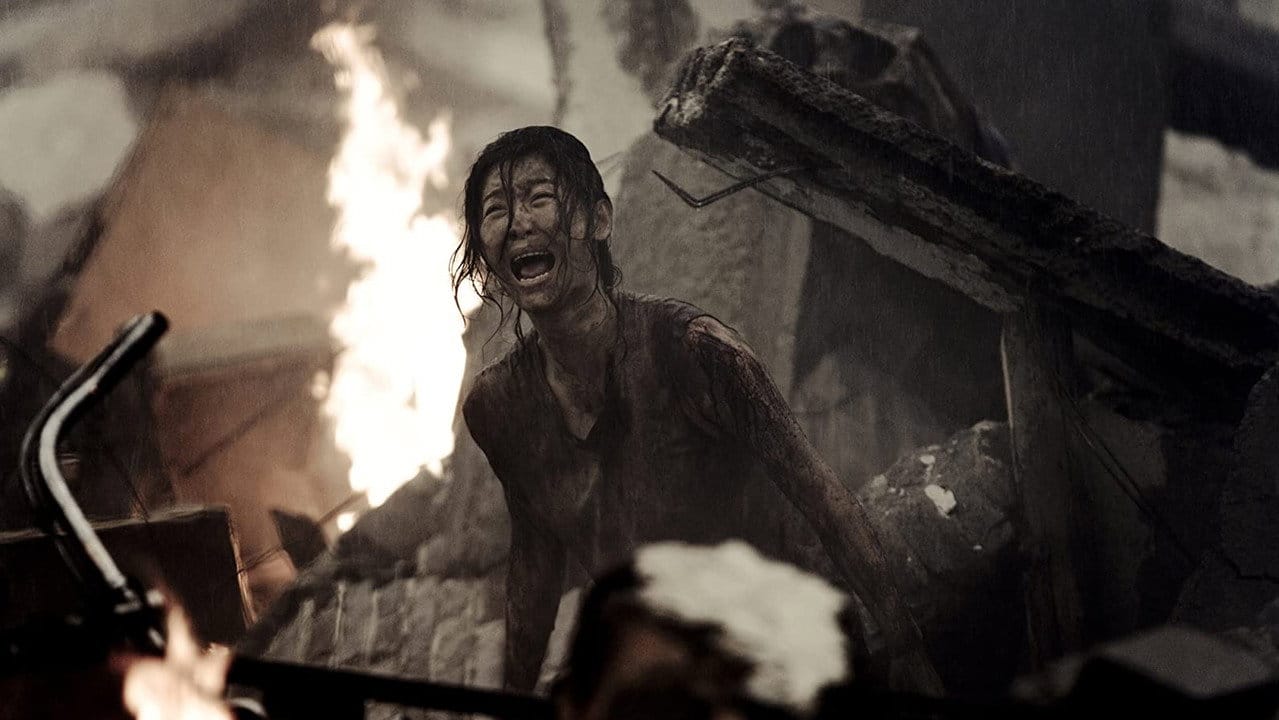
A major Chinese blockbuster with exemplary cinematography. In a way, Aftershock benefited from a higher budget, which allowed it to deliver a superior experience that offers a masterful handling of human drama against the backdrop of historical events in China. Aftershock takes the viewer back to 1976 Tangshan, China, right when a massive earthquake strikes the city. We are introduced to a family of four, whose lives are soon upended as the unpredictable wrath of Mother Nature engulfs the entire city, destroying countless lives and families in the process. This sets up the melodramatic stage for the next two hours, where Yuan Ni (Xu Fan) must make the impossible choice of which of her twins the rescuers should save: her son Da Fang or her daughter Fang Deng. Tradition, culture, and customs, unfortunately, make this a heart-wrenching no-brainer when the decision is made on impulse—compounded by the fact that her husband died trying to rescue her, leaving her as a devoted wife burdened with ensuring the preservation of the family line. Worse still, this decision is made within earshot of Fang Deng, who is fighting for her life beneath the rubble. Through a miracle of heaven, Fang Deng survives the ordeal but is found by a PLA soldier and sent to a survivors' camp. There, she is adopted by a family played by Chen Jin and Chen Daoming, both of whom deliver exemplary performances as her adoptive mother and father, respectively. The narrative then splits into two paths: one following the grown-up Da Fang (Li Chen) and the other following Fang Deng (Zhang Jingchu) through their trials and tribulations growing up in China over the last 30 years. This is interspersed with glimpses of an increasingly vibrant Tangshan and other Chinese cities, showcasing the country’s economic development. Based on a novel, what truly works here are the small subplots introduced along the way—such as teenage romance, filial piety, and, crucially, the core theme of family. These merge beautifully with the inclusion of major historical events, like the death of Chairman Mao and a more recent earthquake that brings the characters back together. Every member of the cast delivers an exceptional performance, making the emotional, melodramatic finale even more powerful as we see how the bitterness and hatred accumulated over the years can dissipate with the passage of time and the opportunity to seek forgiveness. If there is a flaw, the editing seemed to buckle slightly under the weight of the emotions, introducing a few abrupt cuts in scenes where you would expect the camera to linger for a more emotional closure. Nevertheless, the overall cinematography is excellent at capturing the look and feel of the different eras from the '70s to the '90s. The special effects are the only other point of criticism; the use of digital effects feels somewhat clumsy, whereas they should have been seamless to ensure the emotional weight wasn't undermined. Aftershock captures the exasperation and resignation of a survivor, succinctly explaining not just the physical scars, but the emotional ones that linger far longer with survivors, weighed down by hearts full of guilt. An earthquake itself does not last long, but the emotional journey of family members separated by a cataclysmic event continues for a lifetime. Aftershock chose the right path by focusing on the aftermath of the tragedy, delivering a film rich in the human emotions of grief and suffering. Highly recommended!
المراجعات