جاري التحميل...
6.8·2014·99 min·English·إخراج Yann Demange
إثارةحركةدراماحرب
ملخص
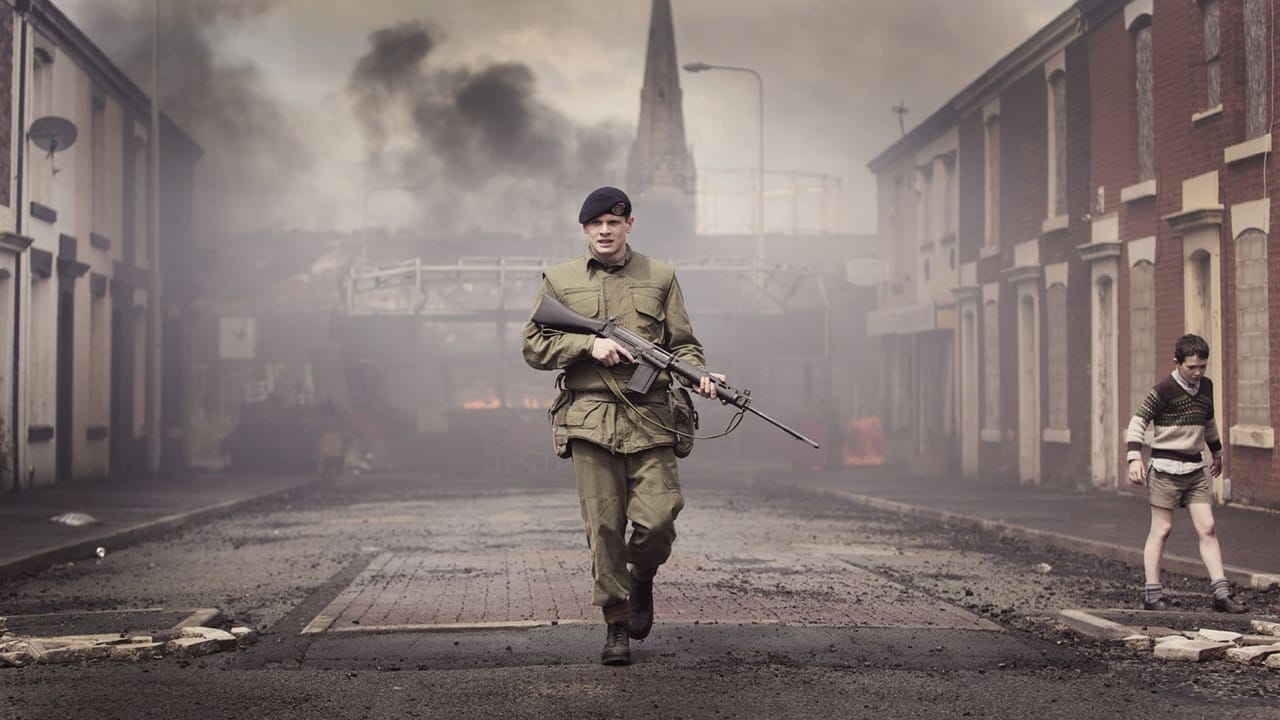
تدور أحداث الفيلم أثناء عمليات الشغب التي حدثت في بلفاست عام 1971، والتي استمرت ما يقرب من الثلاثين عام، وحصدت حوالي 3500 روح. ويتركز الفيلم حول عسكري شاب يتخلى عنه فريقه، ويتركوه وحيدًا وتائهًا، فيجد نفسه مجبر على أن يدافع عن نفسه لينجو من الخطر الموجود بالشارع.
الممثلون الرئيسيون








المزيد مثل هذا
Communauté
7.1
Note Trakt
2.2K votes
10
146
9
148
8
521
7
799
6
410
5
97
4
42
3
10
2
12
1
31
6.8KSpectateurs
81.3KCollectés
5.3KListes
Avis de la communauté (10)
T
tcit★9/10Mar 7, 2015
I don't think everybody will like it, but this film literally hold my breath most of the time. I just couldn't think of anything else after that.
♥8
A
AudiowormVIPCritique★8/10Aug 6, 2020
The Troubles were a truly fucked up conflict. The British education on The Troubles is weak, and people are generally unaware of the events that lead to the escalating violence that defined Belfast's recent history. With this context, the film does a good job of humanising and villianising all sides with a level of fairness that is not often seen in British made media about The Troubles. Soldiers are shown as both young men (often from a tough situation) with very little in the way of stakes in the fight and as the armed support for a ruthless and dehumanising state. Senior officers range from those who want to minimise the use of riot gear (because they're not their to start a riot) to those who are happy to kill their own to escalate the situation. Catholics range from the innocent, the angry, the rage-filled, the tired, and the violent. And it has a shown a decent understanding of what was happening with the IRA at this time in history, and how someone can end up involved in the IRA due to the circumstances of their lives. All of this is weaved around what is effectively a cat and mouse chase across Belfast after dark when being in the wrong part of town is a death sentence for a British soldier.
♥3
S
SimonYNWAVIPMay 13, 2015
A tense film that works both as a stripped-down action thriller, but also an insight into a very tough and difficult time in British and Irish history. The film focuses on the viewpoint of a young soldier sent to Belfast for the first time and whilst the audience is primed to root for the soldier throughout the film, importantly the film shows the brutality of both sides. The initial confrontation between the soldiers and residents of the community builds tension brilliantly as matters escalate out of control, and the handheld camerawork lends an authenticity and gritty realism to the film without every becoming incoherent. From there the film essentially becomes a sustained chase/hunt as the protagonist battles to stay alive, but each encounter shows the reality of life in a community ripped apart by years of violence, fear and hatred. Well worth a look.
♥3
F
FinFan★6/10Sep 22, 2015
I think the fact that the filmmakers tried to make this movie as realistic looking as possible will put a lot of people of. It´s not an easy watch. I don´t know much about the conflict, I was too young, and in that regard the movie doesn´t helped me understand much. If anything at the end I´m not sure who were the bad guys - but maybe that was the intention.
♥2
D
decatur555VIPCritique★8/10Mar 27, 2026
'71 struck me as a very solid and very well-made film, one of those movies that throws you into a situation without needing to explain everything in a heavy-handed way. That sense of Belfast in the 1970s as a broken, oppressive place, full of tension, where any street, any corner, and any doorway can become a threat, is extremely well done. The film captures that atmosphere of dirty war and constant fear very effectively. What stands out most is precisely its realism. It does not feel like a neat reconstruction or an overly tidy historical film, but something much more physical, grimy, and immediate. You are inside the chaos, the confusion, and the violence of a conflict where there is no clear line that allows you to feel safe. That gives the film a lot of force, because the story is experienced almost more through the body than through the mind. It also works very well as a survival thriller. The film knows how to sustain tension, keep moving with pace, and make the protagonist feel permanently on the edge. What is good, though, is that it does not settle for chase mechanics or pure suspense. Little by little, it reveals the background context: the clashes between the two communities, the British presence caught in the middle, and the feeling that nobody really controls a situation that has already rotted beyond repair. I also liked that it does not try to oversimplify such a complex conflict. It does not turn everything into an easy scheme of good and bad sides, and that matters. There is violence, hatred, conflicting interests, and deeply damaged humanity everywhere. The film does not try to offer a full history lesson, but it does make you feel the human weight of the conflict, which is what matters most in the end. It is true that now and then it can feel as if it piles up too many extreme situations or pushes a coincidence slightly too far in order to keep the ordeal going. But it is so well directed, so well staged, and so well sustained in its tension that this barely hurts it. If anything, almost everything adds up to make the experience intense and absorbing. In the end, '71 feels like a harsh, nervous, and very immersive film that combines thriller mechanics with the portrait of a city and a period scarred by violence. I am not sure it fully explores all of its political implications, but as a cinematic experience it works extremely well and makes that 1970s Belfast feel like a true everyday hell.
♥1
المراجعات