جاري التحميل...

4.9·1970·70 min·日本語·إخراج 渡辺護
جريمةدراما
الممثلون الرئيسيون


المزيد مثل هذا









Communauté
4.9
Note Trakt
10 votes
10
9
8
1
7
1
6
2
5
3
4
3
2
2
1
1
26Spectateurs
609Collectés
50Listes
Avis de la communauté (2)
M
miguelreinaCritique★7/10Mar 28, 2021
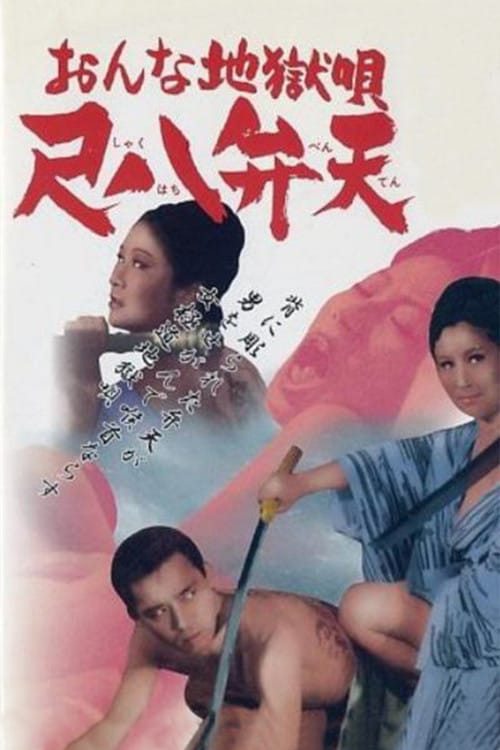
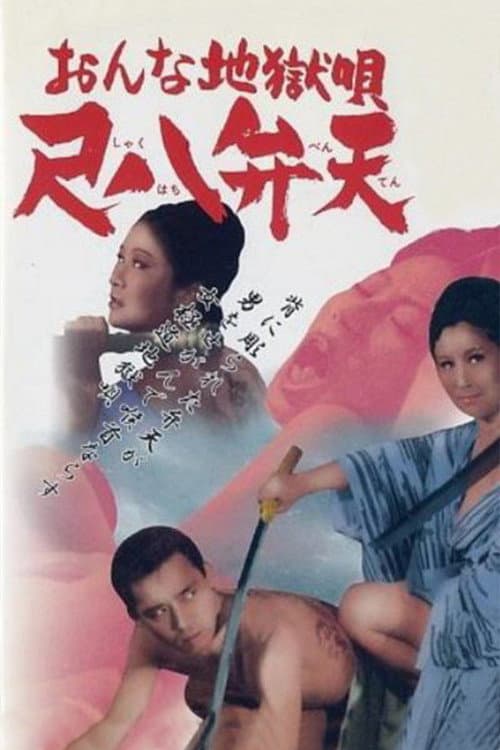
In some cases, there are "pink films" in which the woman is represented as a heroine, as in this movie. The director, Mamoru Watanabe, is another of the fundamental names of this subgenre, which he cultivated for more than forty years, and in this film he presents a story starring Okayo, a woman who is chased by a corrupt policeman, who catches her and sells her to a gangster sadistic. She has a tattoo of Benten, the goddess of fortune, on her back, which is an offense to men. In this film, shot in black and white but with colored inserts for the sex scenes, there is a representation of violence and torture that works as a reflection of patriarchal oppression. The director uses inserts from erotic Japanese prints, and places sexual violence in an environment of natural landscapes that seems idyllic, as a kind of contrast that further reinforces the dramatic character of the scenes. The fact of turning the protagonist into a heroine, creating a kind of mixture between "pinku eiga" and "jidaigeki" (period drama films), causes the scenes of rape and sadism to acquire a different meaning, more as a critical representation than as a vision of violence from an aesthetic point of view. Because, contrary to what happens in "Blue Film Woman" (1969), for example, the punishment ends up being for the rapists, not for the victim. In fact, this film is a sequel to "Otoko-goroshi: Gokuaku benten" (Mamoru Watanabe, 1969), which also starred Tamaki Katori, one of the muses from the "pink films", who played the classic "Flesh market" (Satoru Kobayashi, 1962) with which this subgenre began film.
♥1
S
Saint Pauly★5/10Mar 30, 2021
Like a hairy mole on my ass, this is unique and I've never seen anything like it before, but I won't go out of my way to see it again. A Japanese 'pink' film (70s soft-core pornography -- think _Emmanuelle in Tokyo_ but with some artistic merit) _Women Hell Song_ / おんな地獄唄 尺八弁天 is about Okayo Benten (the latter a nickname garnered from the Buddhist Goddess of Love she has tattooed all over her back) who's an outlaw on the run after she killed a Yakuza. The mix of 1940s style filmmaking and the 70s semi-erotic style (the sex scenes are filmed in color but the narrative in black and white) is interesting, as is the strength of the female central character, but neither of these are able to elevate the film into the realm of recommendable.
المراجعات