Chargement...
7.2·1982·114 min·English·Réalisé par Tobe Hooper
Ils sont là. Ils veulent se venger. Ils savent comment.
Horreur
Synopsis
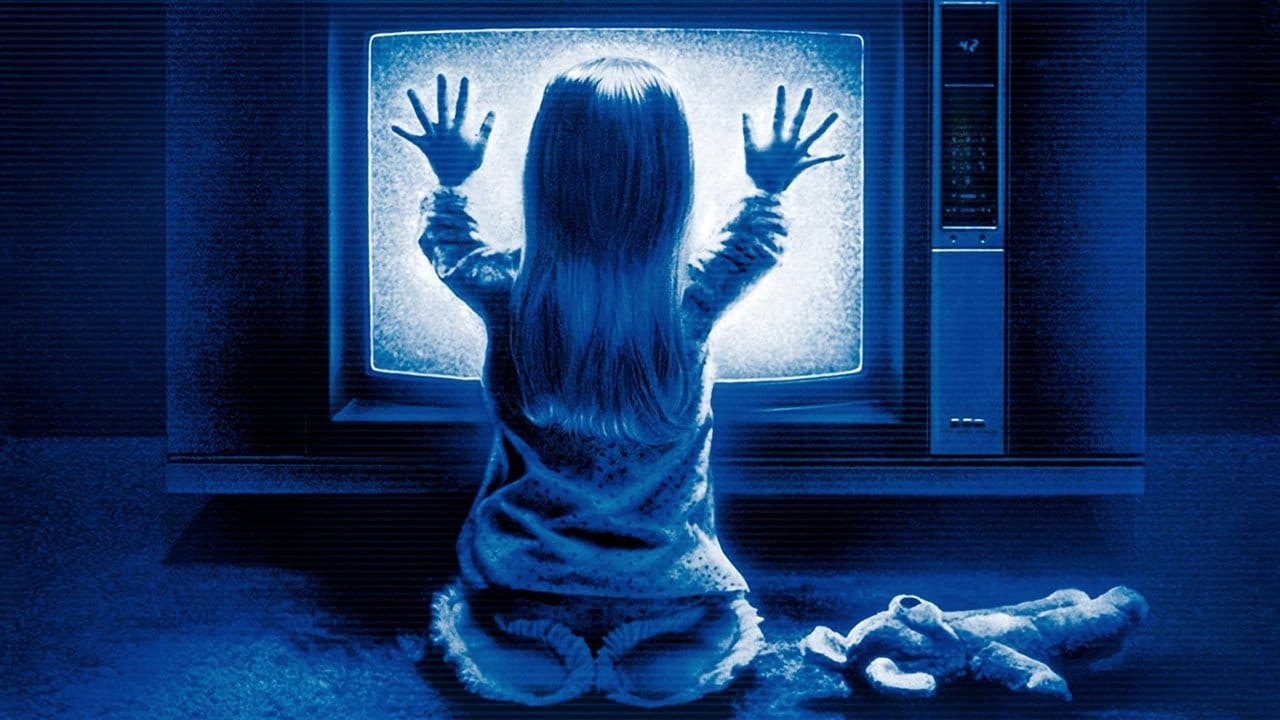
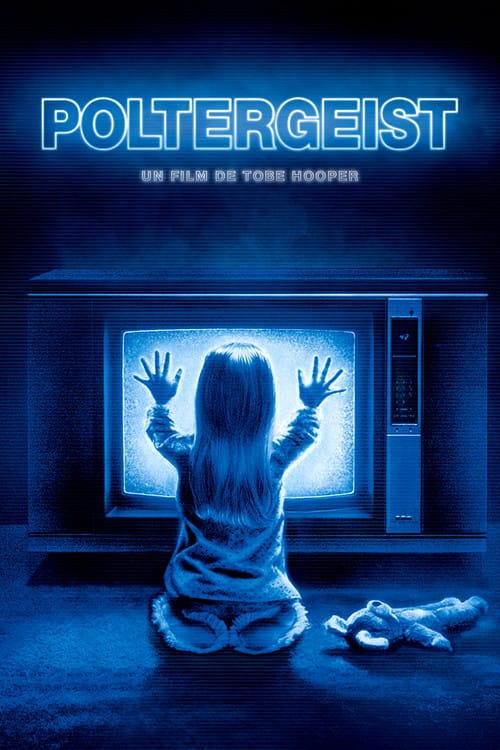
L'heureuse famille Freeling mène une vie tranquille et prospère dans la petite ville de Cuesta Verde. Cependant, leur maison devient le théâtre d'étranges phénomènes quand des objets commencent à se déplacer et que le sol se met à trembler. Une nuit, la petite Carol Anne disparaît et se met à communiquer avec ses parents à travers la télévision. Les Freeling font alors appel à un parapsychologue.
Acteurs principaux







Poltergeist - Saga
Plus comme ça


Communauté
7.4
Note Trakt
6.4K votes
10
782
9
436
8
1.9K
7
1.8K
6
979
5
243
4
159
3
64
2
64
1
42
22.7KSpectateurs
137.2KCollectés
12.4KListes
Avis de la communauté (11)
M
moonkodi★5/10Mar 30, 2017
A lot of fantasy in this horror. Luckily 80's Speilberg fantasy is good (if you like the style). This movie felt more fantasy than horror. As someone said the effects didn't age well; they look Disney. Some are still good or fun. I've seen this a few times and it's never stayed with me. Not my type of horror but I can see why it would have an audience. Very of its day. I remember people used to mention this movie a lot in the 80's and 90's. Not scary either.
♥8
D
DastenHero★10/10Oct 28, 2020
Without going into a complete analysis of this film, the thing that makes this horror picture stick out is that it's about love and the unconditional bond that lies within a healthy nuclear family. There's something indescribably beautiful about seeing a family hold on to each other the way they do in this film - some people might call it corny but personally, it makes gives me a little hope in humanity. It's a rare horror film in that it doesn't focus solely on effects or scares - it's a ghost story that hones in on having a soul to begin with.
♥6
A
AndrewBloomVIPCritique★9/10Oct 31, 2018
[9.3/10] *Poltergeist* breaks so many rules for the sorts of films I like. It relies more on traditional familial archetypes than thoroughly-developed characters. It opts for the big and brash rather than the subtle and subdued for most of its runtime. It’s more apt to go with screeches or speeches than to commit to naturalistic dialogue. Its emotions come in four colors; its approach is forceful, and it plays things loud and proud throughout. But damnit, I loved it. There is something elemental about *Poltergeist*. The film has a surface simplicity -- of hauntings and a family in crisis -- that makes it more approachable, more accessible, in its horror in suburbia setup. That’s not to say there isn’t complexity to what *Poltergeist* is doing. Beneath the scares and big emotions, there’s baked in commentary on the state of the nuclear family circa 1982, metaphors for motherhood and fatherhood that are viscerally felt, and even some manifest subtext. Yet what the film does best is draw you into these scenes of standard if droning domestic felicitude and then startle you, frighten you, and hearten you as it all comes crashing down and needs unlikely souls to come to the rescue. At base, the premise of the film’s story -- a daughter is kidnapped by ghosts -- is almost laughable. But amid the heightened emotions of parents desperate to save their child, investigators shocked to see the paranormal manifest, and allies standing firm against the unspeakable, it compels the viewer to invest in the people, passions, and parlor tricks the film puts on display. And what parlor tricks! There’s a danger of effects-heavy movies not aging well, particularly in the 30-40 years ago range where the effects aren’t advanced enough to seem modern but not rudimentary enough to seem charming. But *Poltergeist* comes out as scary and impressive as ever. Sure, there’s some rudimentary CGI, fake-looking skeletons, and obvious rubber masks here and there. But on the whole, the practical and other effects are as striking today as they were when the film was released. That’s because director Tobe Hooper (rumored to have an assist from producer Steven Spielberg) is as inclined to use tension, well-framed shots, and judicious editing to maximize the impact of whatever spooks and spectacle his team creates. There is a living tree that reaches in and snatches one of the children, a fright bolstered by the desperation and fraughtness of his parents’ attempts to rescue him. There is a run down a long, rouge-lit hallway that seems to expand into forever that underscores the way the laws of nature no longer have purchase in this home. And even when the effects are chintzier, just the suggestion of faces falling off with chunks spilling into the sink, of spectres slipping through the stream, of a pulsating maw threatening to suck your loved ones into another realm, is enough to carry the day with implication. It helps that *Poltergeist* is a fantastically-shot film. Almost every frame of the movie is blocked and staged for maximum impact. Hooper arranges his actors at different depths of frame, making the house feel tighter, the spaces more dramatic, from the visuals alone. He uses light and shadow to give the doorway to another place a perfectly otherworldly feel, and to heighten the drama of moments put into relief by its blinding flash. And the film is rife with reaction shots, human moments of response to inhuman developments that drive home the feeling of what happens as well as any special effect can. That’s one of the most interesting things about *Poltergeist* -- there is barely any exposition. The parapsychologist gives a little detail, but she and her team mainly affirm that something abnormal is happening and their aghast reactions say more than her words. The medium who comes to help gives the film’s clearest statement about what’s occurring, but speaks in poetry and heightened rhetoric more than she lays out details for the audience. And the Freeling patriarch excoriates his boss for not moving the bodies in the cemetery the house was built on for anyone in the cheap seats, but it’s a small detail as the house is combating and collapsing on its owners. Instead, *Poltergeist* resists the urge to have anyone explain who these characters are, how they got here, or the raw specifics of what’s going on. It’s content to show rather than tell, letting the disconnected but familiar family interactions; the shaken, disquieted, or frantic reactions to Carol Anne’s disappearance, and the sense of relief and exhaustion once it's all over clue the audience in to what’s important about the story, beyond the bare facts and figures. That’s helped along by composer Jerry Goldsmith’s tremendous score. Given its essentialist approach, the film leans on the score a great deal to heighten scenes and scaffold the emotional impact of its big moments. Whether it’s the foreboding hum that tells you something bad is about to happen, the bursts of sound that kick the horror into overdrive, or the dramatic swells that underscore the love and catharsis among those fighting the film’s good fight, Goldsmith’s music is an absolutely essential ingredient to what makes the film work. All of these features combine to tell a story that is more visceral than spelled out, very big but also very human, and suffused with enough comedy to let you exhale and enough horror to keep you frightened for one desperate family and their baptism-by-fire compatriots. It is a quietly feminist film, foregrounding four distinct female characters, and orbiting around notions of motherhood as it sets up its thefts and recoveries. It is also a message suggesting a certain staidness and bankruptcy in suburban life, reinforced by the electric hum of the television and its palliative glow that seems the key to the malevolent powers beyond infecting an otherwise safe home and loving family. But at base, it is just a damn compelling story, buoyed by creative effect after creative effect, founded on cinematography that grabs ahold of the viewer and never lets go, and built around characters and reactions that are grand and dramatic, while perfectly calibrated to the tone and touch of the film. Even thirty-five years later, *Poltergeist* is terrifying, tense, bold, and cathartic, and sets a high water mark for filmic tales of the supernatural disturbing, but also reaffirming, the heart of domestic life.
♥6
2
2111anixtJun 10, 2020
this is a really great no bullshit movie, only movie I've seen where people act rationally to everything and there's no unnecessary jump scares.
♥4
W
WhitsbrainCritique★10/10Jan 15, 2022
"Poltergeist" is nothing less than a great horror movie. It is suspenseful, scary, and it's full of surprises. I think the key to the success of this film is that you really like the characters. You care about the danger that they're in and there is a sense of wonder that permeates the entire film. It is loaded with lots of creepy elements. The old tree, the television, the clown doll, etc. And there are also all of those other-world nasties that have captured Carol Anne. The way that the story pulls you into its family and makes you care about their plight is amazing. The film contains loads of cool effects and scenes that are so much fun. There is a scene when the mother, Diane, straightens the chairs out around the dining room table. She thinks that little Carol Anne has pulled them away from the table. The shot here seems to be one single take. It's so cool because the camera shows Diane first rearranging the chairs and then passing by Carol Anne whose sitting on the counter between the dining room and the kitchen. The camera follows Diane into the kitchen for about 3 seconds. She then goes back into the dining room and within that short span of time the chairs have been stacked in a pyramid on top of the table with Carol Anne still sitting on the counter. It's a terrific trick, however it was done. There is also a point within the movie when one of the "ghostbusters" raids the fridge for a late-night snack. He grabs a chicken drumstick and shoves it in his mouth while grabbing other stuff. A look of disgust crosses his face and he drops the chicken leg from his mouth. There it lays on the floor, covered in maggots. He then sees a raw steak begin to crawl across the kitchen counter. The steak slowly oozes into a grotesque pile of who knows what. He then runs into the bathroom to rinse out his mouth or puke or something. He looks into the mirror and begins tearing his own face off. This effect shot is pretty primitive, but it is over the top. Its inclusion seems like a tip of the hat to old zombie movies and the influences of EC Comics. And let's not forget the twist near the end of the movie. "Poltergeist" is a true classic!
♥2
Avis