Chargement...

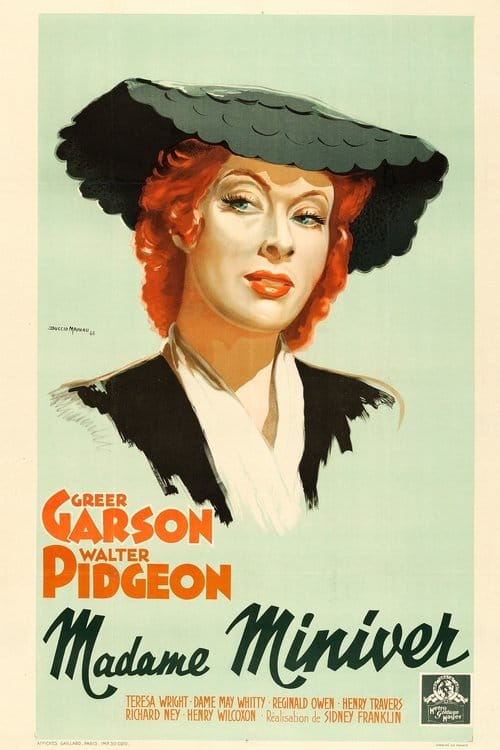
7.1·1942·133 min·English·Réalisé par William Wyler
DrameRomanceGuerre
Synopsis
En 1939 à Belham, près de Londres, vit la famille Miniver : Kay, Clem son mari et leurs trois enfants Vin, Toby et Judy. La guerre vient bouleverser le calme paisible de leur quotidien. Vin s’engage dans la Royal Air Force et se fiance avec Carol Beldon. M. Miniver, faisant partie de la défense passive, est appelé pour évacuer les soldats anglais bloqués à Dunkerque. Pendant son absence, Kay découvre un aviateur allemand blessé et affamé qui la menace. Après l’avoir désarmé, elle le livre aux autorités. Les bombardements allemands s’intensifient mais la vie continue malgré tout, leur vie s’écoulant le plus souvent dans des abris de fortune. Vin se marie avec Carol. Au beau milieu de la traditionnelle fête florale de Belham, survient un raid aérien allemand. En rentrant, la voiture de Mme Miniver est mitraillée, blessant à mort Carol...
Acteurs principaux









Mrs. Miniver Collection
Plus comme ça











Communauté
7.4
Note Trakt
339 votes
10
34
9
37
8
93
7
110
6
41
5
13
4
2
3
3
2
2
1
4
872Spectateurs
28.3KCollectés
2.3KListes
Avis de la communauté (8)
E
EZDubBOizz★7/10Jan 28, 2025
This is a movie I probably wouldn’t have appreciated five years ago, but now I can really see its value. It feels like a significant film for the time it was made, especially considering the message in the final credits. The film serves as a slice of life, set against the backdrop of a family caught in the middle of war. It’s a powerful exploration of human emotion and the complex thoughts and feelings one might experience during such a time. Overall, it’s a good movie and one I’d definitely recommend, 7.13/10
♥2
T
The_ArgentinianMar 2, 2022
I understand that they had to establish the family to be oblivious to the war but it takes too long to get going.
♥2
B
brightonguy★7/10May 23, 2020
It is not easy to describe this film. For the current generation, the film might not mean much but imagine those who watched this film, witnessing the events they themselves have gone through. Only then you truly understand the power of the film. To me, who is in his mid-30s, the film is certainly a reflection of decent, honest, not over the top acting you may be accustomed to see in films of the same era. This is certainly the reason it gets the score I gave. It could certainly be shorter but then you’d have to give up on some important character development scenes. Would I watch this film again? I don’t think so. Would I make my friends watch it? Possibly not.
♥2
S
soonertboneVIP★8/10Oct 12, 2023
Can't help but be swept away in the propaganda, largely on the strength of the performances by Garson (especially) and Pidgeon. Garson has a face, an expression, that she uses throughout the movie to great effect--it exudes strength, determination, and vulnerability all at once. It's quite a memorable performance. I love the sweetness and the gentle warmth suffused throughout--it's a chicken soup movie, even despite its heartbreaking subject matter.
♥1
D
drqshadowCritique★8/10Oct 14, 2022
World War II from the middle-class Brits’ perspective. We join a hard-working family, share their modest concerns just before the onset of hostilities, then stand by as their priorities drastically shift. In one moment, lavish expenses, exclusive flower shows and snooty neighbors comprise the extent of their worries. In the next, ears are tuned for air raid sirens, an eldest son races to join the RAF and a desperate Nazi paratrooper appears in the garden. _Mrs. Miniver_ was indeed propaganda, boosting the Allied cause while the wounds of the Nazis’ blitz on London were still fresh, but it’s far more subtle than the loud, whitewashed, nationalistic newsreels that usually represent that term. Here, we identify with the squabbles of pre-war life, feel the conflicted emotions of standing up for one’s beliefs at great personal risk, linger on the dark terror of a quaking single-family bomb shelter at bedtime. Those latter moments seem to stretch forever; a powerful blend of whimpering children and brave-faced parents that squeezes every last drop of empathy from a very ripe scenario. The Minivers are little more than pawns in this global game, but because the first act is so effectively disarming, it’s easy to feel trapped, unprepared, in that bunker right beside them. We fear the worst for their son, who routinely alerts family to his safety by cutting engines during household fly-overs, but this war is no distant specter. By the famously rousing final soliloquy, recited amidst the ruins of a bombed-out chapel, every single member of the community has paid tolls in one form or another. Critically beloved, _Mrs. Miniver_ took home six Academy Awards (including best picture and best director) and was almost immediately adapted to radio for broader dissemination. Even Joseph Goebbels, the infamous Nazi propaganda minister, held it up as a prime example of the kind of cinema he wanted to create with the German media machine.
♥1
Avis