Chargement...
7.2·1989·126 min·English·Réalisé par Tim Burton
FantastiqueActionCrime
Synopsis
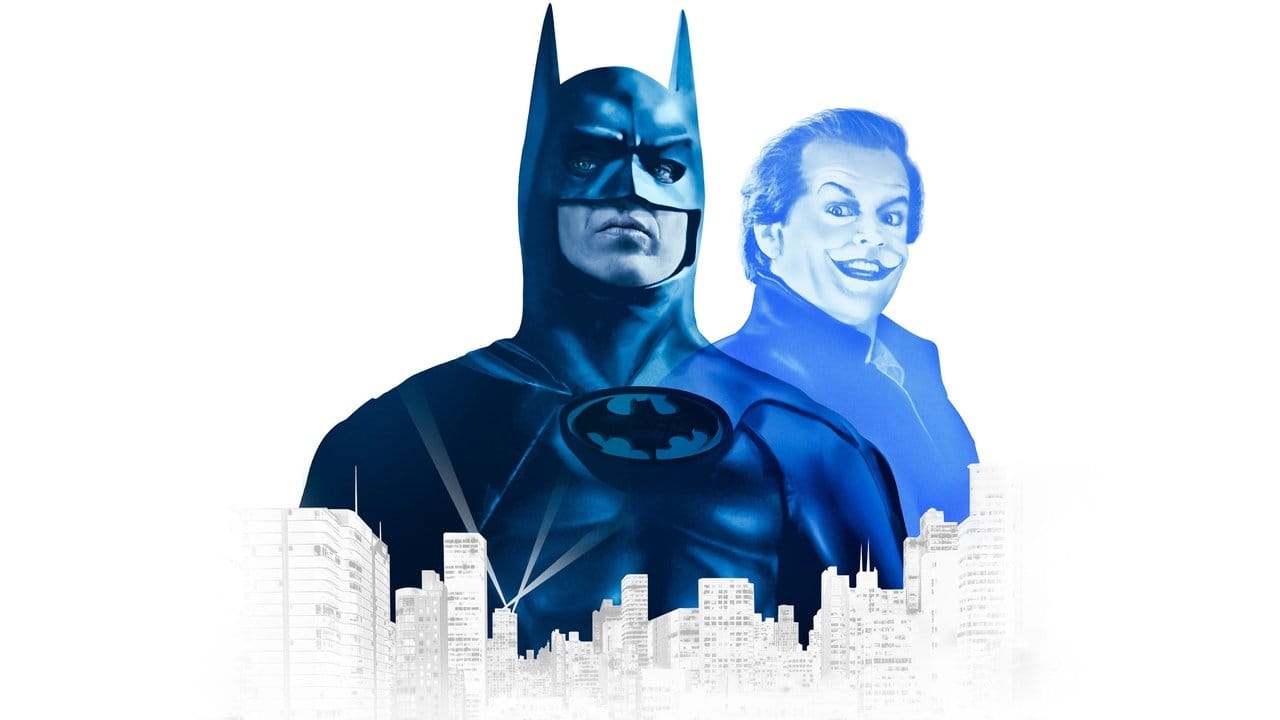
Violence et corruption règnent dans la ville de Gotham City. La mafia dirige la ville à sa manière, au nez et à la barbe des autorités, complètement dépassées par les événements. Depuis quelques semaines cependant, un mystérieux justicier, drapé dans un costume de chauve-souris, terrorise les malfaiteurs et sème l'inquiétude dans les rangs de la mafia. Une jeune journaliste, Vicki Vale, mène l'enquête. C'est ainsi qu'elle fait la connaissance d'un séduisant mais excentrique milliardaire, Bruce Wayne. Celui-ci n'est autre que Batman, qui l'a déjà sauvée. Elle rencontre également un odieux truand, Jack Napier, bras droit du parrain Carl Grissom…
Acteurs principaux



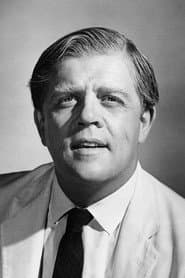
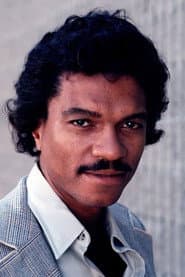
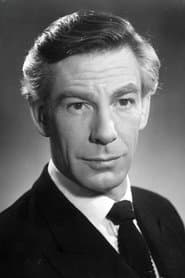
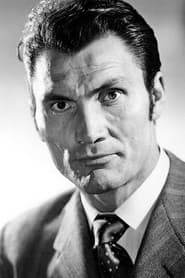

Batman - Saga
Plus comme ça
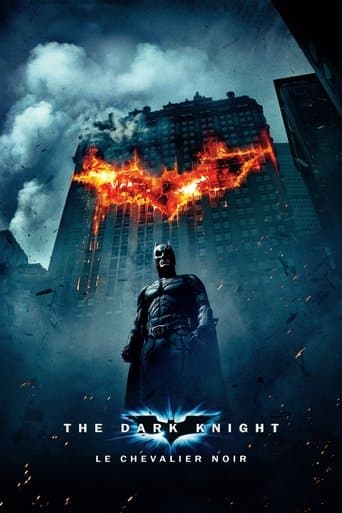
The Dark Knight : Le Chevalier noir
2008·8.5
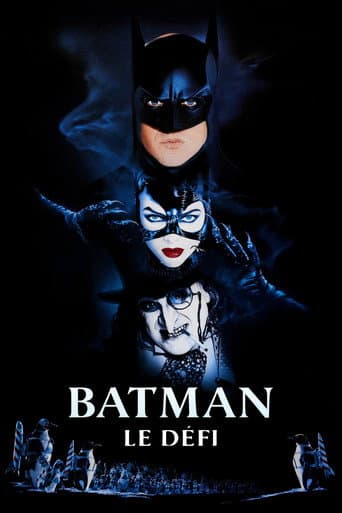
Batman : Le Défi
1992·6.9
Batman Begins
2005·7.7
The Dark Knight Rises
2012·7.8
Batman : Les Origines
2011·7.2
The Flash
1990·6.5
Batman: La Malédiction Qui s'abattit sur Gotham
2023·6.7
Batman v Superman : L'Aube de la Justice
2016·6.0
Suicide Squad
2016·5.9
Batman: La Mystérieuse Batwoman
2003·6.7
La Ligue des Justiciers : Échec
2012·7.4
The Mask
1994·7.0
Communauté
7.5
Note Trakt
13.4K votes
10
1.7K
9
958
8
4.2K
7
3.7K
6
2.0K
5
443
4
237
3
69
2
86
1
64
65.1KSpectateurs
265.1KCollectés
19.4KListes
Avis de la communauté (12)
E
echelon_four★5/10Aug 9, 2013
This movie does not hold up. Do not re-watch unless you want disappointment in your past self.
♥12
A
AndrewBloomVIPCritique★6/10Dec 12, 2016
5.7/10. Someday, possibly in the near future, we’re going to get a gritty, documentary-style Batman film about a regular guy who dresses up like a bat and gets into ugly fist fights with criminals. And when that happens, we’ll turn around and laugh at how cheesy and unrealistic the Christopher Nolan Batman films seem now. Today’s cultural sensation is tomorrow’s hokey relic. So it goes. But until that happens, it behooves us to look at Tim Burton’s 1989 *Batman* film, which comes off pretty corny and even rudimentary relative to the Dark Knight Trilogy, with some perspective. After the semi-grounded approach to the character in recent years, it seems odd that Burton’s film was praised for its serious approach to the source material. But contemporary critics were comparing it to William Dozer’s *Batman ‘66* the overtly comedic, Adam West incarnation of the caped crusader. So while much of what Burton does in *Batman* feels broader and even goofier than the bat-stories people think of today, it’s important to keep it in the context of the wide spectrum of portrayals of the character and his world, whether on the page or the screen, that have taken place over the last eighty years. Even with that thought in mind when approaching the film, it’s hard to reconcile it with the gut response to a film made almost three decades ago under very different standards and expectations for superhero films and blockbusters in general. Some of what dates the film is easily forgivable. The effects are not up to today’s standards – CGI or no – with models or miniatures standing out fairly clearly, and even details as minor as Batman’s costume contribute to the “just playing dress up” vibe. Between the two-piece cowl, or the curtain drapery bit the Dark Knight does with his cape in an attempt to create an intimidating silhouette for the criminals he’s attacking, the entire enterprise feels chintzier than the polished (even overly polished) visuals of today. And yet, that contributes to the feel of the film. If there’s one thing about the film that feels both entirely appropriate to the source material and yet also makes it harder for a modern day viewer to connect with the film, it’s the overall atmosphere of *Batman*. Burton embraces the cartoony, four-color roots of the genre in the visuals and overall tenor of the film, even when it includes more intense elements like gangland hits and dead parents. Part of that comes from the film’s setting, which takes place in an interesting amalgam of the 1940s and the then-contemporary Reagan era. Certain elements of the film – like the cops and robbers motif and the production design as a whole place *Batman* in an old version of New York City that seemed to only exist on the silver screen in the first place. But things like Vicky Vale’s glasses or the breaks in the action for the Joker and his goons to dance to Prince songs, or even the particular energy of the Alexander Knox character, root the picture squarely in the late-eighties. It’s a blend that serves to make the film very specific, timeless, and dated all at once. The set design contributes to that sense as well. It feels like Burton literally shot a movie with oversized play sets. Everything in *Batman* feels larger than life. The world of Gotham is a fantasy land, a theme park, that captures the unreality of Batman’s comic roots while also putting it at a remove from the audience. In effect, these choices make Burton’s *Batman* feels truest to those roots among the various Batman-related films, even as he departs from standard continuity and characterization. Even though Keaton’s Batman doesn’t feel pulled from the pages of *Detective Comics*, there’s a real sense of Burton taking the toys out of the toy box, moving them around his elegantly constructed play set, with all the bombast and silliness that goes with it. The problem, then, is that little of it has any weight. Not every superhero movie needs to be a mediation on hope or morality or vigilantism, but Burton’s *Batman* comes out feeling like empty calories, with really only The Bat himself the only character who offers any sort of inner life. There’s fun to be had here – giant balloons and cartoony gadgets. But it doesn’t quite capture the pure sense of joy or investment that can come up in the lighter Marvel films of recent vintage. Burton’s *Batman*, instead, feels appropriately enough like a Saturday morning cartoon come to life, with the same commitment to whiz-bang action but also lack of depth. The irony is that the actual Saturday morning cartoon inspired by Burton’s work on the screen, *Batman: The Animated Series* distills the character and his world down to a much more coherent and compelling version of the same ideas present here. It’s rare that the characters in Burton’s *Batman* feel like real people rather than four-color abstractions and broadly-sketched archetypes. The peak of this is Jack Nicholson’s Joker. There are hints here and there at a unique conception of the Clown Prince of Crime. The most promising of them is the idea of Joker as a conceptual artist whose medium is homicide. It’s appropriately out there for the character, and accounts for the theatrical flair in his capers. But Burton’s Joker has little true motivation in the film beyond some quickly completed revenge. There’s reason to give Burton the benefit of the doubt, and take his Joker as the result of when someone with little empathy or control to begin with goes insane – unpredictable, almost random cruelty – but the bumpers of the film’s exaggerated atmosphere keep that idea from landing with any force. That leaves *Batman* with a semi-incoherent antagonist, with a rushed origin story, and only Jack Nicholson’s charisma to save things. Nicholson doesn’t just chew the scenery here; he gnaws on it like a dog with a bone. That leads to some enjoyable line reads (“where does he get those wonderful toys” is still a nicely arch bit from Nicholson) and some amusing dances from the three-time Oscar winner, but mostly leads to the character feeling as though it lacks an anchor or a purpose beyond dutifully moving the conflict along and giving Nicholson the space to do a handful of off-the-wall, unconnected comic sketches. Nicholson’s Joker is over the top, as he should be, but also rudderless and showy, undercutting any menace or threat he’s supposed to pose. That extends to the film’s biggest break with the source material – making the Joker, as a young Jack Napier, the one who killed Bruce Wayne’s parents. It creates a certain poetry and connects the hero and the villain in the way that so many stories, superhero or otherwise, like to. (See also: the first season of Netflix’s Luke Cage show.) But it doesn’t amount to much, beyond turning Batman from a crusader for justice into a bog-standard seeker of revenge. It’s a shame because Keaton’s Batman, while hamstrung by some of the movie’s shortcomings, makes for an intriguing version of the character. He doesn’t brood exactly, but he seems quietly tortured nonetheless. It’s a choice keeps Keaton’s Batman from the taciturn glumness that overly dark modern adaptations have taken too far, but still portrays him as a man who doesn’t quite feels comfortable with who or what he is, shutting people out and working through his problems by skulking through the night and protecting other little boys whose parents wander into the wrong alley. Beyond the “wanna get nuts” interlude, it’s a nicely unshowy take on the character that succeeds in ways even the Nolan films struggled with at times. It also gives the film its only real bit of emotional weight, especially Bruce/Batman’s relationship with Vicky Vale. Kim Basinger’s Vale is a thin, if noble for the time to put a female lead with some oomph into the narrative. She shows some modicum of cleverness and resourcefulness during the film, but still devolves into standard damsel-in-distress tropes that make her feel more like a prop than a vital part of the story. Still, the film never feels more human and real than in the moments when Bruce and Vicky are flirting, or worrying about one another, or shutting each other out. The film goes back and forth, but in their scenes set in and around Wayne Manor in particular, there’s a chemistry there that buoys the film, and gives another layer to Keaton’s performance as his Batman is only willing to let someone so far into his life. There are other smaller elements that make the film enjoyable. Danny Elfman’s score is, to borrow the title of the film’s aborted sequel, thrillingly triumphant, with an operatic bombast that perfectly matches the tone of the film. On the other side of the coin, Michael Gough brings warmth and kindness to his portrayal of Bruce’s butler and confidant, Alfred Pennyworth, that helps give the movie what little emotional grounding it has. In between is the film’s palette, which is garish and at times even lurid appropriate to the newsprint origins, balancing the darkness of the setting with an exaggerated color scheme. Still, Burton’s *Batman* can’t help but feel like a half-measure to the modern eye. Halfway between the tongue-in-cheek cheekiness of Dozier’s *Batman ‘66* and the pot-boiling grit of Nolan’s Dark Knight Trilogy, Burton’s *Batman* can’t quite manage the balance of weight and whimsy that the animated series he inadvertently spawned nearly perfected. Instead, the film is a muddle of Batman’s sensibilities and Burton’s, presenting yet another one of Burton’s troubled loners, amid the painted cardboard world and cartoony figures, that leave the sense of a fingers-crossed adventure where everyone’s just playacting. *Batman* is not quite a lark, not quite a thrill, and not quite an achievement. It’s a curiosity, an evolutionary step for the caped crusader on the silver screen, having not fully shed its previous form, and not yet worked out what the character might be. The film is a toy box come to life, with all the good and all the bad that the description conjures.
♥9
S
saundrew★9/10Sep 22, 2015
This movie felt like one of the greatest superhero movies of all time to me back when I was a kid. I mean, seriously it is pretty great, and by just 15 years ago or so, I'd say it was the best. When I watch it, I think of Six Flags. Just think about how big of a deal this movie was for the superhero genre. We had Superman, which had been great, but then it progressed into terrible after four films (Batman will get there too). Then this pumped it up, then Spiderman kicked off... and well you know where we are now. Part of me really likes how classic comic booky it feels. I mean the Dark Knight franchise is better with being so realistic, but there's something kind of nice about it being over the top. Anyway, the acting is great both with Keaton and Nicholson. And Tim Burton cools his style down to work really well without being over the top. Yea, pretty good time.
♥6
A
aldyNov 18, 2014
Batman (1989) was bad and helped me to appreciate just how great the Dark Knight trilogy was for comic book movies. The plot was simply uninteresting and the action was dull. I wasn't a fan of the production design either, too much goddamn smoke everywhere, plus the special effects and sound effects were just so bad. I'm not entirely sure what people mean when they say the movie's "dark". Sure, aesthetically it is, but the actual content isn't really that dark. I guess everybody was just comparing it to Adam West. Keaton seemed so mechanical as Batman, and barely seemed to have any personality at all as Bruce Wayne. As if to compensate though, everybody else's acting was so over-the-top; this wasn't even just Jack Nicholson (though how anybody can think he's better than Heath Ledger is beyond me), everybody's performances were overly theatrical and exaggerated. The whole movie just lacked subtlety. The musical cues and camera movements were all so obvious. Did you see that facial expression he made? Did you notice this was a dramatic moment?? Did you?! It's like a movie reenactment of a stage production of Batman.
♥6
W
WaltuhApr 7, 2025
Why did Man and Jonkler simp over some random woman instead of having say gex by themselves? Are they stupid ?
♥4
Avis