Chargement...
8.0·1959·130 min·English·Réalisé par Alfred Hitchcock
Une course contre la mort.
ThrillerAventure
Synopsis
Patron d’une société de publicité new-yorkaise, Roger Thornhill a un rendez-vous d'affaires au Plaza Hotel. Mais il y est enlevé à la suite d'un malentendu : ses ravisseurs le prennent pour un certain George Kaplan. Il se retrouve malgré lui dans la peau de ce Kaplan, un espion que tout désigne comme tel. Pris entre une mystérieuse organisation qui cherche à le supprimer et la police qui le poursuit, Tornhill est dans une situation bien inconfortable. Il fuit à travers les États-Unis, pourchassé par ses ravisseurs, et part à la recherche d'une vérité à laquelle il devra faire face…
Acteurs principaux
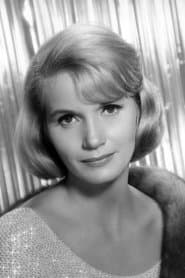
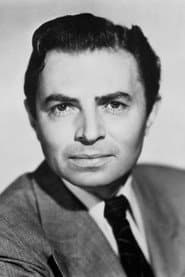
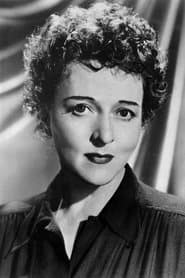
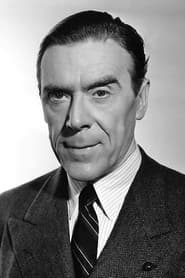

Plus comme ça
Agents très spéciaux : Code U.N.C.L.E.
2015·7.1
xXx
2002·6.0
Red
2010·6.7
Le Pont des espions
2015·7.2
La Mort dans la peau
2004·7.3
Un espion ordinaire
2020·7.0
The Amateur
2025·6.9
Mission : Impossible - Protocole Fantôme
2011·7.1

Max la Menace
2008·6.2
The Family Plan
2023·7.2
Drôles d'espions
1985·6.2
Mission : Impossible 3
2006·6.8
Communauté
8.1
Note Trakt
5.7K votes
10
1.1K
9
1.0K
8
2.0K
7
948
6
436
5
80
4
66
3
23
2
27
1
23
16.3KSpectateurs
171.9KCollectés
15.7KListes
Avis de la communauté (12)
A
AndrewBloomVIPCritique★8/10Jan 12, 2017
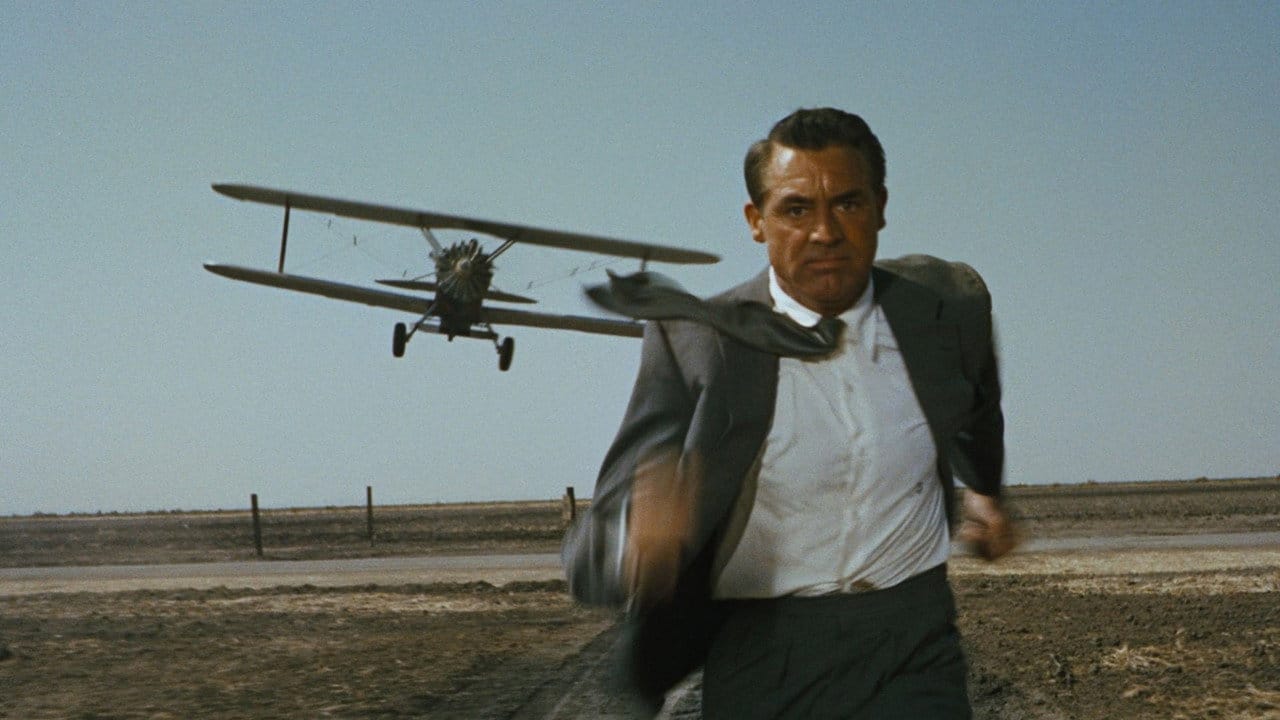
7.9/10. Whenever I watch classic films, I cannot help but think about “The Citizen Kane Effect” – the idea that venerated works of art can seem ho-hum to a modern-day viewer because their innovations that wowed contemporary audiences have become commonplace. And I also think about my friend and film critic Andy Roth’s response that the term was inapt, because even apart from its many innovations, *Citizen Kane* was a sound, well-crafted bit of storytelling. That’s where I am with *North by Northwest* one of the most lauded films in cinema history that inhabits the rarified are of the silver screen’s Great Works. And yet, in an era of film where a series of dramatic twists and regular joes getting mixed up in the extraordinary in a movie have become commonplace, if not tired tropes, *North by Northwest* certainly still seems good to a modern viewer, or at least this modern viewer, but for a film with such a pedigree, it can no longer wow. That’s no sin for anything but the best-regarded films. And yet, to Mr. Roth’s point, even stripped of that pedigree, and the expectations that come with, *North by Northwest* is a thoroughly well-made film, with good pacing, thrilling set pieces, heightened intrigue, and twists and turns to recontextualize events and reenergize the proceedings as necessary. The film is flawless, not in the sense that it is perfect or exceptional, but in the sense that there’s little, if anything, to point to that *North by Northwest* does poorly. It just doesn’t inspire much passion in an era littered with imitators of the film’s imitators. But what does stand out, even half a century later when green screens and CGI have allowed directors of photography to depict anything you can imagine, is the visual virtuosity that Hitchcock puts on display. The cornfield scene in *North by Northwest* is iconic for a reason, but beyond the action and the drama is the imagery that conveys it. The way Hitchcock and cinematographer Robert Burks play with perspective, using grand sweeping shots of the plane in the distance looming larger and more ominous with each pass, the way the frame is blanketed in white at the same time the protagonist is, and the dramatic cuts as Thornhill flags down a doomed tanker serves to create an exhilarating scene that communicates the stakes and the danger of the moment without the tools of modern day filmmaking. That also speaks to the fim’s (and one of Hitchcock’s) greatest strengths -- the ability to create mood. The viewer feels Thornhill’s paranoia as he’s thrust into a case of mistaken identity, feeling bewildered and overwhelmed at the threats, espionage, and intrigue unfurling around him at an ever-increasing pace. The final setpiece, with the cat and mouse game set at Mount Rushmore, uses that setting and the score, not to mention the way the action is framed, to create an ongoing tension and drama throughout. And The scenes between Thornhill and Eve Kendall evoke a charged passion, coupled with playfulness, that emerges between two people on the run, each not really knowing whether they can trust the other. The love story between them is odd by modern standards, but works for the film’s purposes. Considering the compressed timeline of the film, their romance happens very quickly, and their back-and-forth banter is left to do the heavy lifting when mood doesn’t suffice. That banter vacillates between charm and cheese. Still, it fits the story and the surroundings, and it’s a reminder how the Tarantinos, Sorkins, and Whedons of the modern day were, at least to some degree, following the classic blueprint for stylized dialogue with their trademark forms of patter. Beyond the dialogue, *North by Northwest* is an extremely well-written film in terms of its story, pacing, and plot. Each of the reveals have their seeds planted early, to where when the twists come, it’s an “aha” moment rather than a “huh?” moment. That’s what distinguishes the film from the many movies today, particularly blockbusters, that traffic in the same sort of secret identity and mystery box storytelling. While several films include a twist for twists sake, meant to allow the picture to coast on the shock of the reveal alone, *North by Northwest* takes the time to set up the important details and hints at the truth, so that when everything falls into place, it feels like a natural extension of what’s come before rather than a radical shift out of nowhere. The only problem, relative to other movies in Hitchcock’s filmography, is that *North by Northwest* isn’t really *about* anything. It’s simply a well-plotted thrillride, which is the sort of faint praise one might wish to be damned with. There are hints here and there at a larger point. If there is a theme to the film, it’s that ordinary men can accomplish extraordinary things, particularly when they are motivated by love (or, if you’re a cynic, lust). When we meet Roger Thornhill, is a smooth-talking gentleman, twice divorced, who seems no sooner to become embroiled in the world of spooks and spies than he does to become an astronaut. But when accidentally embroiled in this near-fatal misunderstanding, he answers the call, and in the process, finds talents, and a partner who appreciates them, that seemed to elude him before. For the most part though, that’s window dressing on an exciting adventure that slowly unspools with enough dramatic twists to keep things humming. That’s no crime. If the most a movie can boast is that it entertains the audience, has a tightly-written screenplay, and enough character moments to make its grand set pieces have impact beyond the spectacle of them, it’s doing quite alright. *North by Northwest* only suffers for being a part of the canon, that ineffable signifier of greatness that tells latter-day audiences what they’re watching is supposed to be a knock-your-socks-off masterpiece, leaving many of them, myself included, mildly disappointed at a film that is simply great rather than transcendent. Somehow, I don’t think Hitchcock would cry many tears over that assessment.
♥12
N
NancyLDraper@gmail.comVIP★10/10Dec 27, 2018
Movie making at it's best! Where to start? Hitchcock spun brilliance. Stellar cast, phenomenal performances: Cary Grant never misses a beat, James Mason is ruthless, Martin Landau is menacing, Leo G. Carroll obfuscates, but Eva Marie Saint is the fulcrum of the piece with her powerful, skilled, nuanced performance, perfectly balancing confidence, vulnerability and passion. The cinematography is vivid. The colour is glorious. Hitchcock at his best (did you catch his cameo?). Of course I rate this film a 10 (the best) out of 10. [Mystery, Intrigue, Suspense]
♥3
L
LarZieJVIP★10/10Nov 23, 2020
"No, they didn't give me a chaser" North by Northwest is the most fun Alfred Hitchcock movie. Never a dull moment in this one and watching it again is just as fun as the first, second and third time. Anyway, North by Northwest is Hitchcock's action, adventure comedy and it fires on all cylinders. The cast is great starring Cary Grant, Eva Marie Saint, James Mason and Jessie Royce Landis. Cary Grant especially seems to have so much fun and it shows. I just love his scenes where he is drunk! And the story just strings you along with Hitchcock's masterful direction. Have you spotted him? The final scene at Mount Rushmore, the scene with the plane, the drunken chase, everything is shot so well. North by Northwest is just one of those films you have to watch. You'll fall in love with Cary Grant, one of the most versatile actors, you see a different side of Hitchcock, a more fun one and those 135 minutes will just fly by. A classic.
♥2
K
KurtMoneyVIP★10/10Aug 22, 2016
Guh. I wrote a comment and then it disappeared. Anyway, this movie is amazing. Cary Grant at his best, Eva Marie Saint at her best, Hitchcock at his best. Just miles better than Vertigo, btdubs, but I'm not here to throw stones. One thing that is hysterical/horrible is the fact that the woman who played Cary Grant's mother WAS NINE MONTHS YOUNGER THAN HIM. Man. That poor actress!
♥2
N
nextstepCritique★8/10Sep 2, 2024
While "North by Northwest" (1959) and the James Bond novels share thematic similarities, there is no direct evidence that the James Bond novels were a specific inspiration for the film. However, both were part of the broader cultural fascination with espionage, adventure, and glamorous, high-stakes intrigue that characterized the 1950s and 1960s. Here’s a bit more detail: Timeline and Context: The first James Bond novel, "Casino Royale," was published in 1953, and subsequent novels followed throughout the 1950s. By the time "North by Northwest" was released in 1959, several Bond novels were already in circulation, but the Bond films had not yet begun (the first Bond film, "Dr. No," was released in 1962). Inspiration for "North by Northwest": The idea for "North by Northwest" primarily came from a conversation between Alfred Hitchcock and screenwriter Ernest Lehman. They wanted to create a thrilling adventure film, and the concept of an ordinary man caught up in extraordinary circumstances (mistaken for a spy) was central to the plot. Hitchcock had explored similar themes in earlier films, such as "The 39 Steps" (1935) and "Saboteur" (1942). The idea of a suave, resourceful protagonist, international intrigue, and exotic locations (like the Bond novels) are present in "North by Northwest" but were likely more influenced by Hitchcock's own previous work and the broader trends in the espionage and thriller genres than by the Bond novels specifically. Reverse Influence: While the Bond novels may not have directly inspired "North by Northwest," the success and style of "North by Northwest" did have a notable influence on later films, including the James Bond film series. The combination of suspense, sophisticated villains, glamorous settings, and thrilling action sequences in Hitchcock's film set a template that the Bond films would further popularize. In summary, while "North by Northwest" and the James Bond novels share some similarities, the film was not directly inspired by Ian Fleming’s work. Instead, both drew from the same rich cultural landscape of espionage fiction that was popular at the time.
♥1
Avis