Chargement...
6.9·2002·103 min·Français·Réalisé par François Ozon
L'une d'entre elles est coupable. Laquelle ?
ComédieThrillerMystère
Synopsis
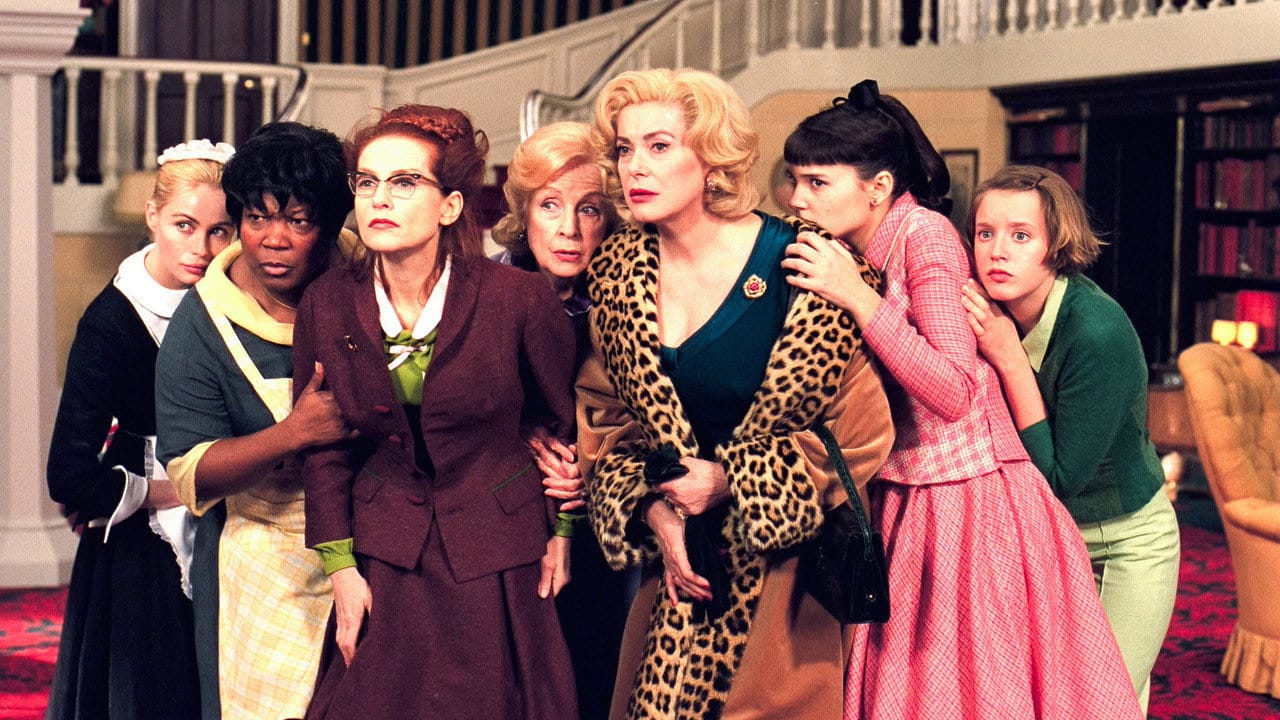
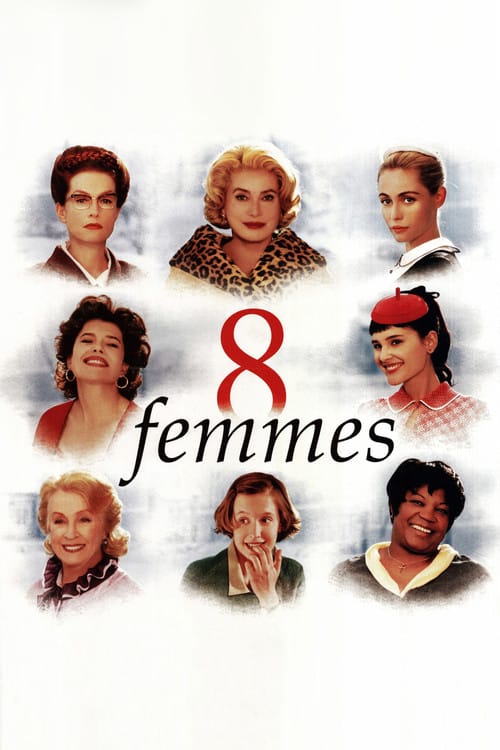
Dans les années cinquante, dans une grande demeure bourgeoise en pleine campagne, les gens sont sur le point de fêter Noël. Mais un drame se produit : le maître de maison est retrouvé assassiné. Le ou plutôt la coupable se cache parmi huit femmes que fréquentait régulièrement la victime. Commence alors une longue journée d'enquête, faite de disputes, de trahisons et de révélations.
Acteurs principaux









Plus comme ça







Communauté
7.2
Note Trakt
778 votes
10
115
9
36
8
187
7
205
6
138
5
42
4
32
3
4
2
13
1
6
2.3KSpectateurs
21.1KCollectés
2.0KListes
Avis de la communauté (9)
T
tatiananana★6/10Apr 5, 2023
the musical numbers really felt completely out of place in this murder mystery, in my opinion. every time a song came on, I got surprised and annoyed because I kept forgetting it was supposed to be a musical as well. it just seemed at odds with each other and bothered the hell out of me. the moment I would get invested, they stopped the natural pacing of the suspense to start singing. there are good musical numbers, but most of them feels unnecessary and aren't well incorporated within the story. I felt that if it wasn't for the musical bits, I would've probably had loved the movie instead of finishing it confused and disappointed.
♥2
S
spookynight★10/10Feb 24, 2019
♥2
S
Spiritualized Kaos★4/10Sep 1, 2016
A police musical ?!?!?! Buf... buf...
♥2
C
com.mil666Jul 13, 2026
Do you know where I can watch it with Spanish subtitles? I really like the movie.
S
senbaldorVIPCritique★7/10Jun 7, 2026
# Reception and Legacy - Critical Impact - Silver Bear for Best Artistic Contribution (Berlin Film Festival) - Celebrated for its 'All-Star' ensemble performance # Themes and Symbolism - Feminine Power Dynamics - The 'absence' of the male patriarch as the catalyst for female liberation/conflict - Exploration of the female gaze - Theatricality vs Reality - Life as a performance - The house as a stage set # Cinematography and Aesthetics - Visual Style - Technicolor-inspired palette - Highly stylized, vibrant interior design - Static camera angles emphasizing stage-play structure - Artistic Influences - Douglas Sirk's melodramas - Cukor’s ensemble dramedies - French Chanson aesthetics # Music and Sound - Diegetic Musicals - Each woman performs a chanson reflecting her inner turmoil - Songs act as soliloquies revealing character depths # Narrative Structure - The Whodunit Framework - Closed-room mystery trope - Classic Christie-esque investigation - Deconstructive parody of the genre - Narrative Style - Theatrical staging - Breaking the fourth wall through musical numbers - Sudden shifts between farce and melodrama # Character Analysis - Archetypal Personas - The Matriarch (Gaby) - The Spinster (Augustine) - The Ingénue (Suzon) - The Femme Fatale (Pierrette) - Development Arcs - From mutual suspicion to collective guilt - Revealing hidden desires and socio-economic resentments # Summary Insights - The film utilizes the 'closed-room mystery' not to solve a crime, but as a pressure cooker to expose the fragility of patriarchal family structures. - The transition into musical numbers serves as an emotional rupture, stripping away the characters' facades while simultaneously reinforcing the film's artificiality. - By casting the greatest French actresses of different generations, Ozon creates a meta-commentary on the history of French female archetypes in cinema. - The 'murder' serves merely as a MacGuffin; the true subject is the complex, often toxic, yet codependent relationships between the women. - The ending, which subverts the traditional detective resolution, highlights that in this world, truth is secondary to the preservation of the group's collective identity.
Avis