Chargement...

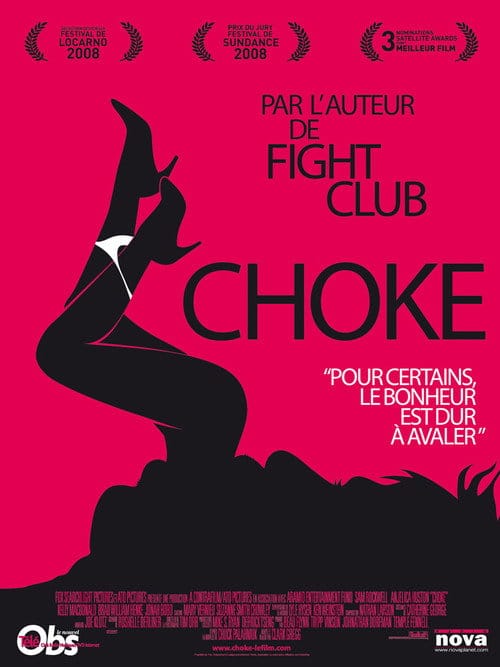
6.1·2008·92 min·English·Réalisé par Clark Gregg
Pour certains le bonheur est très dure à avaler
ComédieDrame
Synopsis
Cherchant de quoi payer la clinique privée où sa mère est hospitalisée en psychiatrie, Victor monte une redoutable escroquerie. Alors qu'il dîne dans les meilleurs restaurants, il fait semblant de s'étouffer et s'arrange pour que de bons Samaritains viennent à son secours : ces derniers se prennent alors d'affection pour lui et finissent par le couvrir de chèques. Son boulot est tout aussi surprenant puisqu'il endosse le costume d'un domestique irlandais du XVIIIème siècle dans un parc d'attractions historiques. Et lorsqu'il n'est pas en train de jouer les pèlerins, de s'étouffer en mangeant - ou encore de rendre visite à sa mère qui ne le reconnaît plus -, il participe à des thérapies de groupe pour obsédés sexuels.
Acteurs principaux









Plus comme ça



Communauté
6.3
Note Trakt
700 votes
10
57
9
13
8
90
7
153
6
202
5
92
4
39
3
22
2
10
1
22
1.9KSpectateurs
20.0KCollectés
1.4KListes
Avis de la communauté (3)
D
drqshadowCritique★5/10Feb 4, 2020
This eponymous adaptation of a Chuck Palahniuk novel goes through the right motions, but loses track of its charm somewhere in the translation. The filmmakers probably loathe any comparisons to Fight Club, Palahniuk's most famous property, but with a similarly sarcastic tone, grim protagonist and writhing, unpredictable plot, it's difficult not to tie the two together in some meaningful ways. Choke barely holds a candle to its daunting big brother, sadly; it captures none of the character or idealism that made Tyler Durden's darker hues so palatable, and the dialog - though witty in a few spots - is largely lacking in conviction and flavor. Sam Rockwell's turn as Victor, a sex-addicted scam artist in the midst of a midlife crisis, is uncharacteristically dull and bland. It's tough to root for, or even identify with, such a despicable character, even as his journey reveals the details of why he is this way. The storyline, explained via a series of monologues so single-minded Kevin Smith might blush, branches off in so many directions, it's often difficult to determine what's the primary message and what's just window dressing. Over-ambitious at best, it's a mess of competing distractions with few resolutions and a cast of shuffling, murmuring archetypes. A disappointment.
♥1
S
Spiritualized Kaos★8/10Nov 23, 2025
The novel may give rise to this curious film.
E
Erebos★8/10Apr 17, 2021
Apart from the surface-level similarities with Fight Club regarding the diegetic style, character archetypes and intentionally jarring cutaways, the two films are very different in themes. Fight Club was idealistic and ideological, while Choke is introspective and grounded to reality. Notable was the decently accurate portrayal of sex addiction and its consequences.
Avis