Chargement...
5.9·2025·106 min·Português·Réalisé par Andrucha Waddington
Documentaire
Synopsis
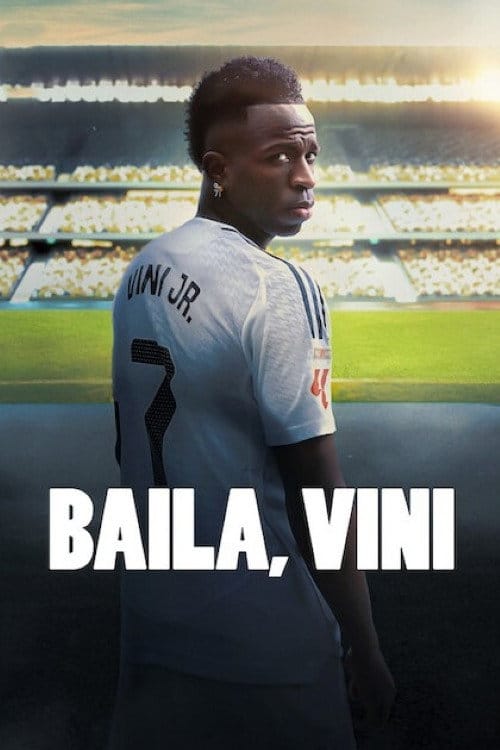
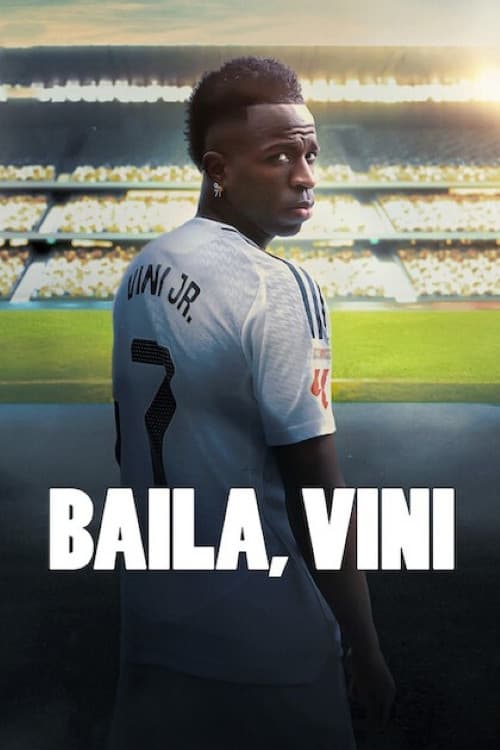
« Vini Jr. », un documentaire retraçant la vie de Vinícius Júnior, l'un des attaquants les plus prometteurs du football. Avec des statistiques impressionnantes, Vini Jr est une star de l'équipe nationale brésilienne. L'intrigue le suit en 2024, année décisive. Vainqueur de la Ligue des champions de l'UEFA, il pourrait bien remporter le prix FIFA The Best. Également reconnu pour son courage dans la lutte contre le racisme, le documentaire retrace les difficultés qu'il a rencontrées lors du championnat espagnol. Avec la présence de plusieurs idoles du sport, telles que Neymar, Karim Benzema, Jude Bellingham et Tony Kroos, le documentaire analyse l'impact du joueur sur et en dehors du terrain...
Acteurs principaux

Plus comme ça
John Candy: I Like Me
2025·7.9

Seduced and Abandoned
2013·6.2
The Class of ‘92
2013·7.1

My Mom Jayne
2025·8.0
Iron Maiden: Burning Ambition
2026·8.7

Scotty et les secrets interdits d'Hollywood
2018·5.9

180° South
2010·7.2
Le Making-of de Hawkeye
2022·7.2
Être James Bond
2021·7.7

Les Secrets du monde d'Avatar
2022·7.3
Whitney
2018·7.3
Showrunners: The Art of Running a TV Show
2014·6.4
Communauté
7.2
Note Trakt
241 votes
10
92
9
2
8
36
7
25
6
24
5
19
4
11
3
3
2
6
1
23
775Spectateurs
440Collectés
217Listes
Avis de la communauté (1)
D
decatur555VIPCritique★10/10May 21, 2025
Some films are born with a sentence already written. Baila, Vini is not just a portrait of Vinícius Jr.’s meteoric rise at Real Madrid. It is, above all, a direct and brave statement against the racism that continues to plague Spanish football stadiums. And that’s exactly where many choose to cover their ears. The documentary starts strong, revisiting his childhood in Brazil, his arrival in Madrid at just 18, and his evolution into one of the world’s brightest stars. But soon it shifts toward something far more uncomfortable and courageous: his blunt and unapologetic denunciation of the racism he has endured in Spain, culminating in that infamous match at Mestalla, now etched in recent football history. The images of the crowd shouting “monkey, monkey” are painful—at least for those willing to feel that pain. Sadly, many don’t. Worse still, they deny what’s obvious, justify the unjustifiable, or attack the messenger. So it comes as no surprise that the documentary was bombarded with negative ratings on platforms like FilmAffinity or IMDb, often orchestrated by fans who felt targeted. Some have even threatened to sue the producers over the subtitles, as if that were the real problem. Truth be told, Baila, Vini doesn’t reinvent the documentary format. It’s straightforward: interviews, archive footage, narration. But it doesn’t need more. Its power lies in the message—one of a young star who, despite being one of the best players in the world, dares to stare racism in the face and speak up. And in a country where some still believe that racially abusing a Black player is “just part of football,” that takes courage. Those who accuse Vinícius of provoking, exaggerating, or acting should ask themselves why their anger isn’t directed at those who hurl racist abuse at him week after week. And why defending “Spain’s image” seems to mean hiding racism instead of fighting it. Baila, Vini will be ignored, mocked, or dismissed by many. But it will be remembered. Because beyond football, it stands as a powerful testimony to a truth that too many still refuse to accept. And that’s exactly what makes it so essential.
♥2
Avis