Chargement...
7.4·2009·91 min·English·Réalisé par Kenny Ortega
Michael Jackson comme vous ne l'aviez jamais vu
MusiqueDocumentaire
Synopsis
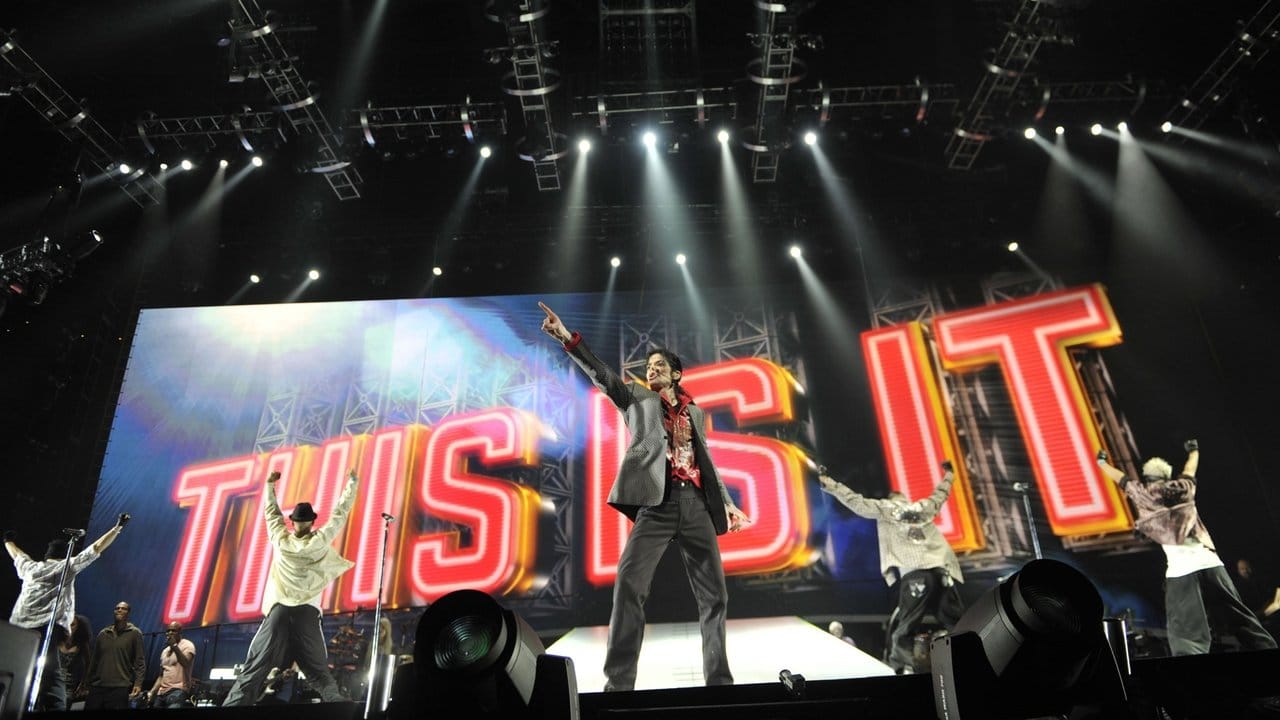
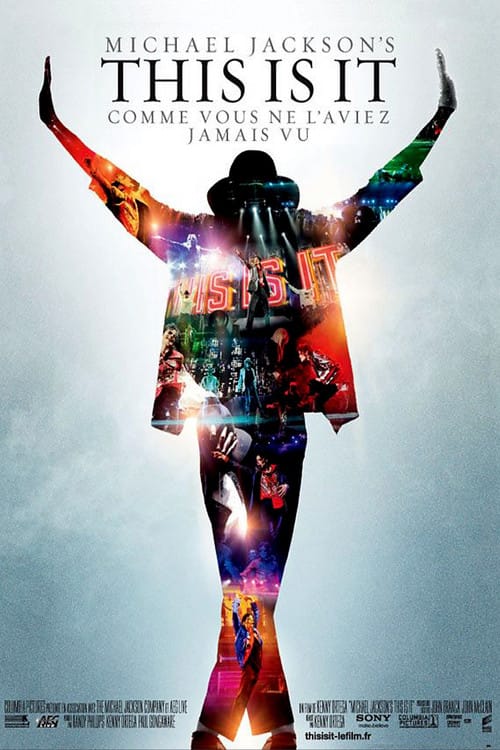
Un film reportage constitué des images des coulisses des dernières répétitions de Michael Jackson.
Acteurs principaux




Plus comme ça

EPiC: Elvis Presley in Concert
2026·8.3

Avicii: True Stories
2017·8.0
Glee ! On Tour : Le Film 3D
2011·7.3

Hannah Montana : Spécial 20 ans !
2026·7.2
Whitney
2018·7.3

Miss Americana
2020·7.8

Western Stars
2019·7.0

Iron Maiden: Burning Ambition
2026·8.6

The Greatest Night in Pop
2024·7.9
Katy Perry: Part of Me
2012·7.1
Justin Bieber's Believe
2013·6.9
That's Entertainment! III
1994·7.0
Communauté
7.5
Note Trakt
1.9K votes
10
458
9
85
8
399
7
434
6
318
5
60
4
48
3
28
2
26
1
32
8.7KSpectateurs
80.5KCollectés
3.4KListes
Avis de la communauté (3)
S
SpeedDemon★10/10Jul 17, 2021
Superb movie as MJ prepares for the tour. Heartbreaking that after all that work by him and all the other performers that it didn't happen because of his death.
♥3
H
heyflpCritique★8/10May 4, 2026
Rehearsals are usually invisible spaces, places where the show doesn’t fully exist yet, but is already breathing in fragments, in attempts, in tiny corrections you almost don’t notice. That’s where performance stops being myth and reveals itself as construction, as ongoing effort between body, sound, and intention. “This Is It,” unfortunately, lives right in that gap between what was about to happen and what never did. Instead of capturing a finished show, the film becomes a document of process, a direct look at the creative machinery of Michael Jackson in his final months. And maybe it’s exactly this incomplete state that makes it so powerful, because everything we see carries the unavoidable absence of what was supposed to come next. The film’s structure, built from rehearsal footage recorded between April and June 2009, avoids any attempt at traditional dramatization. There’s no narrative shaped like a typical biographical documentary. What we get instead is a continuous flow of preparation, where music, dance, and direction all blend together in almost real time. That formal choice is key to the film’s impact, because it removes interpretive distance and puts the viewer right inside the work itself. We’re not watching something edited to tell a specific story. We’re watching an artist in motion, testing, adjusting, refining. It ends up being a portrait that reveals more through observation than explanation. In that space, Michael Jackson shows up not as a distant icon, but as the full architect of his own show. His presence is defined by a rare mix of technical precision and a kind, controlled way of working with the team. He doesn’t lead by being loud, but by being clear. Every timing adjustment, every lighting note, every comment about rhythm or movement shows how carefully he’s shaping what’s being built. There’s a strong awareness that the show isn’t just a setlist, it’s a complete experience, where sound, image, and movement all need to sync perfectly. In that sense, “This Is It” breaks down the idea of Michael as just a performer and repositions him as the full author of what he creates. At the same time, there’s a constant tension between what we see and what we know. The film shows a Michael who’s physically capable, precise in his movements, fully in sync with dancers who are younger and working at a high level. On screen, he feels confident, his gestures are exact, and there are moments where his connection to the music feels completely intact. But watching this today inevitably adds another layer. Under that apparent vitality, there are subtle signs of wear, small pauses, moments where the energy feels more contained, like his body is working within a limit he’s carefully managing. That ambiguity makes the film even more unsettling, because it doesn’t contradict what we see, it just adds a layer of fragility that wasn’t so obvious at first. The show itself also stands out for its scale and ambition. Sequences that mix film projections, visual effects, and complex choreography suggest that the concert was meant to go beyond a traditional live performance. There’s a clear attempt to blend different languages, turning the stage into an extension of a bigger visual universe. Michael inserted into classic film scenes, interacting with digital elements, or leading numbers with strong thematic ideas, like the environmental segment, all point to a creative vision that’s always trying to push what live performance can be. Even in rehearsal form, you can already see how big it was going to be. But maybe the most striking thing about “This Is It” isn’t the scale of the show, it’s the relationship between Michael and the people around him. Technicians, dancers, musicians, everyone responds to him with what feels like genuine admiration, not something staged. There’s a collaborative atmosphere that goes against the image often associated with productions of this size. Michael places himself as part of the group, someone who works alongside everyone else, who listens, adjusts, participates. That attitude reinforces the sense that this is a collective process guided by a central vision, but built by many hands. Watching “This Is It” now is inevitably shaped by the awareness of what never happened. Every rehearsal carries a sense of something interrupted, every sequence feels like it’s pointing toward a show that never fully reached an audience. And still, the film doesn’t rely only on that absence. It stands on the evidence of what was already there, ready, in progress, almost finished. There’s something deeply moving about realizing that this project wasn’t just possible, it was already taking shape with impressive clarity. In the end, “This Is It” doesn’t really work as a farewell, but as an accidental record of a process that got cut short. It’s a film that reveals more than it celebrates, that exposes more than it concludes. By showing Michael Jackson fully engaged in his craft, it puts us in front of a hard-to-ignore paradox: the vivid presence of someone who was, in a way, already gone. And maybe it’s exactly that overlap between vitality and loss that makes every minute of the film hit so hard.
♥1
D
DannyVFilmsApr 3, 2020
Kinda scared to watch this after _Leaving Neverland_
Avis