
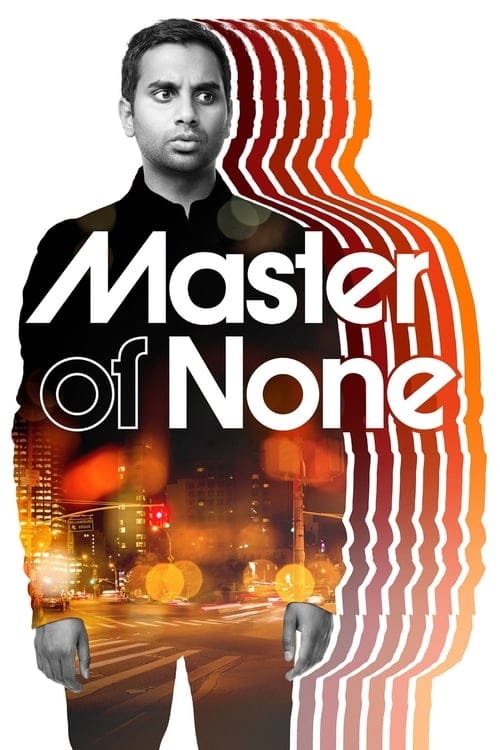
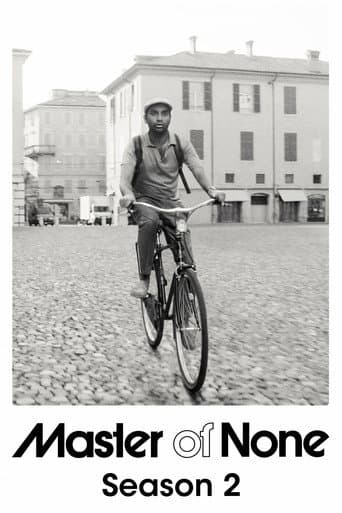
Der New Yorker Dev (Aziz Ansari) mag ja über 30 sein, doch er kann sich kaum entscheiden, was er essen möchte, geschweige denn, was er im Leben erreichen will.









Avis de la communauté (10)
This is a show that plays in the vein of "finally getting minority voices on television." There's chuckle moments and the cast has chemistry, but the perspective isn't necessarily "new." It's like long-form observational comedy more than anything else. If you're a fan of Aziz you'll get what you expect, but it's not particularly gripping, so to speak. A mash-up of millennial sensibilities and awkward situations, but even trying to recall "moments" from the show, I sort of draw a blank. That usually tells me all I need to know about a show. You won't knock it for trying, but you're not going to call home about it. Edit: The 2nd season turns up the charm and makes for more memorable moments.
Season 1&2 are amazing but season 3 is disappointed
It's OK. Lots of daydream-sequences when characters are having 'thoughts' -- after the first few I started to zone out when they started, and eventually zoned out on a lot of the rest. A number of roles seem to have been filled by non-actors who deliver lines without conviction resulting in something that's not quirky, well-acted, or hugely funny. Even though I never really was fully engaged, the series has been well reviewed, so there are obviously viewers who enjoy it, I'm just not among them...
Season 2 is so much better than the first that was great too. Fucking awesome
For its first two proper seasons, this is an engaging and funny sitcom that, like a number of its contemporaries, expands the boundaries of what’s possible in the medium. In fact, calling it a sitcom feels unfair and it’s certainly not a sitcom in the multi-camera tradition. It does feel like, at some point in the teens (or maybe earlier) the American TV comedy grew wings and took flight into something different. Master of None doesn’t take anywhere as near as many risks and detours as Atlanta, but it still feels very distinct from the American sitcoms of the past. “Aspiring actor living in New York, hanging out with his friends and struggling with his relationships” used to mean a very specific thing in the 20th century and still did on network TV in the 21st. (Maybe it still does.) But here it is very different. My theory is that this is due to cable, sure, but also due to animated sitcoms. Animated sitcoms completely blew open the form and created all sorts of narrative possibilities for sitcoms. Eventually, live action caught up and arguably went places that animated shows would rarely go. This show uses the typical sitcom premise to tackle themed episodes in the first season and, occasionally, in the second. Instead of a goofy plot, each episode is about something, usually filtered through the experience of children of immigrants (or other minorities). The main through-line of the first season is Dev and Rachel’s relationship which provides contrast with the themed episodes. The soundtrack, as everyone has noted, is excellent. It’s perhaps a little hipper than thou but given that I am a massive music snob, it works. And then, in the second season, Dev just goes to Italy. And he really goes to Italy. You can see an American sitcom having a “main character goes to Italy” thing in the past, but “Italy” would have been a lot somewhere or maybe the dessert in the Valley or whatever. Instead, Dev goes to Italy and the show gets way more ambitious. From the beginning, it was clearly inspired more by movies than TV but it’s so much more true in the second season. I think that decision to be ambitious in the second season mostly works. There are lots of jokes that work for me. I found the odd episode veering into cringe comedy territory, which I have a lower tolerance for than I used to, but only the odd episode. (Mostly just Arnold crashing the wedding. Most moments of the other episodes were not cringey.) Otherwise, I mostly really liked the comedy. I found the Dev/Francesa will they/won’t they thing a little tiresome – that one episode was so long! – but I appreciate they ambition, I appreciate the desire by Ansari and Yang to make a show that’s bigger than “sitcom,” that’s bigger than the premise. There are moments in this show that I will remember for ages and bring up over and over again. It’s one of those shows that just has those moments. For me, it’s not consistently good enough to rise to one of the best shows of it’s era. But I think it’s more interesting than you likely think it is. And it’s consistently funny. And it very much deserves its place in this new wave of half-hour, character-driven American comedies that reject the narrative constraints. And now, for the other thing: Master of None Presents Moments in Love So I have no idea what to do with this. If you haven’t watched the show, you may not know that, for their third, abbreviated season, they just made a completely different show. Some of the same characters, sure, but a completely different show. I can’t begin to tell you how different a show it is. What they did is they took a friend of Dev’s, made her and her wife – whom I think we’ve never met – the centre of the show, and made a drama about their relationship and their attempts to get pregnant. The tone is completely different, Dev is present for mere moments, and just about everything from the first two seasons is gone, except (obviously) the ambition. Putting aside any thoughts about quality, I think it’s fairly unlikely that the overlap of fans of the first two seasons and people who would like the third season is 60%. I suspect it’s much, much lower. (I have yet to go looking for angry reviews of the third season, though critics liked it because of course they did, it’s about lesbians.) I understand that, getting Moments in Love greenlit on its own, as a Master of None spinoff or whatever, was probably impossible. And I guess Ansari felt like there wasn’t much else to say about Dev and his life in New York. And I can’t help but wonder how much of what happened here was influenced by the rhetorical culture online at the time. But I still think the tonal shift from season 2 to 3 is the most jarring tonal shift I have ever seen in a show, and only equaled or exceeded by a couple of films. There are episodes of season 3 that are hard watches, I mean hard. And you can trust me, I watch a lot of things that other people would consider hard watches and I don’t notice. I should say, I do think it’s mostly good. And, in defense of Ansari and White, I think it’s a story that is worth telling. Especially so the stuff about IVF and the lack of insurance coverage for LGTBQ+ people in a country that claims its concerned about falling birthrates. Both White and Ackie are good – Ackie’s got the showier role and so appears better. I would note that I felt like Ansari shows the limits of his limited range when he does appear, as I felt like he really didn’t do an amazing job here whereas I felt like he was quite good in the first two seasons – it’s a different show. I think it’s well-done. I just think it’s not Master of None. And I have no idea what to do with that. 8/10 for the first two seasons. I would probably given Moments in Love an 8/10 or maybe a 7/10 on its own.