Laden...

6.5·2018·87 min·English·Regie Alison Klayman
Dokumentarfilm
Handlung
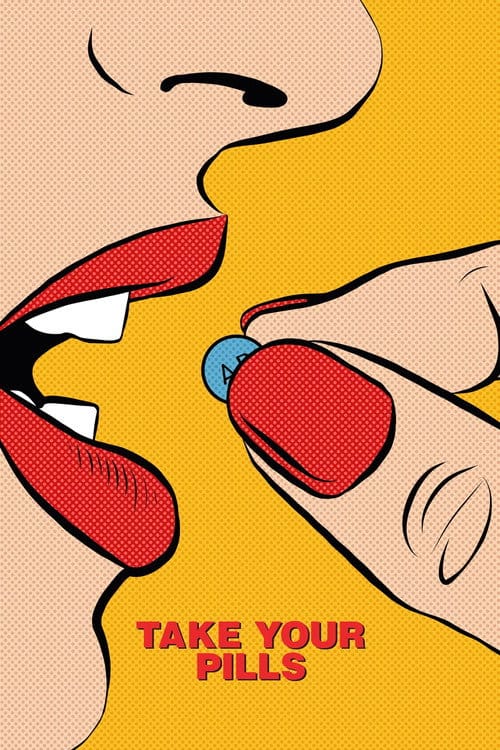
In unserer wettbewerbsorientierten Welt setzen Studenten, Sportler, Programmierer und andere zur Leistungssteigerung auf Upper wie Adderall. Doch zu welchem Preis?
Hauptdarsteller
Mehr wie das

Whitney - Can I Be Me
2017·6.5

Cocaine Cowboys
2006·7.3

Ikarus
2017·7.6
Cobain: Montage of Heck
2015·7.6
The Velvet Underground
2021·6.8

Alexander McQueen – Der Film
2018·7.5

Evil Influencer: Die Story von Jodi Hildebrandt
2025·6.2

Der 13.
2016·7.8

Jennifer Lopez: Halbzeit
2022·6.8

Lil Peep – Everybody’s Everything
2019·8.5
Trainwreck: Die echte Project-X-Party
2025·5.9
The Decline of Western Civilization Part II: The Metal Years
1988·6.8
Communauté
6.6
Note Trakt
624 votes
10
58
9
8
8
85
7
200
6
161
5
44
4
38
3
21
2
7
1
2
2.9KSpectateurs
23.5KCollectés
1.4KListes
Avis de la communauté (3)
A
agiledood★6/10Mar 28, 2018
This definitely didn't need to be 90 minutes. The best part for me was the history aspect of ADD/ADHD and amphetamines in general, especially because us adults have a habit of blaming everything on millenials/kids etc when we are the idiots who've created this mess of a society. I suppose the other interesting part was the conversation around the placebo vs adderall study they did where there was no difference between the scores other than the question 'do you feel the stimulant helped with this test?'
♥3
G
gremlinCritique★7/10Nov 29, 2022
At first I wasn't sure how I felt about this documentary. It was informative and intriguing, and it had me asking questions I'd never thought about before. And I love that. At the same time, it was very limited in scope and had a general negativity toward stimulants as a treatment for ADHD, which I think can contribute to adding to the stigma that's already there. It's important to remember that there is a lot more to this issue and discussion than what can be fit into a 1.5 hr film and that stimulant medication helps a lot of people with ADHD. This documentary tries very hard not to mention benefits and dismisses any benefit using information from a single study that found students had no measurable improvement in academic performance while using stimulants, despite many other studies showing data that proves the opposite. This documentary is biased, which is very obvious from the beginning, but I don't think that means it doesn't have value. I had a sour taste in my mouth right after watching it and I'm glad I waited to write this comment because my own bias was impacting how willing I was to accept new and conflicting information. It's been a week since I've seen this film and I keep thinking about it. When I was first diagnosed with ADHD I didn't want stimulant medication. I struggled on Concerta and Ritalin and Adderall. They all made me feel awful and the negative side effects were too much for the benefits to be worth it. But I was finally put on a low dose of Vyvanse and it's made a big difference in my ability to function within my family, be responsible for and complete my work on time, and finish tasks that are crucial for me to be more independent. And as much as this medication has helped me, I also wholeheartedly agree that it has created a lot of problems for a lot of people. Between addiction, dealing drugs, side effects, social pressure, and irresponsible prescribing, stimulants have potential to cause a lot of harm. I can't ignore that. Learning more about the history of stimulant use in the United States (and elsewhere) was eye-opening. Positive and negative experiences can exist at the same time. This can be a life-changing class of medication in the best and worst ways at the same time. As regulation gets more strict I do worry about losing access to a medication that has made such a big impact in my life. Despite being disabled, stimulants have helped me get by and contribute in a society that I might not have without it. But the one thing that keeps haunting my thoughts is the question of why it's necessary in the first place. Why we push our workforce so hard they feel there is no option but to take stimulants. Why we demand that people with ADHD perform the same way as those without ADHD. Why it's impossible to truly compete without being on a drug. Why universities are so difficult and tough on students that stimulants are the only way for some people to make it. Beyond application for ADHD, this medication is being abused as an escape and a performance enhancer to help people meet unrealistic expectations. This documentary asks the question "why do we need these unrealistic expectations to begin with?" and for that reason I highly value the time I spent watching and learning from this film.
M
moonkodi★6/10Mar 16, 2018
It was OK. It's a bit of a can of worms.
Kritiken