Laden...


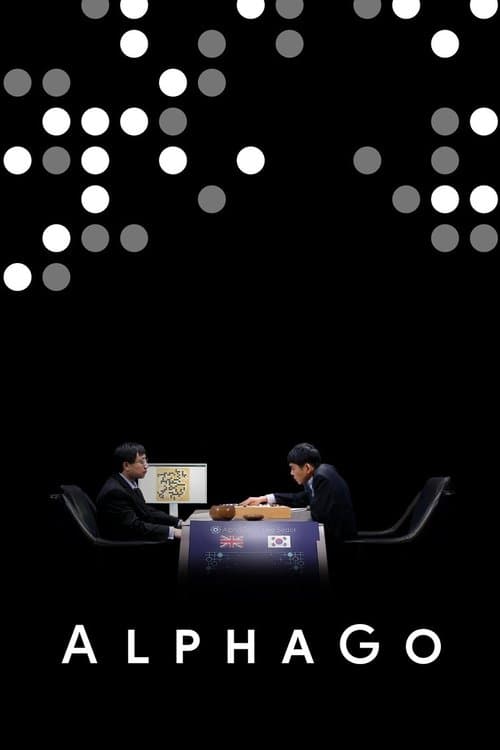
7.7·2017·90 min·English·Regie Greg Kohs
Dokumentarfilm
Hauptdarsteller








Mehr wie das

The Class of ‘92
2013·7.1
Unbekannt: Killerroboter
2023·6.8

Verführt und Verlassen
2013·6.2

The Bill Murray Stories: Life Lessons Learned from a Mythical Man
2018·6.8

Powaqqatsi
1988·7.3

Coded Bias - Vorprogrammierte Diskriminierung
2020·6.9

Avatar: The Deep Dive - A Special Edition of 20/20
2022·7.3

The Captains
2011·6.4

I Am Heath Ledger
2017·7.4

Springsteen on Broadway
2018·7.9

Tea With the Dames – Ein unvergesslicher Nachmittag
2018·6.8

Der Unaufhaltsame Aufstieg Von Bitcoin
2014·7.0
Communauté
8.0
Note Trakt
599 votes
10
88
9
92
8
218
7
161
6
32
5
4
4
1
3
1
2
1
1
1
1.9KSpectateurs
18.6KCollectés
1.4KListes
Avis de la communauté (3)
M
mhriemers★9/10Jan 2, 2018
What did I feel bad for Lee Sedol through out this whole film. The weight of a whole country on your shoulders. When he won that fourth game, the will to fight sort of came back.
♥3
M
maverick0213★10/10Dec 31, 2022
I've been attracted by this idea of perfection. What is the perfect way to solve this problem? Or the most efficient way to do this task? We humans are, unfortunately, limited in our analytical capacity. Our brains have evolved to make a monkey survive in nature, not play complex strategy games. The brilliant aspect of algorithms like AlphaGo is that they only understand the rules of the game and are not limited or influenced by humanity's approach thus far (while this is not entirely true of AlphaGo, which did learn from top go players, an improved version called AlphaZero learnt go only through self-play and was superior to AlphaGo). That means they come up with brilliant approaches, that up till then, no human had even imagined. That's why game-playing AIs blow our minds, we are able to see a completely different yet effective approach to the game. We get a little closer to perfection. AlphaGo is a wonderful documentary that triggered my interest in ML. A gripping, human story of how AI is developed and how it fares when pitted against a human. Was I the only one cheering for AlphaGo the entire time?
♥1
D
dgwCritique★9/10Sep 7, 2020
_At time of writing, this documentary is available for free on YouTube, published by DeepMind itself:_ https://www.youtube.com/watch?v=WXuK6gekU1Y ---- While true that this documentary doesn't go into very much depth on the technical side of things, it's quite effective at covering the _human_ story. My inner geek would have liked more (and clearer) shots of the many monitoring displays showing AlphaGo the program's current state and operating metrics during the games, but that wasn't the _point_ of _AlphaGo_ the film. Surely if I enjoyed watching this, as one who wouldn't even know where the valid moves on a Go board are, an actual Go player would get even more out of it because they would _recognize_ the significance of Move 37, and Move 78, instead of leaning on the commentators (as I did) to glean some shred of understanding. The reason I haven't awarded a perfect 10/10 rating, however, is that an entire thread is left loose: AlphaGo never, as far as we know, rose above its tendency to get "delusional" in the later stages of a game. This shortcoming, which played a big role in the "plot" leading up to the tournament in Korea, came up again later only in passing. Even if it was just one more text banner at the end, with the others about Lee Sedol, Fan Hui, and the worldwide Go board supply, addressing even _plans_ to solve that one mandelbug would have made this documentary fully satisfying and complete.
♥1
Kritiken