Laden...

5.8·2025·98 min·Português·Regie Gabriela Amaral Almeida
ThrillerKrimiDrama
Hauptdarsteller








Mehr wie das












Communauté
5.8
Note Trakt
33 votes
10
3
9
2
8
3
7
3
6
8
5
4
4
4
3
3
2
1
1
2
72Spectateurs
7Collectés
37Listes
Avis de la communauté (2)
A
ariana_silva_b88850★6/10Jul 13, 2026
ruim não foi, mas a versão americana é 10x melhor
H
heyflpCritique★5/10Mar 27, 2026
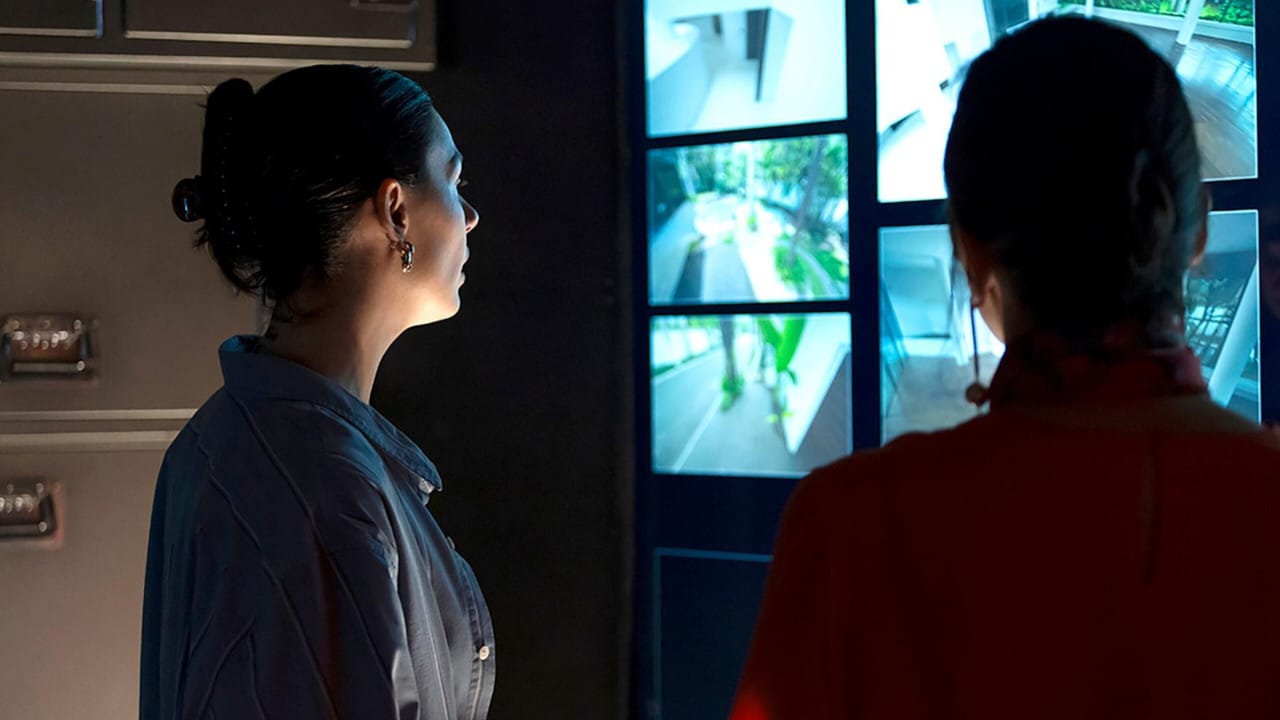
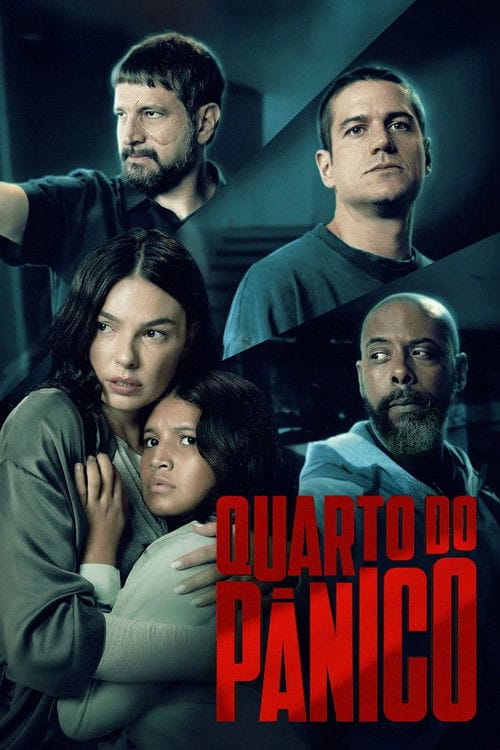
Some houses are built to protect the people inside them, but end up revealing exactly what those people are trying to hide from themselves. The safe space turns into a trap, the refuge becomes exposure, and the architecture starts working like a silent mirror of human fragility. “Quarto do Pânico,” directed by Gabriela Amaral Almeida, builds its whole dramatic setup around that kind of spatial idea. By adapting a story audiences already know into a Brazilian context, the film leans on the strength of a contained suspense structure with few characters and a single enclosed environment, trying to turn the house into something almost alive within the narrative. The result is a movie that shows solid control of atmosphere and pacing in several moments, but struggles to fully justify itself as a reinterpretation, especially because it stays too closely tied to the structure that came before it. Narratively, the film follows Mari (Isis Valverde) and her daughter Bel (Marianna Santos) after moving into a sophisticated house equipped with a high-level security system, including the panic room itself. The home invasion carried out by a trio of criminals quickly turns that space into the dramatic center of the story, pushing the plot forward in a nearly real-time progression built on the rising tension between intruders and victims. Gabriela Amaral Almeida handles this kind of domestic suspense with confidence, organizing the flow of events well and using confinement as the story’s main dramatic engine. The house, often filmed with low lighting and framing that emphasizes corridors, doors, and transitional spaces, takes on an almost active role in the narrative. There’s a clear effort to turn architecture into a source of threat, creating a sense of vulnerability that works especially well during the early invasion sequences. Still, that spatial construction rarely unfolds into deeper psychological layers, staying mostly in the realm of functional suspense. That limitation becomes even more noticeable in the dramatic construction of the protagonist. Isis Valverde carries the film with a convincing presence, balancing fragility and determination throughout. Her performance provides the emotional weight needed to keep the audience engaged, especially since the script doesn’t offer enough material to fully explore the character’s inner dimension. The attempt to connect Mari to the trauma of her husband’s death feels like a promising element, but it’s only briefly suggested and never really affects the story’s dramatic progression. That lack of psychological depth weakens the emotional core of the narrative, reducing conflicts that could have enriched the suspense into simple background information. As a result, the film ends up depending heavily on Valverde’s performance to maintain its dramatic intensity. Among the antagonists, Marco Pigossi delivers an unstable and unpredictable presence that initially feels promising but ends up weakened by questionable script choices and by a physical characterization that never fully convinces. The makeup for his injuries, for example, shows clear technical limitations and directly affects the credibility of moments that should heighten tension. André Ramiro, on the other hand, gives a more consistent performance as Benito, especially in how the film explores his moral ambiguity. His presence introduces an interesting layer of empathy within the group of intruders, creating an effective contrast with the violence of the situation. Still, that dramatic layer doesn’t get enough space to develop more fully. Marianna Santos, meanwhile, struggles to make Bel feel like a truly expressive character within the story, which weakens the central mother-daughter relationship and reduces the emotional impact of several sequences that depend on that dynamic. Fábio Mendes’ screenplay reveals what’s probably the film’s biggest weakness. The narrative progression feels too rushed, and the dialogue rarely has time to deepen conflicts or build more complex relationships between the characters. Instead of exploring the psychological possibilities of confinement and threat, the script chooses a more direct and surface-level approach, prioritizing plot movement over dramatic development. That sense of urgency keeps the film from creating truly memorable suspense moments, turning potentially dense situations into functional episodes. Even when the film tries to introduce elements specific to the Brazilian context, like urban violence and the paranoia surrounding home security, those ideas remain underdeveloped and work more like references than real dramatic drivers. Visually, the direction shows competence in building atmosphere, but it struggles to create a strong aesthetic identity of its own. The Brazilian house has a cleaner, more contemporary design, but it’s less expressive as a dramatic space. The technological potential of that modern environment, including security systems and digital devices, is rarely explored in creative ways within the narrative, which feels like a missed opportunity to update the material for a current context. Instead of reinventing the suspense dynamics with new storytelling tools, the film mostly follows already established paths, reinforcing the sense that it stays structurally close to its earlier reference. In the end, “Quarto do Pânico” works as an effective suspense exercise in several moments, supported by confident direction and a strong central performance from Isis Valverde. Still, its strong attachment to the original narrative model keeps it from developing a more distinct identity of its own. The few structural changes it introduces don’t significantly reshape the experience, and the lack of deeper psychological development limits the dramatic reach of the project. Even so, it remains an interesting entry within recent Brazilian cinema, capable of engaging viewers through the tension of its premise, even if it leaves the lingering feeling that there was room for a bolder reinterpretation more deeply rooted in its own context.
Kritiken