Laden...
7.8·2025·55 min·English·Regie Miley Cyrus
MusikFantasy
Handlung
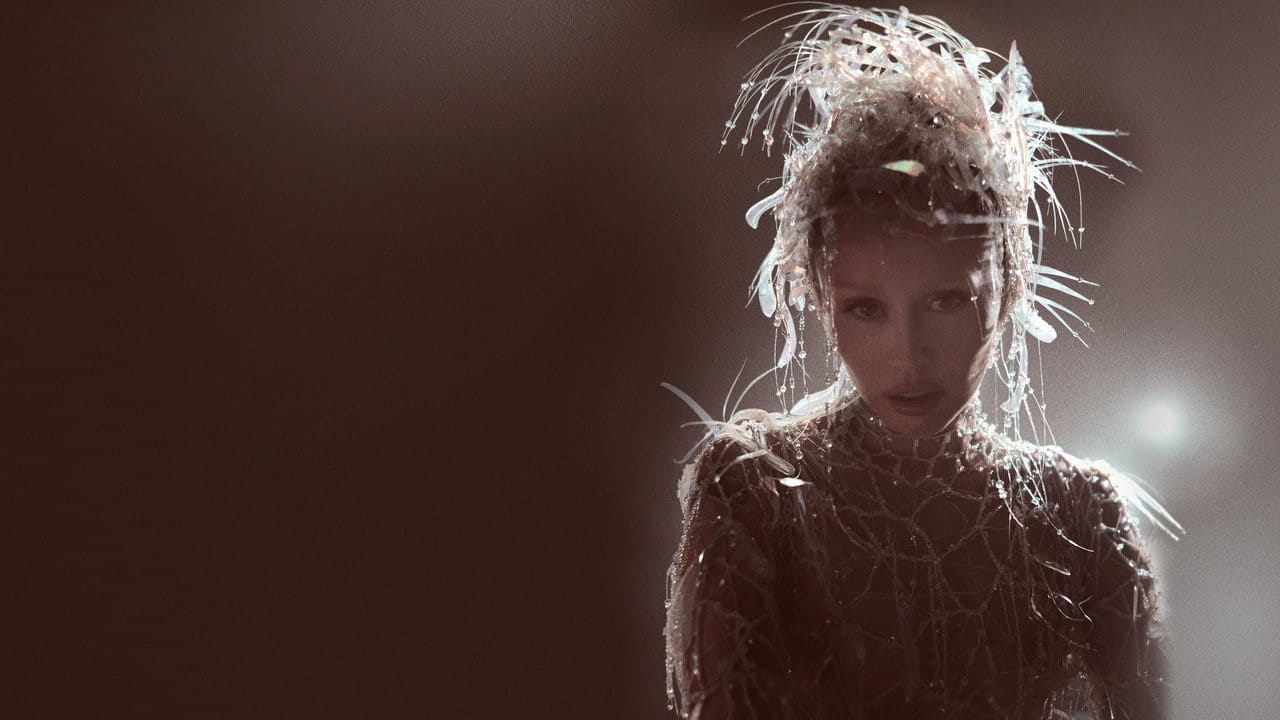
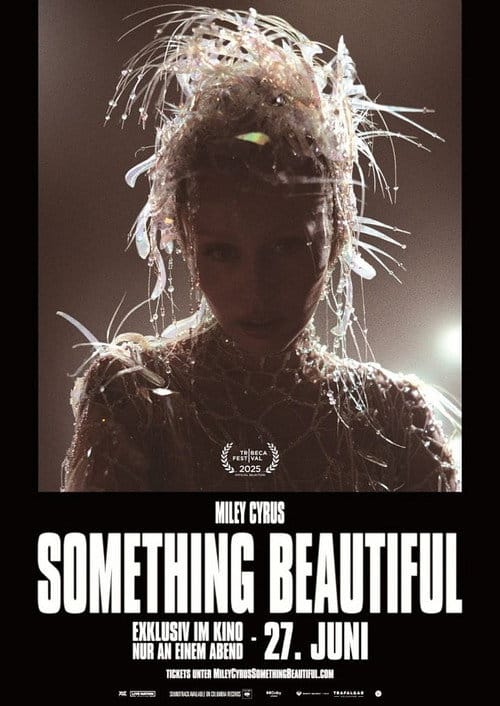
Something Beautiful ist eine einzigartige Pop-Oper voller Fantasie mit dreizehn neuen Songs aus dem visuellen Album Something Beautiful von Miley Cyrus. Exklusiv fürs Kino abgemischt von Alan Meyerson (Dune Part One, The Dark Night).
Hauptdarsteller


Mehr wie das
Black Is King
2020·7.1
Save the Last Dance
2001·6.5
Teen Spirit
2019·6.0
Moonwalker
1988·7.1
Lady Gaga: The Monster Ball Tour at Madison Square Garden
2011·8.7

Honey 3 - Der Beat des Lebens
2016·6.7

One Chance - Einmal im Leben
2013·6.7
Street Style
2004·6.4
Thirty Two Short Films About Glenn Gould
1993·7.0
Step Up All In
2014·6.8
Find Me Falling
2024·6.6
Madonna: The Immaculate Collection
1990·8.7
Communauté
7.6
Note Trakt
207 votes
10
72
9
10
8
34
7
25
6
25
5
21
4
10
3
5
2
1
1
3
679Spectateurs
675Collectés
332Listes
Avis de la communauté (2)
H
heyflpCritique★9/10Jun 28, 2025
“Miley Cyrus: Something Beautiful” isn’t just a visual album—it’s a full-on sensory manifesto. Alongside the record of the same name, this film, directed by Cyrus herself in collaboration with Jacob Bixenman and Brendan Walter, offers more than just an audiovisual translation of its tracks. It’s a deep dive into the creative psyche of an artist who, almost two decades after bursting onto the scene, has never seemed so comfortable in her own skin. With her ever-changing aesthetic, raw energy, and magnetic presence, Cyrus pulls the viewer through a maze of images, sounds, and emotions that swing between the sublime and the strangely intimate—cementing her place not just as a singer, but as a performer with a truly unique artistic vision. The two-act structure lets the project shift through different moods and atmospheres, balancing dreamy, introspective moments with bursts of pop grandeur and visual fireworks. From the get-go, it’s clear this isn’t about linear storytelling—it’s about feeling. The hazy opening, full of ambient noise and almost ghostly whispers, sets the tone for something that plays more like a dream than a narrative. With producers Sean Everett, Ian Gold, and Piece Eatah by her side, Cyrus builds sonic landscapes where acoustic instruments, synths, and natural sounds blend into one emotional ecosystem. And at the center of it all is her voice: raspy, raw, vulnerable—equally capable of summoning desperation and liberation. Visually, the film is all about texture. With diffused filters, layered images, projections, and psychedelic backdrops, the look calls back to experimental ‘90s music videos while staying rooted in current visual trends. Each track comes to life through luxurious costumes and carefully chosen symbolism—like the green fringed dress in “End of the World” or the retro-glam energy of the dancers in “Easy Lover.” None of it feels random; it all connects to the visual language Miley’s been building for years, now with a new level of stage maturity but without losing that spark of mischief. Naomi Campbell’s appearance, with her hypnotic presence and near-mystical delivery, gives the whole thing a futuristic fairytale vibe—and let’s be real: if Naomi’s out here orbiting Miley’s world, then that world clearly has its own gravity. If “Something Beautiful” doesn’t follow a traditional story arc, that’s not a flaw—it’s part of the point. It plays like an open letter—or maybe a holographic diary—where memories, desires, and past wounds overlap like pieces of a broken mirror. Scenes like “Pretend You’re God,” with its strobe light storm, or the liberating “Golden Burning Sun,” with Cyrus riding a motorcycle through gusts of wind, capture that spirit of visual and sonic catharsis. And even though the film leans into spectacle, it also knows when to pull back. There are silences, still moments, glances that say more than any lyric. In a time when visual excess is everywhere, that kind of restraint feels powerful. Benoît Debie’s cinematography meets its perfect match in Miley, who moves through his sensual, provocative lens with ease. The camera doesn’t worship her from afar—it keeps her close, almost tangible. That closeness, that raw emotional exposure, is what makes the film feel like a genuine extension of her music. Tracks like “Every Girl You’ve Ever Loved” and “Walk of Fame” blend glamour and pain with real finesse, and the overarching idea of healing a sick culture through art—something Miley talked about in interviews—comes off not as pretentious, but as a sincere attempt to connect something deeply personal with something universal. “Miley Cyrus: Something Beautiful” isn’t easy to pin down. It’s not just a long-form music video, and it’s definitely not a disguised biopic. It’s a ritual. A trip. A love letter to art pop with a rock ‘n’ roll soul—channeling Bowie and Björk while boldly stamping the name “Miley” in its own loud, unapologetic ink. Honestly, it wouldn’t be surprising if this project ends up being looked back on as a landmark in visual music—one that didn’t need to explain itself, because it knew how to feel. And for long-time fans like me, it’s a gift: intimate, daring, and yes, something truly beautiful.
♥2
O
Oh Djadja!★10/10Jul 7, 2026
É talento que você quer, então toma talento!
Kritiken