Laden...
7.6·2002·85 min·English·Regie Chris Sanders
AnimationFamilieKomödieScience Fiction
Handlung
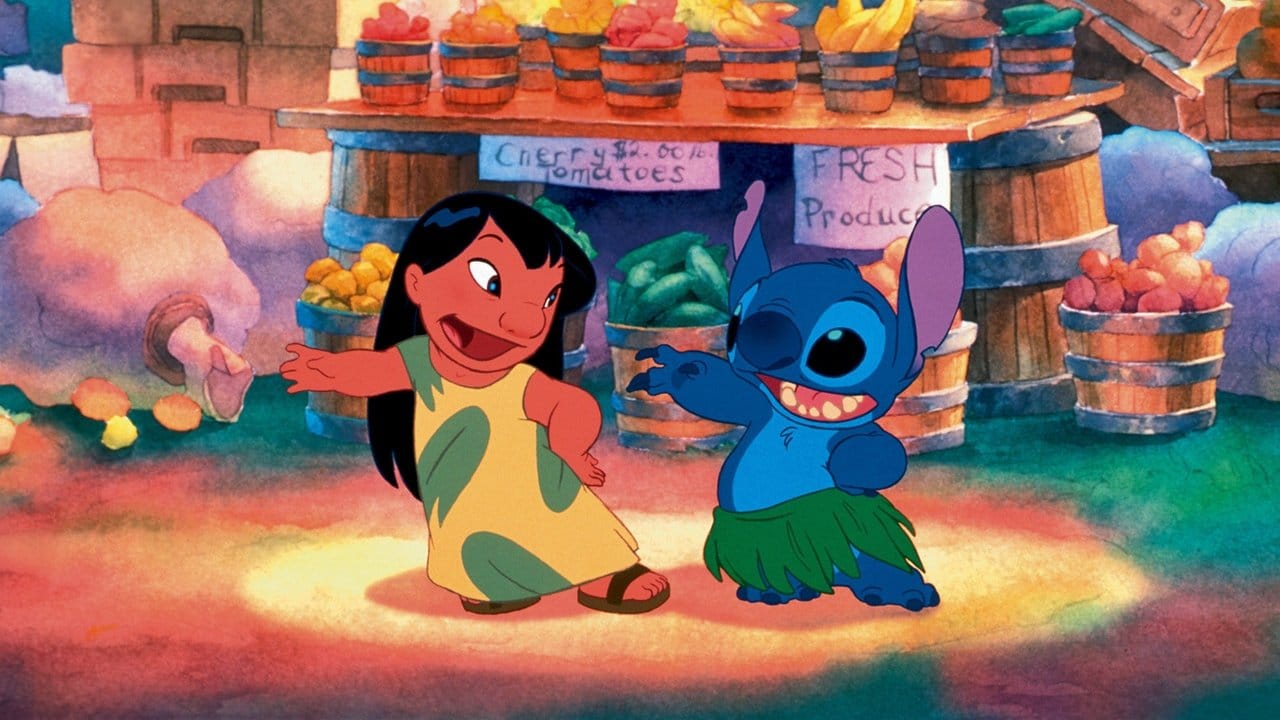
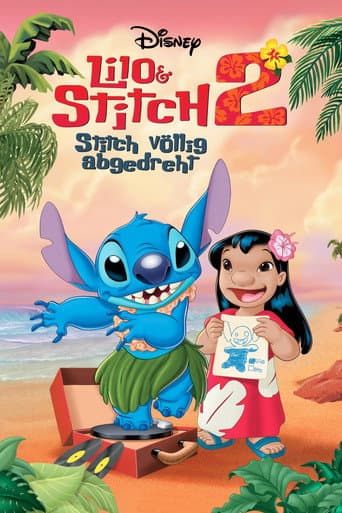
Weil das Alien namens Stitch nur auf Zerstörung programmiert ist, soll der garstige Kerl eliminiert werden. Ihm gelingt die Flucht nach Hawaii, wo er von dem einsamen Mädchen Lilo aufgenommen wird, das Stitch für ein Hündchen hält. Zunächst hat Stich nur Mätzchen im Kopf, als aber außerirdische Kopfgeldjäger Jagd auf ihn machen, ist er gezwungen, sich mit Lilo zu arrangieren.
Hauptdarsteller

Daveigh Chase
Lilo (voice)

Chris Sanders
Stitch (voice)

Tia Carrere
Nani (voice)
David Ogden Stiers
Jumba (voice)

Kevin McDonald
Pleakley (voice)

Ving Rhames
Cobra Bubbles (voice)

Zoe Caldwell
Grand Councilwoman (voice)

Jason Scott Lee
David Kawena (voice)

Kevin Michael Richardson
Captain Gantu (voice)
Susan Hegarty
Rescue Lady (voice)
Lilo & Stitch Filmreihe
Mehr wie das
Lilo & Stitch
2025·7.2
Stitch & Co. - Der Film
2003·6.4
Elio
2025·6.9
The Boss Baby
2017·6.5
Die Abenteuer von Mr. Peabody & Sherman
2014·6.7
Ich - Einfach unverbesserlich
2010·7.3
Lilo & Stitch 2 - Stitch völlig abgedreht
2005·6.7
Home - Ein smektakulärer Trip
2015·6.8
Die Croods
2013·6.9
Die Boxtrolls
2014·6.7
DC League of Super-Pets
2022·7.2
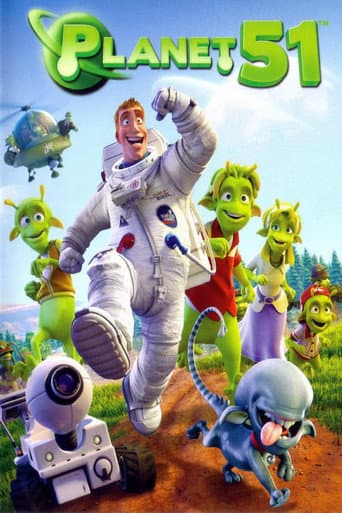
Planet 51
2009·5.9
Communauté
8.0
Note Trakt
14.1K votes
10
3.6K
9
1.4K
8
4.0K
7
2.9K
6
1.5K
5
346
4
167
3
56
2
62
1
62
96.9KSpectateurs
384.8KCollectés
20.9KListes
Avis de la communauté (10)
A
alexspooky★10/10Jun 23, 2022
It's sandwich day. Every Thursday I take Pudge the fish a peanut butter sandwich... And today we were out of peanut butter. So I asked my sister what to give him, and she said 'a tuna sandwich'. I can't give Pudge tuna! Do you know what tuna :asterisk_symbol:is:asterisk_symbol:? It's fish! If I give Pudge tuna, I'd be an abomination! I'm late because I had to go to the store and get peanut butter 'cause all we have is... is... stinkin' tuna! Pudge controls the weather.
♥9
2
2016moonlight★8/10Sep 30, 2021
Lilo has to be the cutest Disney character of all time! Lover her so much
♥8
A
AndrewBloomVIPCritique★7/10Aug 30, 2018
[7.3/10] There are essentially two constituent parts of *Lilo and Stitch*. One is a remarkably real story of difficult but well-intentioned children, struggling surrogate parents, and community and cultural institutions that aren’t prepared to deal with either. The other is a zany space adventure replete with slapstick and laser fights and wacky aliens. The former is what sets the movie apart, and makes it feel of a piece with the Pixar films that were coming out in the same era, and the latter is what makes it feel like just another silly cartoon. And the two aren’t an easy fit. But the film is at its best in those rare moments where it finds the earned connections between them. The parallels between Lilo’s situation and Stitch’s are not subtle. Lilo is a high-spirited young woman, who can’t control her impulses, and has strong abandonment issues after losing her parents to a car accident. Stitch is an alien hybrid, one built for death and destruction and survival, who’s as much, if not more, of a handful, even away from cities and rayguns. The comparisons don’t stop there. Lilo and her sister Nani are trying to prove to their local social worker that they’re a functioning, if unique family, so that the state doesn't take Lilo away. Whereas Stitch, for his part, similarly has to prove that there’s something good about his found family, something that brings out the good in him, so that the imperious Galactic Federation doesn't take him away. Naturally, Lilo and Stitch are kindred spirits, and the film succeeds when it explores why. It’s liable to go over the heads of younger viewers, but there’s something potent when the mad scientists who created Stitch wonders what the little alien will do when away from cities to destroy and enemies to fight. It turns out that he finds people who both love him and make him a better soul.There’s thematic heft there, in the idea that in the right environment, even difficult children with different needs can flourish. Say what you will about *Lilo and Stitch* as a piece of art, but its heart is in the right place. The film is at its best when it’s exploring the reality of that situation, of Nina having a tempestuous little girl to deal with when she’s just a young woman herself, and of Lilo feeling like the world doesn't want her and struggling to feel love and security when her acting parent is continually harried and her actual parents are in the great beyond. That in turn prompts her to act out and have a shorter fuse, which makes things harder for Nani, which makes things harder for Lilo, and so forth and so on. Naturally, things only gets easier for Nani when Lilo adopts a new “dog” who is just as tempestuous and destructive and not especially obedient. The film taps into something very real in these scenes of these sisters in a tough situation trying to get by. *Lilo and Stitch* is remarkable for how much it commits to that. I may have let an expletive slip when Lilo asks her sister “are we a broken family?” because it’s the kind of legitimate, kitchen sink drama frankness and pathos that you don’t necessarily expect from a studio known for wish-receiving princesses and flying elephants. As a friend put it with regard to the *The Babadook* it was the scariest thing I’d ever seen -- and then the monster showed up. *Lilo and Stitch* already tells a great and challenging story about the struggle of two siblings scraping by without their parents, practically and psychologically, even before the little blue furball shows up to provide that thematic parallel. But this is a kids’ movie, and as much as *Lilo and Stitch* goes to some bold places, it also has to entertain the kids, so there’s tons of wacky hijinks and other mishegoss that often gets in the way. Again, there’s a worthwhile story to be told of Stitch’s own little arc, realizing he was made for destruction but wanting a family, and not wanting to be left behind, just like Lilo does. The problem is that the movie gets bogged down in the cartoony efforts of the intergalactic model U.N. to try to recapture him. The least you can say for these moments is that they’re fun to look at. *Lilo and Stitch* deserves plaudits for its art style and animation, which stand out even in the Disney pantheon. There’s a rounded, more fluid look to the characters and their world in the film, one that uses the film’s visuals marks this tale as something a little less perfect and manicured than its princess-y contemporaries. At the same time, the colors in the movie are gorgeous with hot blues and pinks to capture the Hawaiian atmosphere. And the movement of the characters is just as distinctive, with figures stretching and squishing to make the goofy parts land, while remaining expressive enough to carry the emotion of a scene. That said, the alien cast becomes a little too goofy, in a way that undercuts the emotion the film is going for. Even Stitch himself walks the line between focus grouped adorable and rabidly annoying (which, in fairness, befits his character). And the outlandish recapture sequences aren’t clever or exciting enough to feel like anything other than colorful interstitials between the meat of the picture. But even that meat starts to smell at times. In places, the movie’s good thematic intentions run aground on the story it’s trying to tell. For one thing, the film wants us to root against Stitch’s would-be captors. But the only one who could be truly described as evil eventually takes Stitch’s side (for little-to-no reason), while the others seem pretty justified in wanting to contain this creature who, by his creator’s own description, only exists to cause destruction and mayhem. That goes for both sides of that parallel. You feel for Lilo and Nani and the way they don’t want to be separated, especially when the courteous but severe social worker seems to show up at the most inopportune times possible. Obviously they’ve had to deal with enough separation and the sense of being “left behind” in that family. But the other side of the coin is that it seems clear that however hard she’s trying, poor Nani is in over her head and unable to give Lilo the care she needs, which makes it sad but hard to argue against things when it looks like the social worker’s made an adverse decision. Still, *Lilo and Stitch* makes that moment a harrowing one, and its reversal equally as heartening, because it’s rooted in the authentic feelings of connection and loss between Nani, Lilo, and Stitch. Some of the film is a bit of a chore, as you’re slogging through one wacky trip or another. But when the movie touches on those real challenges, real moments of sibling fighting and affection, and real family bonds, of both the blood and chosen variety, it’s something truly transcendent and unique in the Disney canon. Those moments are more than enough to make up for the times in which it’s like any other kids’ film.
♥7
M
Mr. Sackamano★7/10Mar 16, 2021
Kids loved it...I guess lol, they were quiet for 85 minutes
♥6
M
madhackrviperVIP★10/10Feb 22, 2024
I've always loved this movie, but something that shot it up to a 10 for me this rewatch and made it a new comfort movie for me, is realizing how OBVIOUSLY AUTISTIC Lilo is. 1. Special interest 1: photographing overweight tourists and making a collage with the photos 2. Special interest 2: Elvis (she uses Elvis to cope with RSD as well) 3. Routine: Feeding a specific fish a peanut butter sandwhich once a week, and she is very upset if this routine is disturbed 4. Stimming motions with hands, forthright speaking tone, some literal thinking 5. Rejection by peers who find her strange, tries to include her strange homemade doll with a socially unacceptable backstory in the girls playing with "normal" dolls I relate to Lilo so much now. And that makes this movie come through for me.
♥4
Kritiken