Laden...
5.0·2025·116 min·English·Regie Trey Edward Shults
MusikThrillerDrama
Handlung
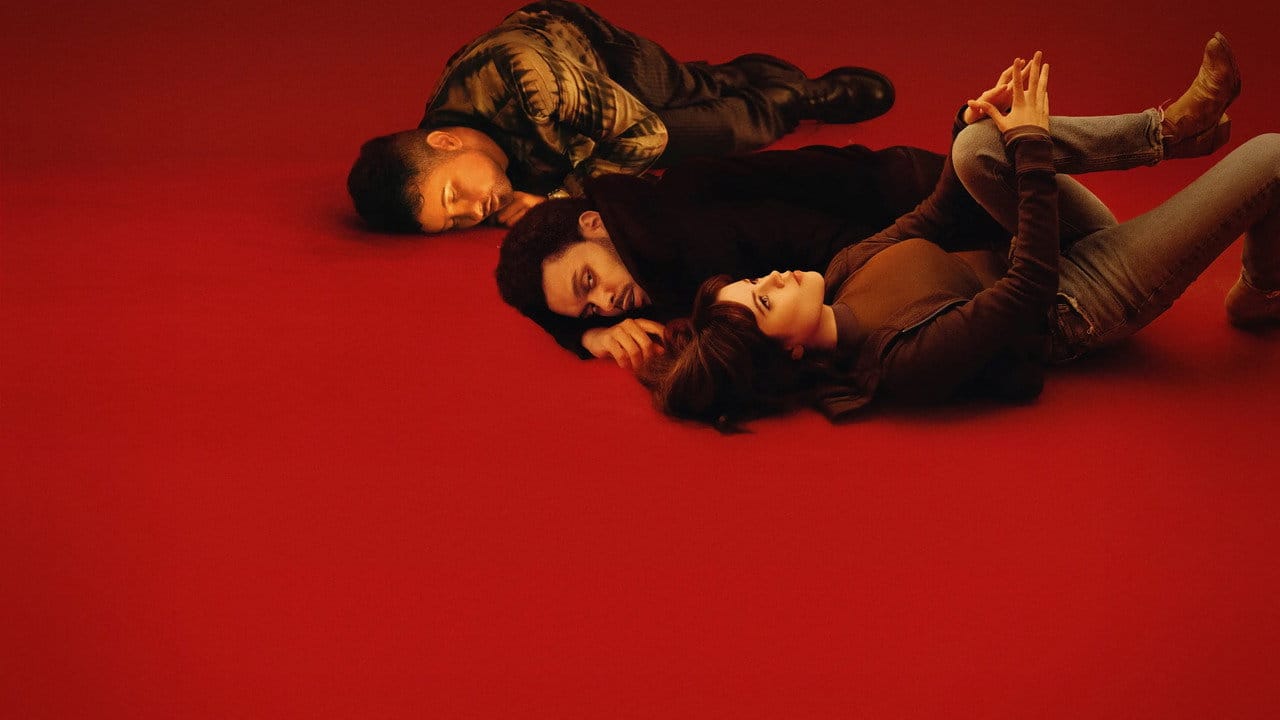
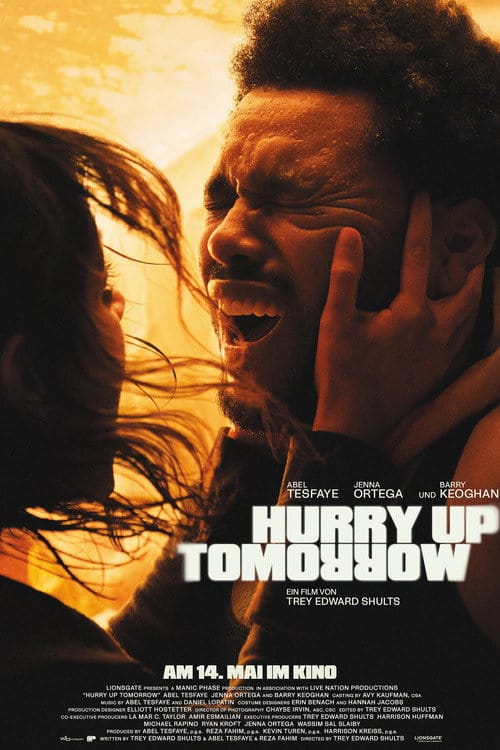
In dem musikalisch getriebenen Psychothriller geht es um einen von Schlaflosigkeit geplagten Musiker (Abel Tesfaye), der sich auf eine Odyssee mit einer geheimnisvollen Fremden begibt, die alles infrage stellt, was er dachte, über sich zu wissen. Regisseur Trey Edward Shults erschafft dabei ein einzigartiges Kinoerlebnis: eindringliche Bilder, psychologische Tiefe und atmosphärische Spannung verbinden sich zu einem Film, der sowohl intensiv auch als auch intim ist.
Hauptdarsteller









Mehr wie das
Communauté
4.6
Note Trakt
671 votes
10
47
9
4
8
40
7
41
6
102
5
84
4
132
3
48
2
113
1
60
2.7KSpectateurs
20.8KCollectés
1.4KListes
Avis de la communauté (12)
H
hgram★7/10Jul 16, 2025
♥4
H
heyflpCritique★3/10May 20, 2025
“Hurry Up Tomorrow” is one of those projects that clearly thinks it’s saying something deep and transformative, but really just ends up exposing its creator’s bloated ego and creative confusion. Directed by Trey Edward Shults in collaboration with Abel Tesfaye (The Weeknd), the film presents itself as an existential audiovisual experience, but in reality, it’s a long, pretentious trip of empty self-pity, packed with tired metaphors, obvious symbolism, and a near-narcissistic worship of its own image. The script—co-written by Shults, Tesfaye, and Reza Fahim—falls apart at its most basic structure. The narrative drags with this stagnant pacing, like it’s constantly waiting for a big revelation that never actually comes. The main character (played by Tesfaye himself) spirals into a personal crisis after a breakup that exists only as a distant echo in a voice message from his ex (Riley Keough) at the beginning of the film. She’s more of a functional ghost, only there to kickstart his emotional collapse, and never becomes a real character. That same pattern repeats with pretty much everyone else in the movie—no one feels alive; they’re all just orbiting around this dying star at the center. What could’ve been a raw portrait of an artist’s emotional downfall turns into a painfully long parade of scenes where nothing actually happens—aside from the film constantly reminding us how hard it is to be famous. The direction leans hard on worn-out visual gimmicks: endless rotating shots inside cars, close-ups glued to the sweaty face of the lead, film grain trying to give things an “organic” feel—and none of it serves any real narrative purpose. It’s all aesthetic flair trying to mask a hollow core. The movie might look like it belongs in the A24 world, but it completely lacks the emotional coherence or storytelling strength of that studio’s better work. The recurring metaphor about losing one’s voice as a symbol for an identity crisis could’ve had some potential—if it weren’t hammered in so literally. And worse: Tesfaye can’t carry that arc in a meaningful way. His performance is flat, detached, stuck somewhere between lifeless and overly posed. The camera treats him like a god, but there’s just nothing to uncover. There’s no emotional depth, no real self-awareness—just a performance screaming “look how much I’m suffering” without ever making us feel that suffering. Jenna Ortega shows up late in the game as a mysterious figure named Anima, injecting some much-needed energy into the third act. She plays an allegorical role—obsession, delusion, a warped reflection of fan devotion. Her performance is intense and magnetic, bringing to mind echoes of “Black Swan” and “Requiem for a Dream” in how her character takes over the screen. But even when the film finally stumbles into actual conflict, it immediately pulls back, too scared to go all in. The promised destruction—emotional, physical, symbolic—never really happens. The literal and metaphorical fire Tesfaye keeps alluding to doesn’t burn anything down. Everything stays intact, including his ego. Even the soundtrack—made up of tracks from the companion album—fails to justify its role in the film. Instead of adding to the drama or elevating the scenes, the songs feel like half-baked music videos awkwardly wedged into the narrative. It reinforces the idea that “Hurry Up Tomorrow” isn’t really a movie at all—it’s more like a marketing piece dressed up as art. A rebrand disguised as a personal manifesto, but without the depth to stand as either. All in all, “Hurry Up Tomorrow” is an exercise in vanity wrapped in the costume of indie cinema. It’s a movie that takes itself so seriously, it forgets to communicate anything that isn’t self-absorbed. A project that tries to burn down The Weeknd persona in front of us—but lacks the guts to actually let it go. If Abel Tesfaye truly wants to be reborn as a filmmaker, step one might be realizing that becoming a real artist in cinema takes more than stylized suffering and mirror tricks. It takes truth. And this film, well... it missed that mark by a mile.
♥4
A
achla_★2/10May 16, 2025
Hopefully Jenna was there to save some frames!
♥2
R
ragreynoldsVIP★2/10May 17, 2026
Genuinely stunned by how uninterested in this I was
♥1
C
craig200210★7/10Jun 24, 2025
This movie was actually alright, although it felt like this movie was an ad for his new album also called hurry up tomorrow, the acting was pretty good but also felt like some scenes dragged out. Jenna Ortega's performance was also pretty good at portraying that kind of character she played.
♥1
Kritiken