Laden...
6.6·2024·140 min·English·Regie RaMell Ross
DramaHistorie
Handlung
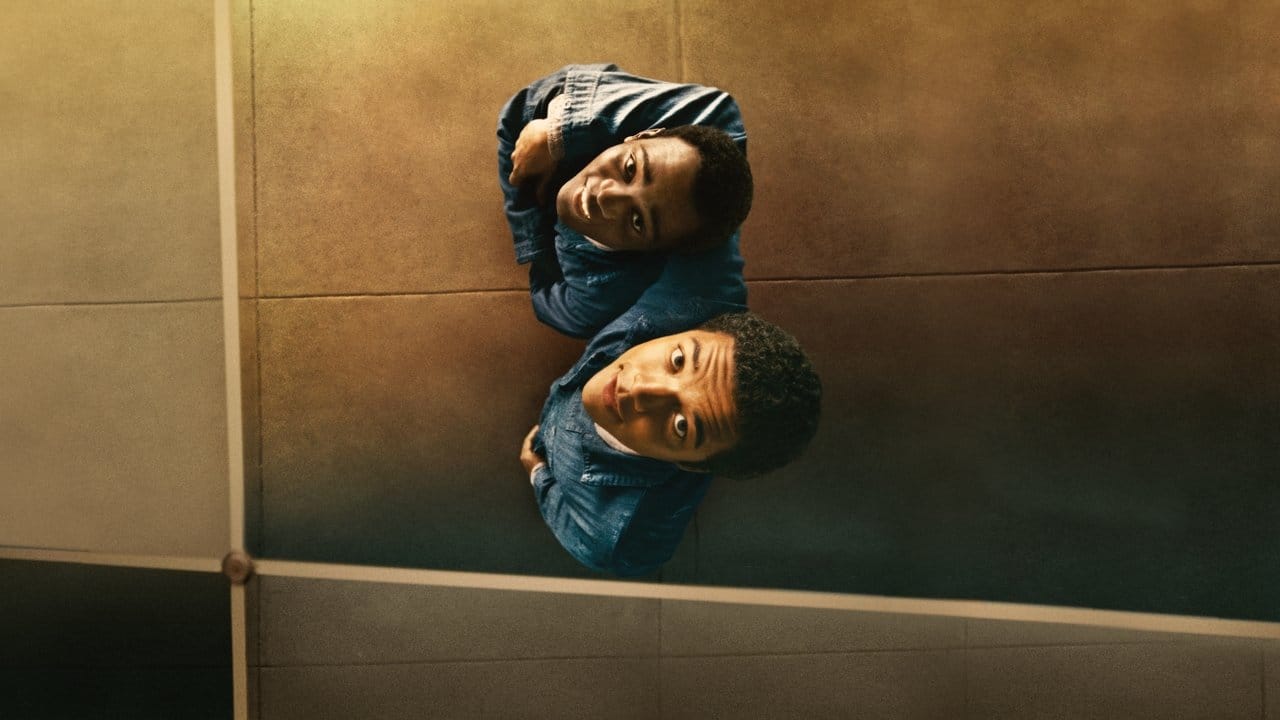
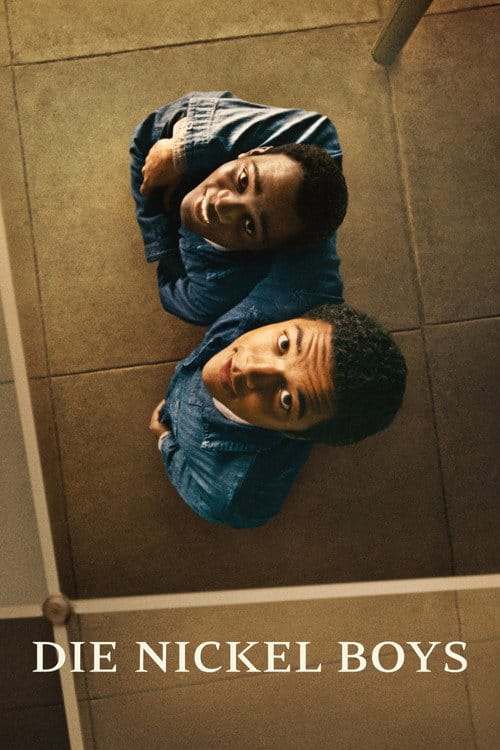
Die Geschichte einer Freundschaft zweier junger Afroamerikaner, die sich in den 1960er Jahren in einer berüchtigten Besserungsanstalt in Florida wiederfinden. Gemeinsam kämpfen sie gegen die brutalen Misshandlungen und Ungerechtigkeiten, denen sie in dieser korrumpierten Institution ausgesetzt sind. Ihre enge Verbindung wird zum einzigen Halt in einer Welt voller Gewalt und Verzweiflung, während sie versuchen, die erschütternden Prüfungen zu überstehen. Verfilmung von Colson Whiteheads 2019 mit dem Pulitzer-Preis ausgezeichnetem Roman "The Nickel Boys".
Hauptdarsteller








Mehr wie das
Moonlight
2016·7.4
The Trial of the Chicago 7
2020·7.7
Es war einmal in Amerika
1984·8.4
Wie ein wilder Stier
1980·7.9
Asphalt-Cowboy
1969·7.5
Bully - Diese Kids schockten Amerika
2001·6.7
12 Years a Slave
2013·7.9
The Hate U Give
2018·8.1
Jim Carroll - In den Straßen von New York
1995·7.4
Die Verurteilten
1994·8.7
Sleepers
1996·7.6
Son of the South
2021·6.5
Communauté
6.8
Note Trakt
1.8K votes
10
175
9
160
8
433
7
298
6
409
5
129
4
113
3
35
2
52
1
25
5.9KSpectateurs
20.5KCollectés
6.8KListes
Avis de la communauté (12)
J
JimDarko★7/10Jan 29, 2025
A bold take on this story that some people will chalk up as a gimmick. I feel it is a very effective way to showcase not only this story but the feeling of memories. Really makes the film’s impact that much stronger even if I can’t help but compare it to a video game sometimes (I mean that as a compliment)
♥6
F
fasterfilmcritic★5/10Jan 26, 2025
Nickel Boys tells a heart-wrenching story. But it's non-linear, first-person perspective, chaotic method of telling that story results in a narrative that is difficult to follow and a message that is less powerful. Its form is not unlike watching a puzzle be randomly put together for two hours, unaware of what you're looking at, until the last twenty minutes when the final pieces are put into place and the picture reveals itself.
♥6
R
RyeZoo★5/10Jan 18, 2025
Bad day at the movies for me seeing this right after brutalist disappointing me. Plus I drove 2 hours for these two films…. The point of view feels like a gimmick and to me cheapens the experience. This had potential for much more of an impact if it was told traditionally. I like seeing actors faces when giving dialogue. I know I’m in the minority here for this film. This story is very fucked up, but the weight of it didn’t hit emotionally for me.
♥6
P
przvl★9/10Feb 3, 2025
Few films tell a brutal story through a first-person view, and even fewer do it well. Nickel Boys not only uses this approach but makes it powerful. It draws us into Black experiences and challenges how we see, watch, and judge. This perspective makes the story deeply political and emotional, showing feelings—like Black love—in ways rarely seen on screen. It creates empathy through observation, making the film both bold and unforgettable. The film also includes glimpses of Apollo 8, not just as a historical detail but as a deeper message. While the era saw major scientific progress, the country still failed to treat its people with dignity. As JFK once said, “We are reaching for the moon but falling into discord on Earth.” The film reminds us that no achievement matters if justice and equality are left behind.
♥3
H
heyflpCritique★10/10Jan 30, 2025
Some films hit us hard not just because of what they tell, but because of how they tell it. “Nickel Boys,” directed by RaMell Ross, is one of those rare cases where narrative and aesthetics intertwine in an almost hypnotic way. Adapting Colson Whitehead’s Pulitzer-winning novel, the film dives into the story of Elwood (Ethan Herisse) and Turner (Brandon Wilson), two Black boys in segregated Florida who end up trapped in the brutal Nickel Academy. But this isn’t just a story about systemic injustice—it’s a study of hope, resilience, and how time reshapes memory and trauma. The result is a devastatingly powerful film that pulls us in without relying on easy sentimentality, demanding that the audience see and feel without spoon-feeding everything. From the very first frame, Ross establishes a cinematic language that defies conventional expectations of a historical drama. Instead of leaning on a linear narrative or obvious emotional beats, he crafts a sensory experience where the characters’ glances and gestures speak as loudly as their words. Jomo Fray’s cinematography is a spectacle in itself, shifting between almost documentary-style compositions and images of breathtaking lyricism that cruelly contrast with the protagonists’ harsh reality. It’s a film that understands the power of silence, space, and contemplation, making us feel the passage of time and the weight of oppression in an organic, unsettling way. Ethan Herisse delivers a heartbreaking performance as Elwood, an idealistic young man who believes in Martin Luther King’s teachings and the possibility of a better future. His optimism, however, is brutally tested when he is unjustly sent to Nickel Academy. His counterpoint is Turner, a boy who learned early on not to trust promises and sees survival as the only real form of resistance. Their relationship is the beating heart of the film, and the screenplay wisely avoids turning them into mere symbols, instead presenting them as deeply complex, layered characters. They aren’t just victims of a cruel system—they’re individuals with fears, desires, and conflicting worldviews. The film doesn’t just reconstruct the brutality of Nickel Academy through explicit violence but through the psychological scars it leaves on its characters. Ross avoids the usual tricks of social injustice dramas and instead makes us feel the weight of this experience through a more subjective approach. The decision to shift between different perspectives and timelines adds a fascinating depth, allowing the story to breathe and unfold gradually. The transitions between past and present are seamless, and the use of archival footage creates a connection between fiction and historical reality that makes everything even more impactful. Another striking aspect is how the film questions the very notion of heroism. Elwood believes in peaceful resistance and the power of morality, while Turner sees that as an impossible luxury in a system that only understands the language of brutality. Their relationship draws parallels to dynamics seen in films like “12 Years a Slave,” but “Nickel Boys” dismantles any idea of a simplistic resolution. There are no easy promises of justice or redemption—only the harsh realization that, for many, freedom comes at an unbearably high price. The minimalist score and sound design add to the film’s oppressive atmosphere, emphasizing both the fleeting beauty of hopeful moments and the suffocating tension that lingers over every scene in the academy. The empty spaces, echoing hallways, and constant sense of surveillance turn Nickel into a silent nightmare, where the real horror lies in the banality of evil and the impunity that sustains it. The third act holds a revelation that redefines everything we’ve seen up to that point, and Ross handles this moment with rare subtlety, trusting the audience’s intelligence to connect the dots. It’s a bitter ending but one that feels profoundly true to everything the film has built. “Nickel Boys” isn’t looking to offer catharsis or comfort—it’s an unsettling but necessary gaze into history’s wounds and how they continue to reverberate in the present. Ultimately, what makes “Nickel Boys” so powerful is precisely its refusal to be an “easy” film. It doesn’t simplify its message, it doesn’t offer ready-made answers, and it doesn’t seek comfort in sentimentality. It’s a work that demands attention, empathy, and reflection—one that, above all, reaffirms cinema’s ability to make us see the world in new ways.
♥3
Kritiken